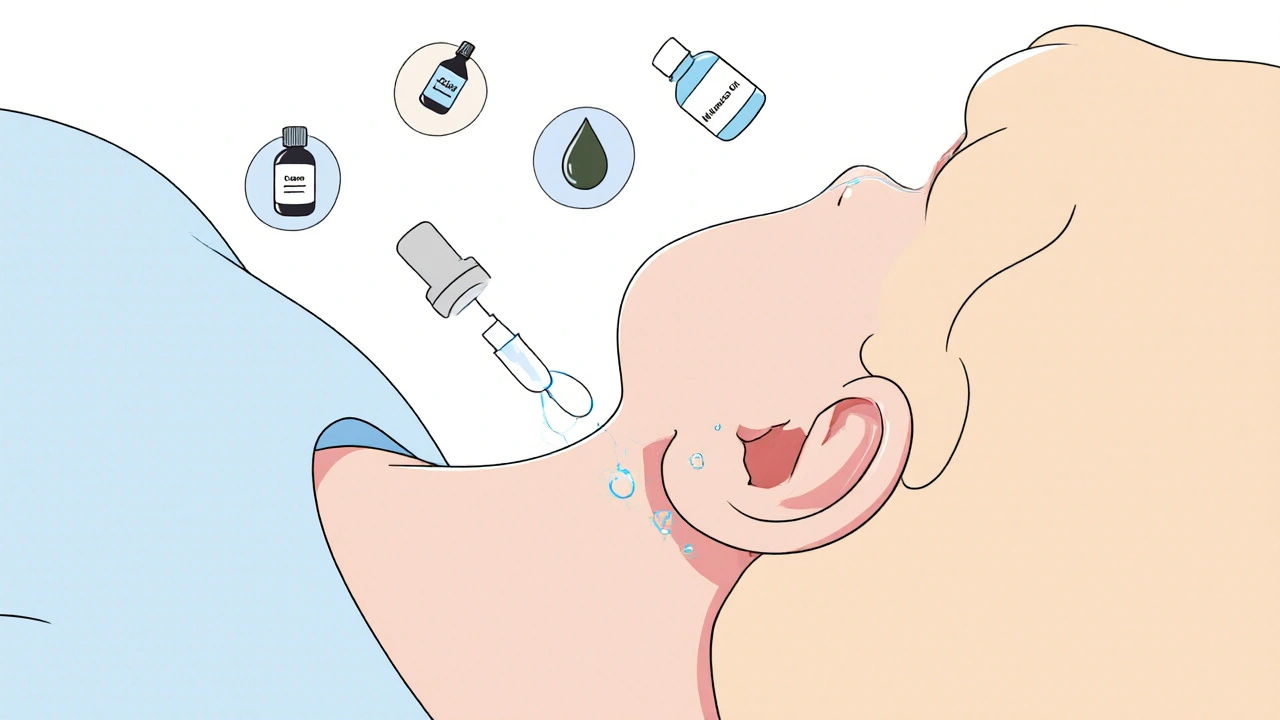
Cerumenolytics: What They Are and How They Help Clear Earwax
When earwax builds up and blocks your ear, it’s not just annoying—it can make you feel like you’re hearing through water. That’s where cerumenolytics, chemical solutions used to soften and break down earwax. Also known as earwax softeners, they’re the first line of defense before doctors consider irrigation or manual removal. Unlike cotton swabs, which often push wax deeper, cerumenolytics work gently from the inside out.
These drops come in different forms: some use water-based solutions like hydrogen peroxide or carbamide peroxide, while others rely on oils like mineral oil or olive oil. Carbamide peroxide is the most common active ingredient in over-the-counter brands like Debrox and Murine Earwax Removal. It breaks down wax by releasing oxygen, making it bubble and loosen. Oil-based drops, on the other hand, work by coating the wax to make it slide out more easily. Neither type cures the cause of excess wax, but they do make removal safer and less painful.
Not everyone needs them. Most people’s ears clean themselves naturally. But if you wear hearing aids, have narrow ear canals, or produce thick wax, cerumenolytics can be a game-changer. They’re also helpful before ear irrigation—many doctors recommend using them for a few days first. The key is consistency: using them daily for 3 to 5 days gives them time to work. Skipping days or using them just once won’t cut it. And never use them if you have a perforated eardrum or ear tubes—that’s when things can go wrong fast.
What you won’t find in these products is magic. No drop will dissolve wax overnight. And no, ear candles don’t work—they’re dangerous and have zero scientific backing. Stick to what’s proven: FDA-approved cerumenolytics used as directed. If your ear still feels blocked after a week, or if you have pain, dizziness, or hearing loss, see a provider. That’s when it’s not just wax—it might be an infection, a growth, or something else needing real attention.
Below, you’ll find real-world advice from people who’ve dealt with this exact problem. Some share how they switched from cotton swabs to drops. Others explain why one brand worked for them but not their sibling. There’s also guidance on timing, what to avoid, and how to tell if you’re overdoing it. This isn’t theory—it’s what actually helps in daily life.