
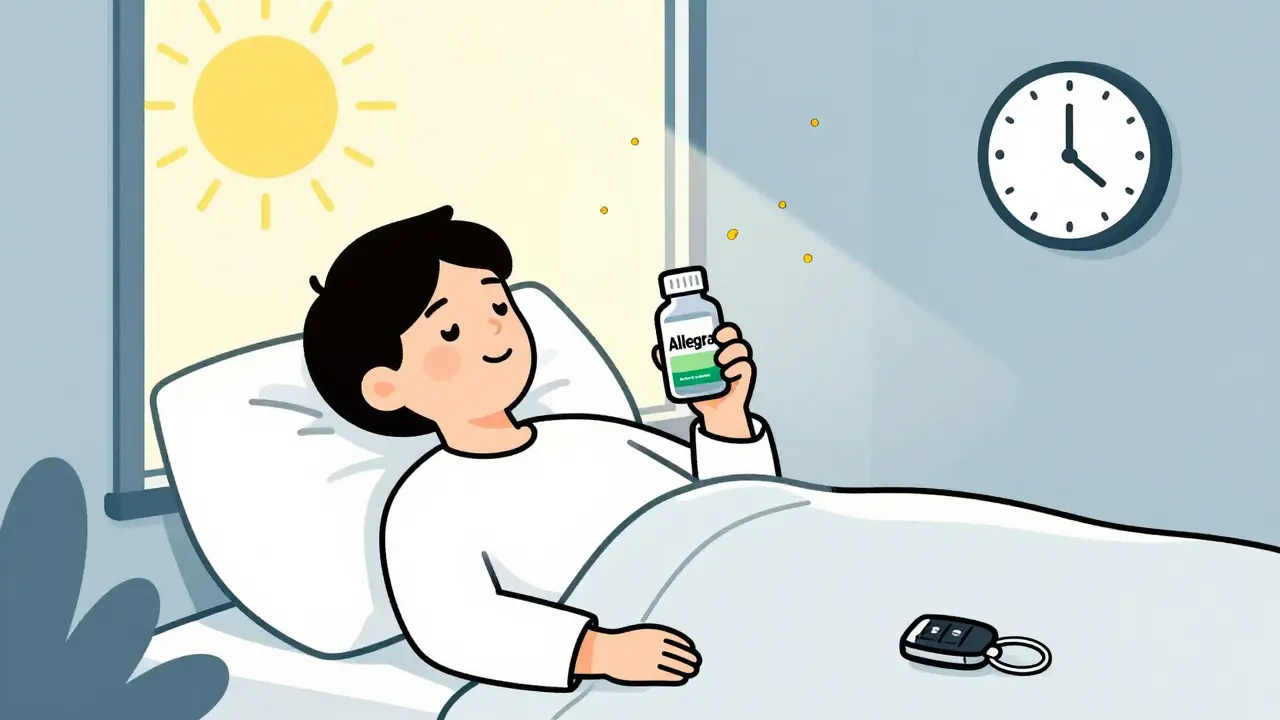
Every spring, when the pollen starts flying, millions of people reach for the same thing: an antihistamine. But not all antihistamines are the same. Some knock you out. Others let you drive, work, or play with your kids without a second thought. Choosing the right one isn’t just about what’s on sale-it’s about matching the medicine to your life.
What Antihistamines Actually Do
Antihistamines block histamine, a chemical your body releases when it thinks it’s under attack-like from pollen, pet dander, or dust mites. That histamine causes the sneezing, itchy eyes, runny nose, and hives you hate. The first antihistamines were developed in the 1930s, and since then, we’ve learned a lot about how they work in the body. Today, there are two main types: those that make you sleepy and those that don’t.
First-Generation Antihistamines: The Sleepy Ones
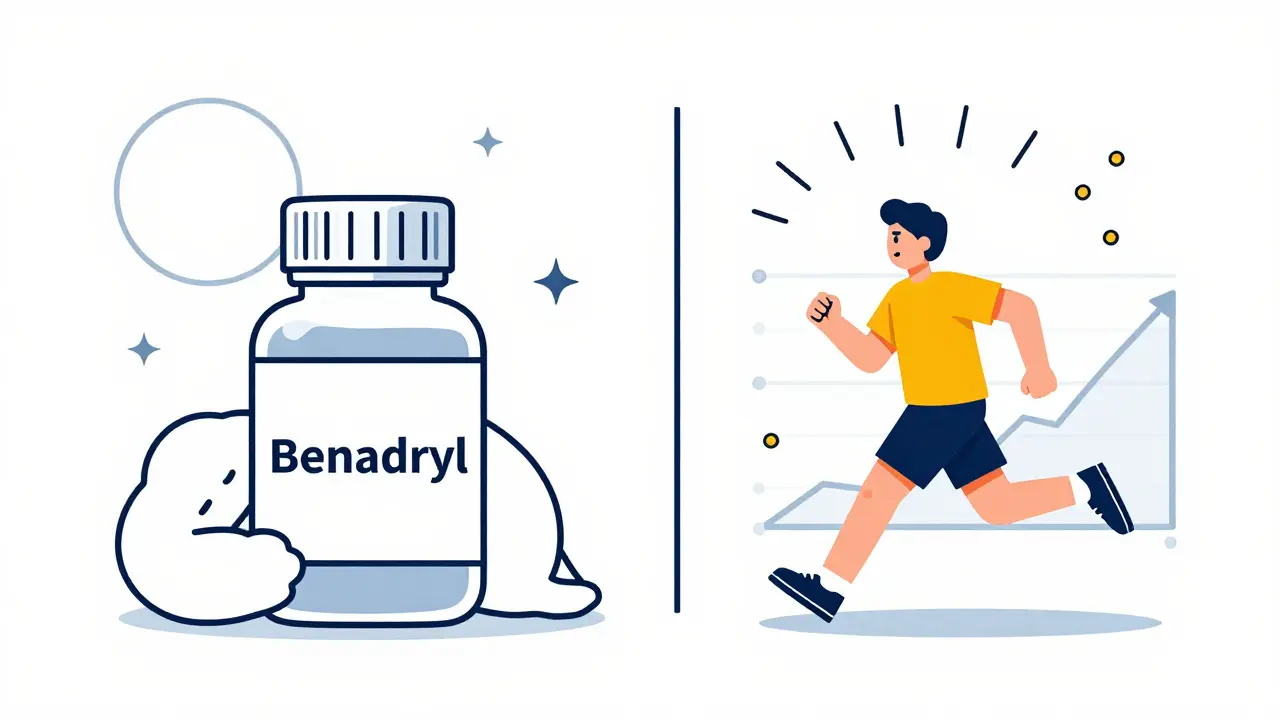
These are the old-school options like Benadryl (diphenhydramine), Chlor-Trimeton (chlorpheniramine), and Unisom (doxylamine). They work fast-sometimes in as little as 15 minutes. That’s why people still use them for sudden hives or allergic reactions.
But here’s the catch: they cross into your brain. That’s why 50% of people who take them feel drowsy. Studies show they can impair your reaction time as much as having a blood alcohol level of 0.10%. That’s over the legal limit for driving in most places. If you’re a truck driver, a nurse on night shift, or just someone who needs to stay sharp at work, these aren’t safe for daily use.
They’re also short-acting. You’ll need to take them every 4 to 6 hours. That’s why you see people popping Benadryl at 8 a.m., noon, and 4 p.m. It’s not just inconvenient-it increases your risk of side effects like dry mouth, blurred vision, and constipation.
Second- and Third-Generation Antihistamines: The Non-Sedating Options
This is where things changed. In the 1990s, drugs like Claritin (loratadine), Zyrtec (cetirizine), and Allegra (fexofenadine) hit the market. They were designed to stay out of the brain. That means they treat your allergies without making you sleepy.
They last 24 hours. One pill in the morning, and you’re covered all day. No more midday naps because your allergy meds knocked you out.
But not all non-sedating antihistamines are created equal. Here’s how they stack up:
| Medication | Generic Name | Onset of Action | Sedation Risk | Special Notes |
|---|---|---|---|---|
| Allegra | fexofenadine | 1-2 hours | 6% | Lowest sedation risk. Safe for drivers and shift workers. |
| Claritin | loratadine | 1 hour | 8% | Reliable, widely available. 4.4/5 rating on Amazon. |
| Zyrtec | cetirizine | 1 hour | 14% | More effective for some, but causes drowsiness in 1 in 7 users. |
| Xyzal | levocetirizine | 1 hour | 10% | Stronger than Zyrtec, but not recommended for adults 65+ without doctor advice. |
Why does this matter? Because if you’re one of the 14% of people who feel drowsy on Zyrtec, you’re not imagining it. A 2021 meta-analysis found cetirizine caused measurable brain fog in users-something fexofenadine barely does. If you’ve tried Zyrtec and felt sluggish, try Allegra next. It’s not just marketing-it’s science.
Who Should Avoid Which Antihistamine?
Not everyone can use the same meds safely.
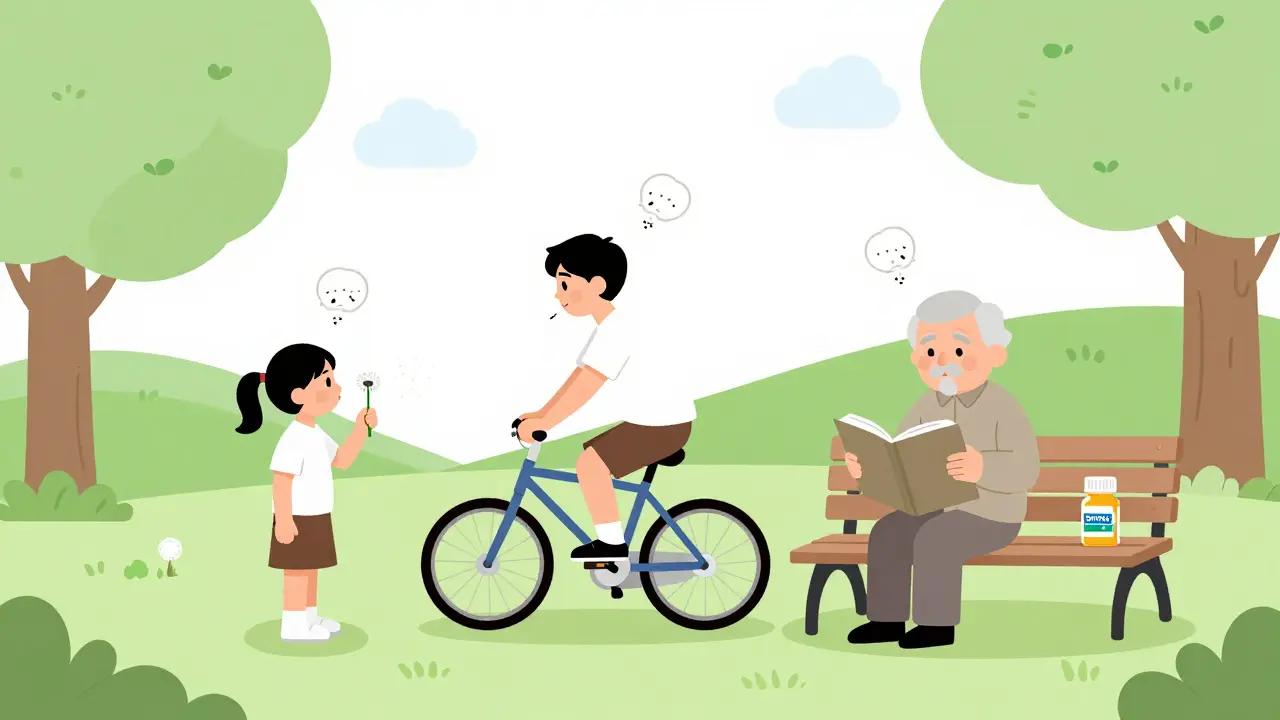
Children under 6: First-generation antihistamines are not approved for this age group. The American Academy of Pediatrics says they carry too much risk of serious side effects, including seizures and abnormal heart rhythms. Stick to second-generation options only if a doctor recommends them.
Adults 65 and older: Your body processes drugs slower. Even non-sedating antihistamines can build up and cause confusion or falls. Xyzal’s OTC label doesn’t even list dosing for this group for that reason. If you’re over 65, start with Claritin or Allegra, and talk to your pharmacist before trying anything new.
People with kidney or liver disease: Your body can’t clear these drugs as well. Allegra is often preferred because it’s mostly eliminated through the kidneys, but if your kidneys aren’t working well, your doctor might suggest a lower dose or a different option.
How to Use Them Safely
Here’s what actually works in real life:
- Start early. Don’t wait until your nose is running. Begin taking your antihistamine 1-2 weeks before allergy season hits. It builds up in your system and prevents symptoms before they start.
- Don’t mix with alcohol. Even non-sedating antihistamines can make alcohol’s effects worse. You might not feel drunk, but your reaction time slows down.
- Avoid grapefruit juice. It can interfere with how your body breaks down some antihistamines, raising their levels in your blood by up to 37%. That increases side effects.
- Take first-gen meds at night. If you need Benadryl for a sudden rash or trouble sleeping, take it right before bed. Don’t drive or operate machinery after.
- Don’t double up. Many cold and flu meds contain antihistamines. Check the label. Taking two meds with the same ingredient can lead to overdose.
What Users Really Say
Real people on Reddit, Amazon, and WebMD have tested these drugs in real life. Here’s what they report:
- On Reddit’s r/Allergies, 78% of Allegra users say they feel zero drowsiness-even at double doses.
- 65% of Zyrtec users say they feel sleepy by afternoon, even when taking it in the morning.
- Claritin has a 4.4/5 average rating on Amazon. Over 80% of 5-star reviews say, “Works without making me tired.”
- Benadryl has a 3.9/5 rating. Most negative reviews say, “Knocked me out completely.”
- Users over 65 on WebMD report drowsiness from Xyzal twice as often as younger users.
These aren’t anecdotes. They’re patterns. If you’ve tried one and it didn’t work, try another. About 30% of people need to test two or three before finding their match.
What’s New in 2026?
Antihistamines aren’t standing still. In April 2023, the FDA approved a new version of Allegra-D with extended-release decongestant action. It gives you 12 hours of nasal relief alongside the 24-hour allergy control.
Sanofi is launching a nasal spray version of rupatadine in 2024. That could be a game-changer for people who hate swallowing pills or need faster relief.
And the trend is clear: more people are choosing non-sedating options. The U.S. OTC antihistamine market is worth $3.2 billion-and 78% of that is non-sedating meds. Why? Because people are tired of being tired.
When to Call a Doctor
Most allergy symptoms can be managed with OTC antihistamines. But if you have:
- Difficulty breathing or wheezing
- Swelling of the lips, tongue, or throat
- Symptoms that don’t improve after 7 days
- Heart problems, high blood pressure, or glaucoma
Then it’s time to talk to a doctor. You might need a different kind of treatment-like nasal sprays, allergy shots, or biologics.
The American College of Allergy, Asthma, and Immunology says second-generation antihistamines will remain the go-to for mild to moderate allergies for years to come. But they also warn that long-term use of first-generation antihistamines in people over 75 might be linked to a slightly higher risk of dementia. The evidence isn’t proof, but it’s enough to avoid them unless absolutely necessary.
Final Advice
Start with Allegra if you need to stay alert. Try Claritin if you want something gentle and reliable. If Zyrtec works for you and you don’t feel sleepy, keep using it. But if you’re tired all day, switch.
Don’t assume the cheapest option is the best. A $5 bottle of Benadryl that makes you useless for 6 hours isn’t saving you money-it’s costing you productivity, safety, and peace of mind.
And remember: antihistamines don’t cure allergies. They just manage them. For lasting relief, consider seeing an allergist. They can test what you’re really allergic to-and help you build a plan that goes beyond pills.
Can I take antihistamines every day?
Yes, second- and third-generation antihistamines like Claritin, Zyrtec, and Allegra are safe for daily use. They’ve been used this way for over 20 years with no major safety concerns. First-generation antihistamines like Benadryl should not be taken daily because of their sedative effects and potential long-term risks.
Which antihistamine causes the least drowsiness?
Fexofenadine (Allegra) has the lowest risk of drowsiness among OTC antihistamines. Clinical studies show only about 6% of users report feeling sleepy, compared to 14% for cetirizine (Zyrtec) and up to 18% for first-generation options. It’s the top choice for people who drive, work with machinery, or need to stay alert.
Is Zyrtec better than Claritin?
Zyrtec (cetirizine) tends to work slightly faster and may be more effective for severe itching or hives. But Claritin (loratadine) is less likely to cause drowsiness. If you’re sensitive to sedation, Claritin is usually the safer pick. Many people find one works better for them than the other-it’s personal.
Can children take OTC antihistamines?
Children under 6 should not take first-generation antihistamines like Benadryl due to safety risks. Second-generation options like Claritin and Zyrtec are approved for children as young as 2, but only in child-appropriate doses. Always check the label or ask a pharmacist. Never give adult doses to kids.
Why can’t I take Allegra with orange juice?
You can take Allegra with water, but avoid grapefruit juice, orange juice, and apple juice. These juices block an enzyme in your gut that helps absorb fexofenadine. If you drink them with Allegra, your body absorbs less of the drug-so it might not work as well. Stick to water for best results.
Do antihistamines cause weight gain?
Some people report weight gain while taking antihistamines, especially first-generation ones. This may be due to increased appetite or reduced activity from drowsiness. There’s no strong evidence that second-generation antihistamines like Claritin or Allegra cause weight gain directly. If you notice changes, talk to your doctor.
Are there natural alternatives to antihistamines?
Some people try quercetin, butterbur, or stinging nettle as natural antihistamines. While some small studies show promise, none have been proven as effective as FDA-approved antihistamines. They also aren’t regulated like medications, so dosing and safety vary. Don’t replace proven treatments without talking to your doctor.
Can antihistamines help with colds?
They can help with runny nose and sneezing from a cold, but they don’t shorten the illness. Cold symptoms are caused by viruses, not histamine. First-generation antihistamines may help with sleep if you’re congested at night, but they won’t fix your sore throat or cough. Avoid using them just for colds unless symptoms match allergy patterns.
Comments (13)