
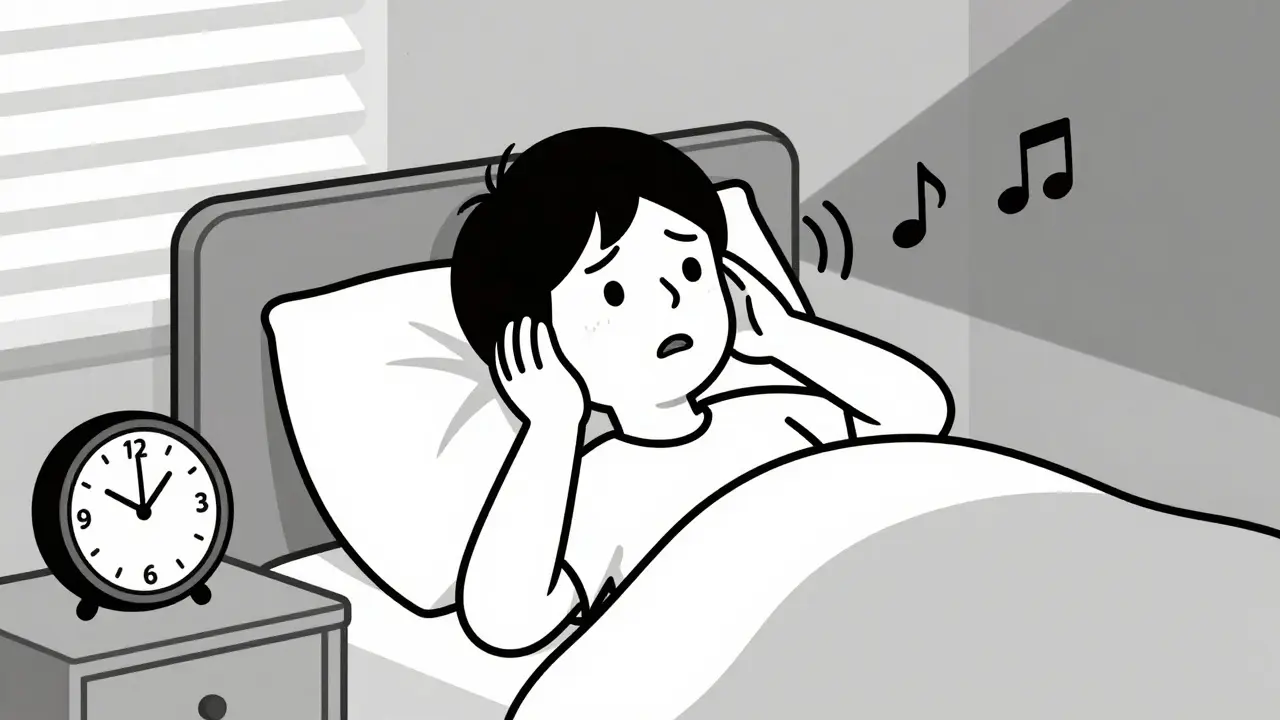
If you wake up one morning and one ear feels plugged-like you’re underwater-or music sounds muffled, distorted, or just plain gone, don’t wait. Don’t assume it’s earwax. Don’t brush it off as stress or allergies. This could be sudden sensorineural hearing loss (SSNHL), and every hour matters.
What Exactly Is Sudden Sensorineural Hearing Loss?
SSNHL isn’t just a drop in hearing. It’s a rapid, unexplained loss of at least 30 decibels across three connected frequencies, happening within 72 hours. That’s the medical definition, but what it feels like is more terrifying: your world goes quiet on one side. Voices sound distant. The TV seems fine, but you can’t hear your partner speaking from across the room. Ringing or pressure might come with it. It’s not like ear infections or wax buildup. This is nerve damage-inside the inner ear, in the cochlea-and it doesn’t fix itself reliably. About 5 to 27 people out of every 100,000 experience this each year. It hits most often between ages 50 and 60, but it can strike anyone-even someone in their 20s. And here’s the brutal truth: without treatment, only 32% to 65% of people recover hearing on their own. That means up to two-thirds could end up with permanent hearing loss if they do nothing.Why Steroids Are the Only Proven Treatment
Steroids aren’t a guess. They’re the only intervention backed by decades of research and endorsed by every major otolaryngology group, including the American Academy of Otolaryngology-Head and Neck Surgery. The goal isn’t to cure the cause-because we often don’t know what caused it. The goal is to stop the damage in its tracks. Steroids work by calming inflammation, reducing swelling around the auditory nerve, and improving blood flow to the inner ear. Think of it like putting out a fire before the whole house burns down. The most common starting treatment is oral prednisone: 1 mg per kilogram of body weight per day, capped at 60 mg daily. That’s typically 50-60 mg for most adults. You take it as a single dose in the morning, for 7 to 14 days, then taper slowly over the same period. Dexamethasone is another option. It’s stronger, lasts longer in the body, and sometimes gets used when prednisone isn’t tolerated. But studies show both work about the same. The real difference isn’t the drug-it’s the timing.Time Is the Real Enemy
The window for effective treatment is narrow. And it closes fast. If you start steroids within two weeks of hearing loss, you have a 61% chance of significant recovery. After four weeks? That drops to 19%. After six weeks? There’s almost no benefit. That’s not a suggestion. That’s a hard line drawn by clinical data. One study tracked 1,200 patients. Those treated within 72 hours recovered hearing at nearly double the rate of those who waited longer. Reddit forums are full of stories like this: “Started prednisone 48 hours after it happened-got back 90% of my hearing in my left ear.” And the flip side: “Went to the doctor after 10 days. They said it was too late. I lost it for good.” Primary care doctors aren’t always trained to spot this. A tuning fork test (Rinne and Weber) can flag it in seconds. But if they don’t think of SSNHL, they’ll send you for an ear cleaning or give you decongestants. That’s dangerous. You need an audiogram-pure tone testing-within 72 hours to confirm the diagnosis. Delay that, and you delay treatment. And delay treatment, and you risk permanent loss.What If Oral Steroids Don’t Work?
About 40% of people don’t fully recover with oral steroids alone. That’s where intratympanic (IT) steroid injections come in. This isn’t surgery. It’s a simple office procedure. A specialist injects dexamethasone (24 mg/ml) directly into the middle ear through the eardrum. The steroid diffuses into the inner ear over hours. It’s targeted. Fewer side effects. And for those who didn’t respond to pills, it works in 42% to 65% of cases. The catch? You usually need to wait 2 to 6 weeks after oral steroids to try this. It’s not a first-line option-it’s a rescue. And yes, it hurts. Some people rate the pain as 8 out of 10. But compared to living with permanent deafness in one ear? Most say it’s worth it.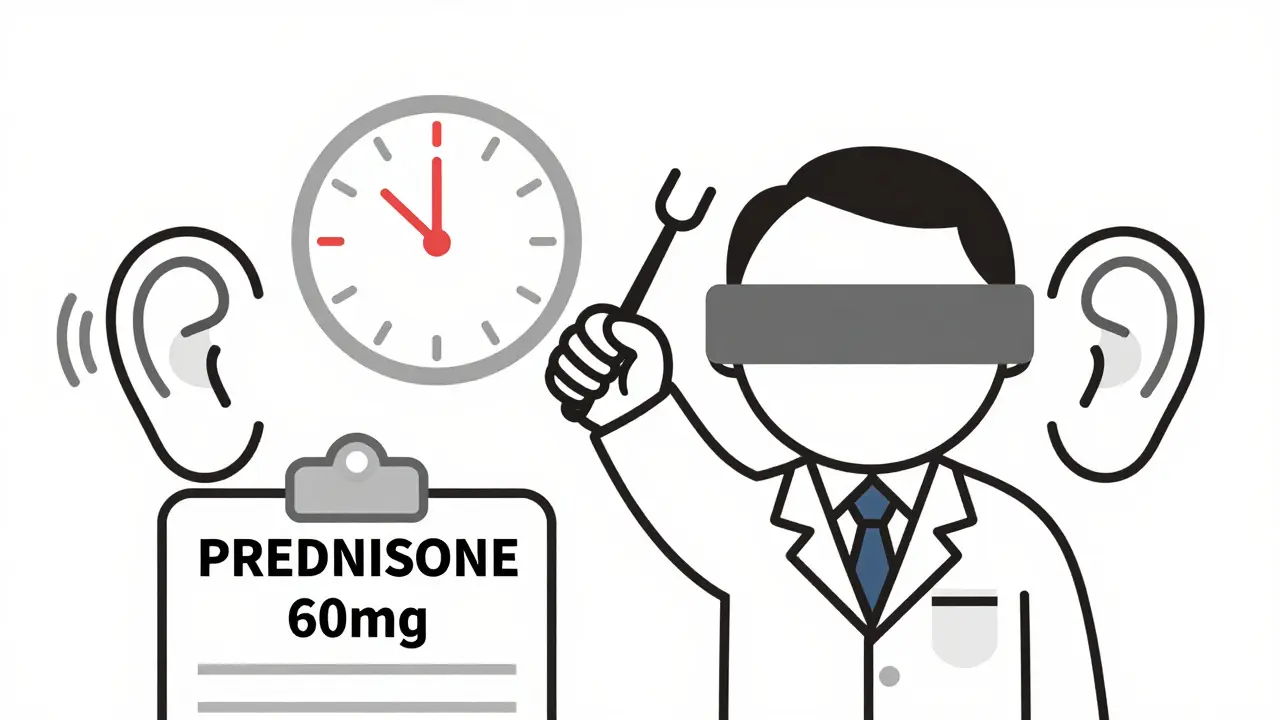
What Doesn’t Work
There’s a lot of noise out there. Online forums suggest antivirals, blood thinners, hyperbaric oxygen, even herbal supplements. Don’t waste your time-or money. Multiple meta-analyses show antivirals (like valacyclovir) and thrombolytics (like tissue plasminogen activator) have no benefit over placebo. Hyperbaric oxygen therapy (HBOT) might add a small boost-6% to 12% extra recovery-if you can get it within 28 days. But it’s expensive ($200-$1,200 per session), hard to find, and not covered by most insurance. It’s not a standard option for most people. And no, antibiotics won’t help. This isn’t an infection. And no, “natural remedies” or acupuncture have no proven role in SSNHL treatment.The Side Effects You Need to Know
Steroids aren’t harmless. Taking 60 mg of prednisone daily for two weeks can mess with your body. Common side effects include:- Severe insomnia (41% of users)
- Weight gain (average 4.7 kg over two weeks)
- Mood swings, anxiety, or irritability (22%)
- High blood sugar (28% in diabetics)
- Stomach upset, needing acid reducers
Why This Isn’t Just About Ears
Losing hearing suddenly doesn’t just change how you hear. It changes how you live. People report feeling isolated, anxious, even embarrassed. They avoid conversations. They stop going out. Studies link untreated SSNHL to higher rates of depression and faster cognitive decline. That’s why treating it fast isn’t just about hearing. It’s about protecting your mental health, your relationships, your independence.
What You Should Do Right Now
If you suspect SSNHL:- Go to your doctor or an ER today. Don’t wait until tomorrow.
- Ask for a referral to an ENT specialist immediately.
- Insist on an audiogram within 72 hours.
- If diagnosed, start steroids within 24 hours if possible.
- Keep a log of your hearing changes-what sounds are clearer, what’s still muffled.
- Follow up with an audiogram at the end of treatment and again at 6 months.
The Future of Treatment
Research is moving toward personalization. Scientists are studying blood markers to predict who will respond to steroids. Phase 2 trials are underway to see if we can test for inflammation levels before treatment. The goal? Avoid giving steroids to people who won’t benefit-and find better options for those who won’t. But for now, steroids are still the gold standard. And they work best when used fast.Final Thought
You wouldn’t ignore chest pain and wait to see if it goes away. You wouldn’t delay treatment for a stroke. Sudden hearing loss is just as urgent. It’s not a minor annoyance. It’s a neurological emergency. If you’ve lost hearing suddenly, your next move isn’t to Google it. It’s to get help. Now.Can sudden hearing loss fix itself without treatment?
Sometimes, but not reliably. Between 32% and 65% of people recover some hearing on their own, but the rest risk permanent loss. Treatment with steroids doubles or triples the chances of full recovery-especially if started within 72 hours. Waiting is risky.
Is prednisone the only steroid used for sudden hearing loss?
No. Dexamethasone is also commonly used, especially for injections into the ear. Oral prednisone is the standard first choice because it’s inexpensive, effective, and widely available. Dexamethasone is stronger and lasts longer, so it’s often preferred for intratympanic injections when oral steroids fail.
How long does steroid treatment last for sudden hearing loss?
Oral steroids like prednisone are typically taken for 7 to 14 days at full dose, then tapered over the same period. Stopping abruptly can cause adrenal fatigue. Intratympanic injections are usually done as a series-once a week for 2 to 4 weeks-after oral treatment ends.
Can I get steroid injections if I have diabetes?
Yes-in fact, intratympanic injections are often preferred for people with diabetes, high blood pressure, or mental health conditions. Oral steroids can spike blood sugar and worsen mood disorders. Injections deliver the drug directly to the ear, avoiding most systemic side effects. Your doctor will monitor you closely either way.
Do I need an audiogram to diagnose sudden hearing loss?
Absolutely. A tuning fork test can suggest SSNHL, but only an audiogram can confirm it. It measures hearing loss across different frequencies and proves it’s sensorineural (nerve-related), not conductive (ear canal or middle ear). Without this test, you can’t be sure it’s SSNHL-and you shouldn’t start steroids.
Why don’t doctors always recognize sudden hearing loss?
Many primary care providers aren’t trained to spot it. Symptoms can mimic earwax, allergies, or stress. Without a high index of suspicion, they may delay referral. That’s why patients need to advocate for themselves: if hearing drops suddenly, say, “I think this might be sudden sensorineural hearing loss. I need an audiogram within 72 hours.”
Are there any long-term side effects from steroid treatment?
For a short 2-week course, long-term side effects are rare. The main risks are short-term: weight gain, insomnia, mood changes, and blood sugar spikes. These usually resolve after stopping. Long-term steroid use (months or years) can cause osteoporosis or cataracts-but that’s not the case with SSNHL treatment.
What if I miss the 72-hour window?
It’s not hopeless. Treatment can still help up to 4 weeks after onset, especially with intratympanic injections. Recovery rates drop after that, but some patients still regain meaningful hearing even at 6 weeks. The key is to act as soon as possible-but never give up. Even late treatment is better than none.
Comments (12)
Okay but have you considered that maybe your ear just needed a good scrub? I mean, I once had a weird muffled feeling and it was just a chunk of wax shaped like a tiny seashell. Like, who even makes wax that artistic? Anyway, I popped it out with a cotton swab and boom-symphony restored. Steroids? Overkill. 🤷♀️
The neurophysiological urgency here is non-negotiable. SSNHL represents a disruption in the cochlear microcirculation, likely mediated by inflammatory cascades involving cytokines like IL-6 and TNF-alpha. The corticosteroid window isn't arbitrary-it's a kinetic threshold where vascular permeability and neural membrane integrity are still salvageable. Delay beyond 72 hours? You're essentially watching axonal degeneration progress unimpeded. This isn't medicine-it's neuroprotection in real time.
People still don’t get it. This isn’t some ‘maybe it’s just stress’ situation. You’re literally risking permanent neurological damage because you’re too lazy to call an ENT. I had a cousin who waited three weeks because she ‘didn’t want to bother anyone.’ Now she has tinnitus that sounds like a broken microwave. And she still thinks it’s ‘just part of aging.’ Sad. And selfish.
Imagine your ear’s like a vintage stereo-suddenly one speaker goes silent. You don’t just turn the volume up. You don’t slap it. You check the wires, the amp, the whole damn circuit. That’s what steroids do: they reboot the signal path before the speakers fry. And yeah, the side effects? Like your car throwing a fit after a tune-up-temporary chaos for long-term function. I took prednisone once. Slept like a zombie, ate like a bear, but could hear my dog bark again. Worth every gram.
Just to clarify-when you say 'intratympanic injection,' you mean they stick a needle through the eardrum? Like, directly into the inner ear? That sounds… terrifying. And expensive. My insurance won’t cover it unless I prove I tried 17 other things first. Which, by the way, I did. I tried ear candling. It didn’t help. But I did get a nice candle smell.
God bless this post. I had this happen in Lagos last year. Went to three clinics before someone said 'maybe it's not wax.' Got steroids after 10 days. Didn't get it all back, but enough to hear my daughter laugh again. 🙏 Don't wait. I'm still scared every time I sneeze now.
Oh, so now we’re treating hearing loss like it’s a flat tire? ‘Here, take this steroid and drive on.’ Meanwhile, the real issue is that our healthcare system is so broken, people have to Google their symptoms to even get a referral. Bravo, medicine. You’ve turned an emergency into a DIY project with side effects.
I’ve read this three times. Three. Times. And I still think: what if it’s not SSNHL? What if it’s a benign tumor? Or Lyme? Or something rarer? The data says steroids help-but what’s the false-positive rate? And how many people are getting treated unnecessarily? I’m not saying don’t act-just… maybe get a second audiogram? Please? 🙏
Let’s be real-this whole steroid thing is Big Pharma’s latest cash grab. They’ve been pushing this since the 90s. Meanwhile, the real cause? Probably EMF exposure from 5G towers. Or glyphosate. Or both. I’ve been taking turmeric, infrared sauna, and humming at 432Hz for two weeks now. My hearing’s improving. The science? Who cares. I feel better. And I didn’t need a prescription.
Typo in the post: 'taper slowely' not 'slowly'. Also, dexamethasone isn't 'stronger'-it's just longer half-life. And why no mention of antivirals in the meta-analysis? You skipped that part. Lazy.
While the clinical guidelines are broadly supported, the methodology underlying the cited meta-analyses exhibits significant heterogeneity. The 61% recovery rate is contingent upon a narrow cohort of patients with idiopathic SSNHL and no comorbidities. Generalizing this to the broader population-especially those with vascular risk factors-is statistically unsound. Furthermore, the absence of a placebo-controlled RCT with long-term audiometric follow-up renders the entire therapeutic paradigm speculative at best.
Valid concern, Ian. But the lack of RCTs isn't because we’re lazy-it’s because SSNHL is a medical emergency. Randomizing patients to placebo when we have a known neuroprotective agent? Ethically untenable. We rely on prospective cohort studies, longitudinal audiograms, and biological plausibility. The consistency across 40+ years of data across continents? That’s not coincidence. It’s convergence.