
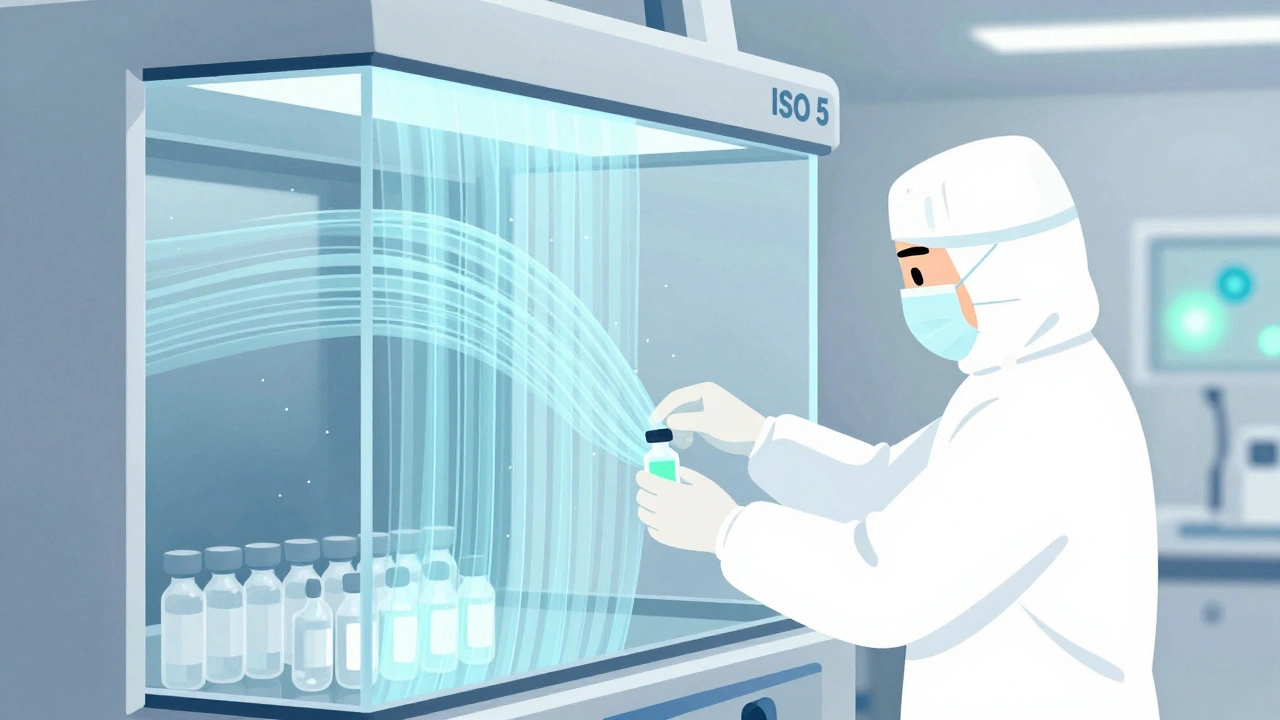
When you get a shot in the arm, you expect it to be safe. You don’t think about the air around it, the gloves the technician wore, or how many times the machine was cleaned before it filled that vial. But behind every sterile injectable - whether it’s a vaccine, insulin, or cancer drug - is a process so tightly controlled that even a single microbe can mean disaster.
Why Sterility Isn’t Optional
Injectables go straight into your bloodstream. No skin barrier. No stomach acid. No immune system waiting at the gate. That’s why a contaminated IV bag can cause sepsis, organ failure, or death. The 2012 meningitis outbreak linked to contaminated steroid injections killed 64 people and sickened over 750. It wasn’t a lab error. It was a failure of sterile manufacturing practices. The standard today is simple: the chance of a single vial being contaminated must be less than one in a million. That’s called a Sterility Assurance Level (SAL) of 10-6. It’s not a suggestion. It’s a legal requirement under FDA, EU GMP Annex 1, and WHO guidelines. And meeting it isn’t just about cleaning surfaces - it’s about controlling everything from the air you breathe to the water used to dissolve the drug.Two Paths to Sterility: Terminal vs. Aseptic
There are two main ways to make sterile injectables, and the choice changes everything. Terminal sterilization means you fill the vial, seal it, then kill everything inside with heat or radiation. Steam at 121°C for 15 minutes is the gold standard. It’s reliable, cost-effective, and gives you a SAL better than 10-12. But here’s the catch: most modern drugs can’t survive it. Biologics - like monoclonal antibodies, vaccines, and gene therapies - are made of proteins that unravel under high heat. About 70% of new injectables fall into this category. So, for these, you need aseptic processing. Aseptic fill-finish means you never sterilize the final product. Instead, you keep everything sterile from start to finish. Every step happens in a cleanroom. Workers wear full gowns, hoods, masks, and double gloves. Machines are sealed behind barriers. Air flows in one direction, like a waterfall of filtered air, sweeping particles away. This is where things get complex.What a Cleanroom Really Needs
Not all cleanrooms are the same. For aseptic filling, you need ISO 5 (Class 100) conditions. That means fewer than 3,520 particles larger than 0.5 micrometers per cubic meter of air. To put that in perspective: a typical office has over 10 million particles per cubic meter. In an ISO 5 room, you’re working in air cleaner than the outside atmosphere on Mars. The room isn’t just clean - it’s controlled. Temperature stays between 20°C and 24°C. Humidity is held at 45-55%. Air changes happen 20 to 60 times per hour. Pressure is higher inside the cleanroom than outside - 10 to 15 Pascals difference - so if a door cracks open, clean air flows out, not dirty air in. The water used? Not tap water. Not even purified water. It’s Water for Injection (WFI), with endotoxin levels below 0.25 EU/mL. Endotoxins are toxins from dead bacteria. Even if no live bugs are present, these can still cause fever, shock, or death. Every glass vial and rubber stopper is baked at 250°C for 30 minutes to destroy them.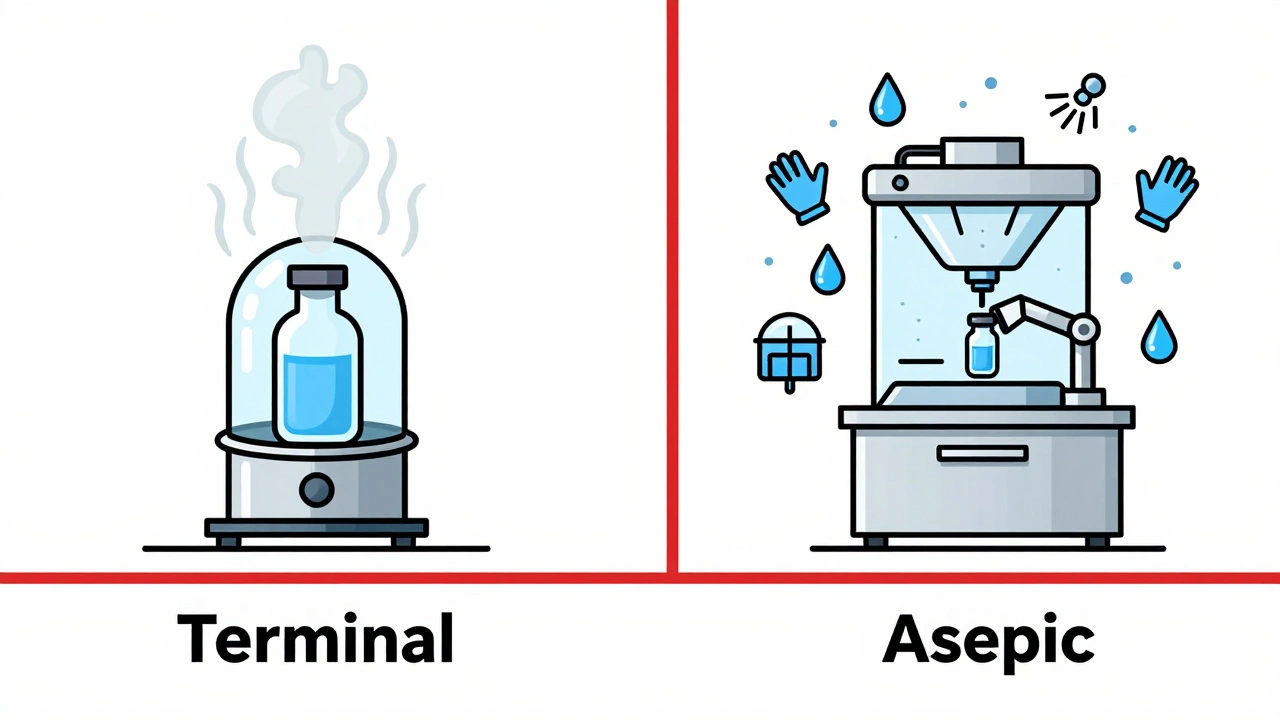
People Are the Biggest Risk
Machines don’t get tired. They don’t scratch their nose. They don’t sneeze. People do. And in sterile manufacturing, people are the #1 source of contamination. That’s why staff training isn’t a one-time seminar. It’s 40 to 80 hours of hands-on practice, repeated every six months. Every movement is scripted. Turning, reaching, bending - all done slowly, deliberately, with gloves taped to sleeves and masks checked for gaps. Even the way you walk matters. Fast steps kick up particles. Slow, smooth motion keeps the air still. Media fill tests simulate the whole process using growth media instead of medicine. If any vial grows bacteria, the whole line shuts down. The FDA says a failure rate above 0.1% means your process is broken. One company reported three media fill failures in just one quarter because of tiny holes in their gloves. Each failure cost $450,000 in lost product.Technology That Makes the Difference
Two systems dominate aseptic filling: RABS (Restricted Access Barrier Systems) and isolators. RABS are semi-enclosed workstations. Workers reach in through gloves to handle vials. They’re cheaper and easier to use. But they still rely on human dexterity. Isolators are fully sealed chambers. Everything is transferred in and out through airlocks or sterilized ports. No human contact. Studies show isolators reduce contamination risk by 100 to 1,000 times compared to RABS. But they cost 40% more to install and require specialized training. The industry is shifting. In 2023, 65% of new sterile facilities used closed processing systems - meaning fewer manual steps, fewer openings, fewer risks. Automated visual inspection replaced human eyes checking vials for particles. One facility cut its defect rate from 0.2% to 0.05% after spending $2.5 million on machines. That’s not just quality - that’s survival.The Cost of Getting It Wrong
Setting up a sterile injectable line isn’t cheap. A small facility with 5,000 to 10,000 liters of annual capacity costs $50 million to $100 million. That’s before you even start making medicine. Running it is even more expensive. Terminal sterilization runs about $50,000 per batch. Aseptic processing? $120,000 to $150,000. Why? More equipment, more testing, more validation, more training, more monitoring. And when you fail? The cost spikes. A single sterility test failure averages $1.2 million. The FDA found that 68% of sterile manufacturing violations involve aseptic technique - not equipment failure. That means most problems come from people, processes, or training gaps.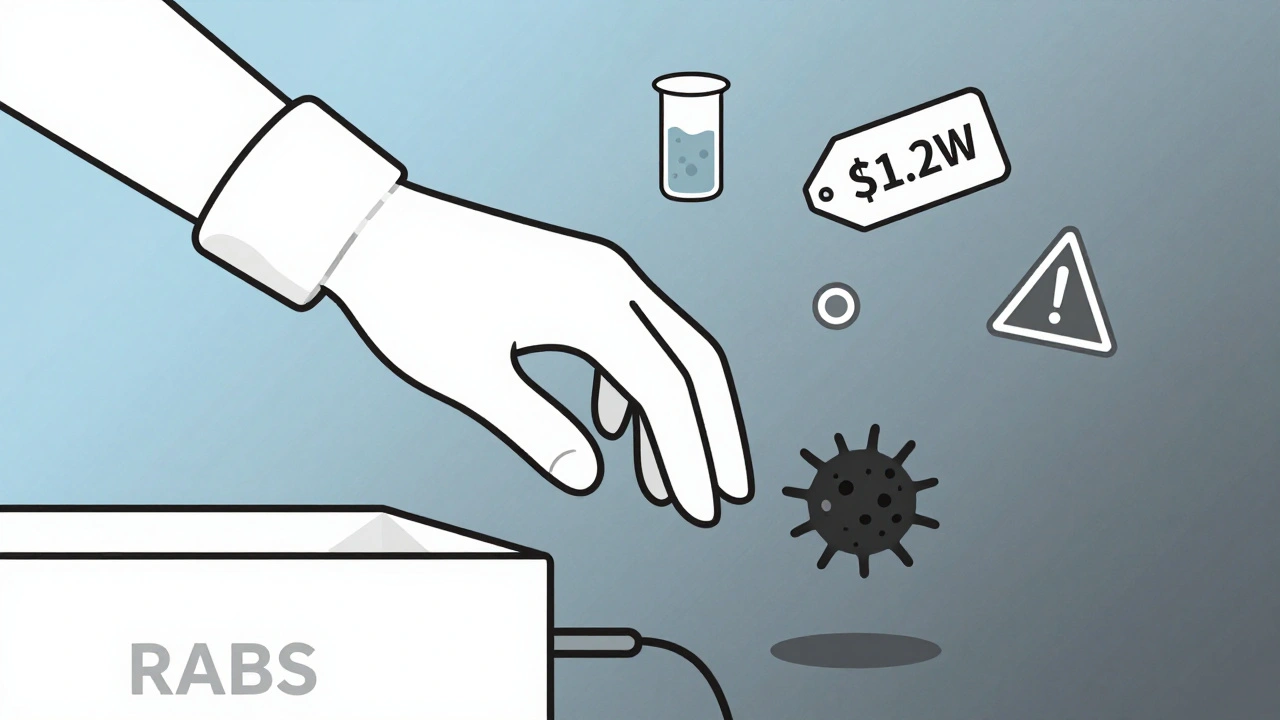
What’s Changing in 2025
Regulations are tightening. The EU’s Annex 1 update in 2022 required continuous environmental monitoring - no more spot checks. Air samplers now run 24/7. Particle counters log data every second. If a spike happens, the system alerts you before a batch is even filled. The FDA is pushing for digital twins - virtual models of your production line that simulate every possible failure before it happens. Rapid microbiological methods are replacing 14-day incubation tests. Now you can know if a vial is contaminated in 24 hours. Automation is growing fast. Robotic filling systems are expected to grow 40% by 2027. AI tools are being trained to spot anomalies in real-time - a drop in pressure, a change in airflow, a glove tear. These aren’t sci-fi ideas. They’re now standard for new facilities.What You Need to Know
If you’re a patient: trust that your injectable was made under extreme controls. The system is built to catch failures before they reach you. If you’re in pharma: sterile manufacturing isn’t just compliance - it’s your reputation. One bad batch can destroy a brand. The cost of cutting corners isn’t just financial. It’s human. If you’re investing: the sterile injectable market is growing at 8.2% per year. By 2028, it’ll be worth $350 billion. But only companies that invest in real science, real training, and real technology will survive.Final Thought
Sterile manufacturing for injectables is one of the most demanding fields in all of manufacturing. It’s not about speed. It’s not about volume. It’s about precision. About discipline. About protecting lives one vial at a time. The rules are strict. The stakes are life or death. And in this world, there’s no room for shortcuts.What is the difference between terminal sterilization and aseptic processing?
Terminal sterilization kills microbes after the product is sealed, using heat or radiation. It’s reliable and cheaper, but only works for drugs that can handle high temperatures - about 30-40% of injectables. Aseptic processing keeps everything sterile from start to finish without heat. It’s used for sensitive drugs like biologics, but requires advanced cleanrooms, strict procedures, and constant monitoring. It’s more expensive but necessary for modern medicines.
Why are cleanrooms classified by ISO levels?
ISO levels define how clean the air is by counting particles per cubic meter. ISO 8 is for gowning areas (100,000 particles per m³). ISO 5 - used for filling - allows fewer than 3,520 particles ≥0.5μm. These standards ensure that contamination risk stays below the 1-in-1-million threshold. Without these levels, you couldn’t measure or control quality consistently.
What’s Water for Injection (WFI) and why is it special?
WFI is ultra-pure water used to dissolve injectable drugs. It must have endotoxin levels below 0.25 EU/mL - far stricter than regular purified water. Endotoxins from dead bacteria can cause fever or shock even if no live germs are present. WFI is made by distillation or reverse osmosis and stored in systems that prevent microbial growth. Using anything else risks patient safety.
How often are media fill tests done?
Media fill tests simulate the entire filling process using nutrient broth instead of medicine. They’re required at least twice a year for each line, and after any major change - new equipment, new staff, new room layout. Each test must include 5,000 to 10,000 units. If even one vial grows bacteria, the process is considered invalid until the root cause is fixed.
What are the biggest causes of sterile manufacturing failures?
The top three causes are: inadequate personnel training (22% of FDA citations), media fill failures (28%), and poor environmental monitoring (37%). Glove tears, improper gowning, and failure to respond to air quality alerts are common triggers. Most failures aren’t due to broken machines - they’re due to human error or procedural gaps.
Is it possible to make sterile injectables without a cleanroom?
No. There is no regulatory-approved method to produce sterile injectables without a controlled environment. Even the most advanced closed systems still require ISO-classified cleanrooms. Some small-scale compounding pharmacies operate under looser rules, but they’re not allowed to produce commercial injectables for hospitals or pharmacies. Regulatory agencies worldwide require cleanrooms for all sterile injectables.
Comments (7)
Just read this and had to pause for a second. I had no idea how insane the controls are for something as simple as a shot. Like, I thought they just wiped down the table and went for it. 😅 The part about people being the #1 contamination source? Yeah, that makes sense. We all sneeze, scratch, and fidget. Imagine having to move like a robot every single shift. Respect to those workers.
omg i had a vaccine last week and now i’m paranoid lol. like… what if someone in the cleanroom had a cold that day?? 😳 the glove tear thing scared me. my cousin works in a lab and she says they check gloves every 20 mins but still… one tiny hole and boom. scariest thing i’ve read all week.
Let me tell you something. This entire industry is built on a foundation of fear and overkill. You think a single microbe can kill you? Sure. But let’s be real - your body has trillions of bacteria already. You’re not a sterile lab rat. The FDA and WHO are playing god with regulations that cost billions and benefit no one except consultants and equipment vendors. They’re not saving lives - they’re inflating profit margins. And don’t get me started on isolators. $40% more? For what? To make sure your insulin doesn’t have a single dead bacterium’s leftover toxin? We’re talking about a molecule that’s already being injected into your veins. Your immune system is perfectly capable of handling the rest. This isn’t medicine - it’s performance art for regulators.
Chad, your comment is the epitome of dangerous ignorance. You’re not just misinformed - you’re actively undermining public trust in life-saving medicine. The 2012 outbreak didn’t happen because someone ‘got lucky’ with a bad batch. It happened because people like you think ‘close enough’ is acceptable. The SAL of 10^-6 isn’t a suggestion. It’s the minimum threshold between life and death. If you think biologics are ‘over-engineered,’ then you’ve never had a loved one on a ventilator because a contaminated IV bag caused sepsis. This isn’t about profit. It’s about the fact that when you inject something into blood, there’s no undo button. Your ‘performance art’ comment is not just wrong - it’s morally irresponsible.
While the technical details presented are undeniably compelling, one must not overlook the profound ethical imperative that undergirds this entire paradigm. The human organism, in its exquisite biological vulnerability, is not a system amenable to probabilistic risk mitigation. To entertain the notion that ‘close enough’ is a viable operational standard is to engage in a metaphysical error - one that conflates statistical convenience with ontological safety. The vial, in its sterile perfection, becomes a sacrament: a tangible manifestation of the moral covenant between science and humanity. To compromise this covenant, even by a single particle, is to transgress against the sanctity of life itself. Thus, the rigorous protocols are not merely regulatory - they are sacred.
Just wanted to say thank you to everyone who makes this happen. I work in supply chain for a small biotech and I’ve seen the 3am calls when a cleanroom alarm goes off. No one gets credit. No one gets headlines. But those people? They’re the reason your insulin doesn’t kill you. The training, the gloves, the WFI, the media fills - it’s brutal. But it works. And if you think it’s expensive? Try explaining to a parent why their kid got sepsis from a ‘cheap’ batch. We don’t cut corners. We can’t. Period.
Okay but the part about robots replacing human eyes checking vials? YES. I used to work in a lab and we’d stare at tiny glass vials for hours trying to spot a speck. Eyes get tired. Machines don’t. And AI spotting airflow weirdness before it becomes a problem? That’s next-level magic. Also, the 40% cost jump for isolators? Worth every penny. I’d rather pay $150k per batch than risk someone’s life because someone sneezed during shift change. This isn’t just science - it’s love in action. 💪✨