
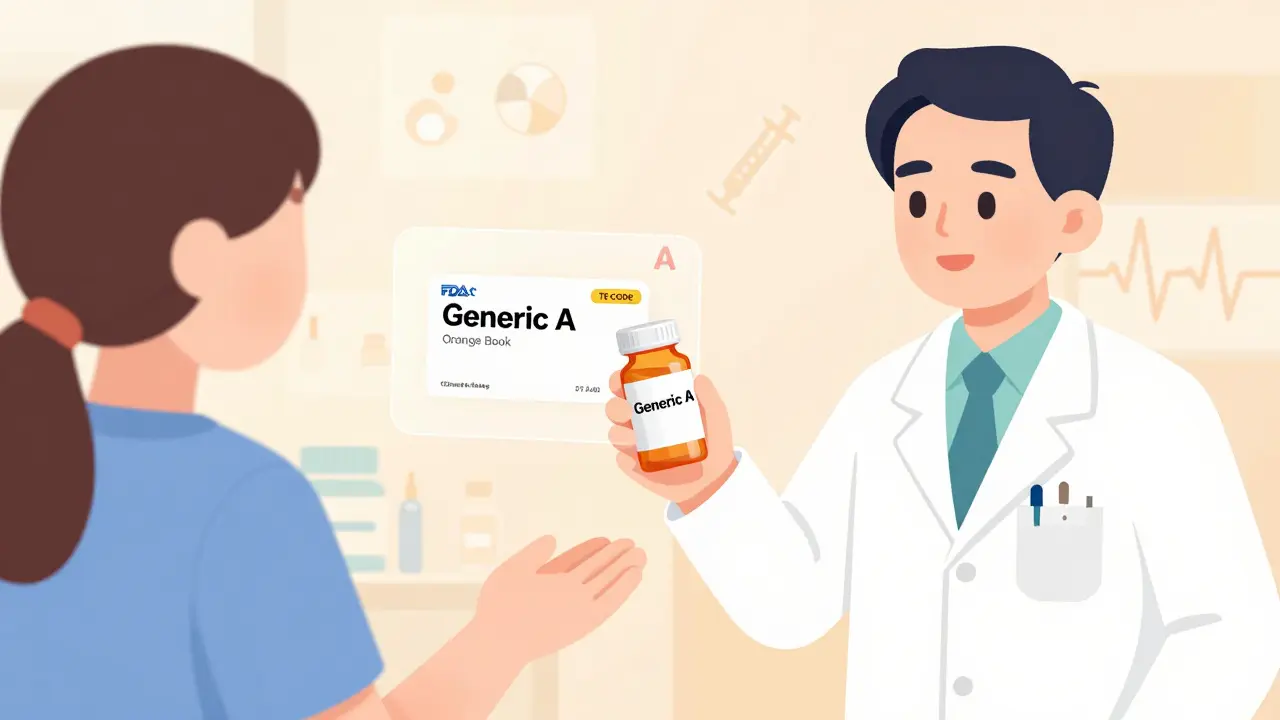
When you pick up a prescription, you might notice your pharmacist hands you a different pill than what your doctor wrote on the paper. It’s not a mistake. It’s likely a generic version-and thanks to Therapeutic Equivalence Codes (TE Codes), you can trust it works just as well. These codes are the backbone of how the U.S. healthcare system ensures that cheaper generic drugs are just as safe and effective as their expensive brand-name counterparts. If you’ve ever wondered why your insurance pushes generics, or why your pharmacist swaps your medication without asking, TE Codes are the reason.
What Are TE Codes and Why Do They Matter?
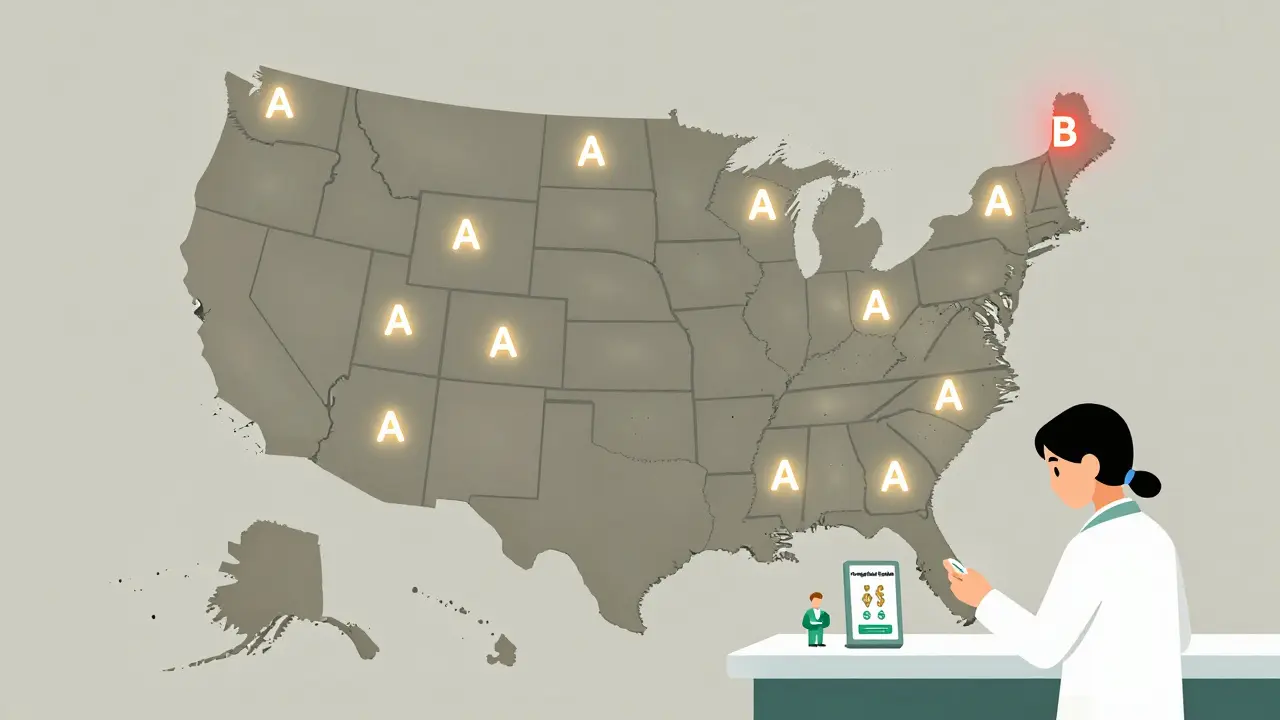
Therapeutic Equivalence Codes are a simple but powerful system created by the U.S. Food and Drug Administration (FDA) to rate whether one drug can be safely swapped for another. They appear in the FDA’s Orange Book-officially called Approved Drug Products With Therapeutic Equivalence Evaluations-which is updated every month. The system started in 1984 after Congress passed the Hatch-Waxman Act, which gave generic drug makers a clear path to prove their products were just as good as brand-name drugs. Before this, pharmacists had no reliable way to know if a generic was truly interchangeable. Now, every state in the U.S. uses TE Codes in its laws to let pharmacists automatically substitute generics unless the doctor says no.
Here’s the bottom line: TE Codes let you save money without risking your health. Generic drugs with an ‘A’ rating typically cost 80% to 85% less than brand-name versions. In 2022, Americans filled over 6 billion generic prescriptions. Most of those were TE-rated. That’s billions of dollars saved every year, mostly by patients and insurers.
The TE Code Structure: A, B, and What Comes After
Every drug with a TE Code has a two- or three-letter rating. The first letter tells you the big picture:
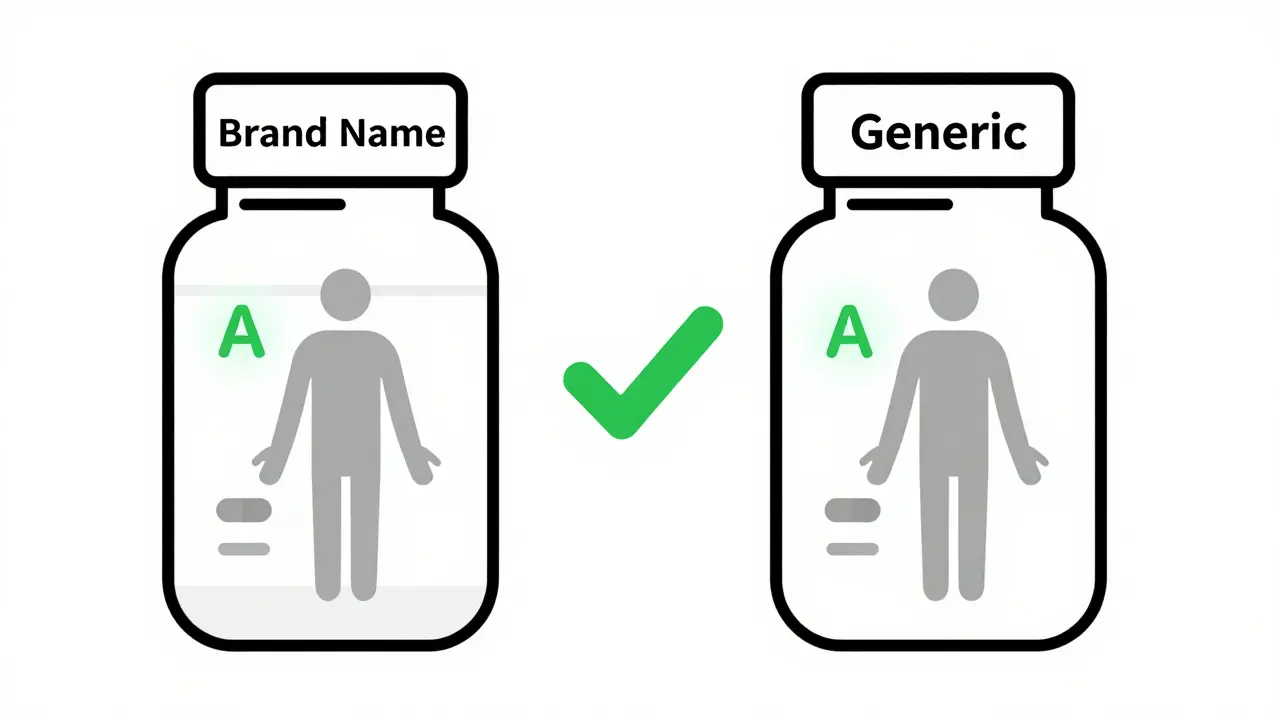
- A = Therapeutically equivalent. This means the generic can be swapped with the brand-name drug without any loss in effectiveness or safety.
- B = Not therapeutically equivalent. This is rare. It usually means the generic hasn’t passed the FDA’s tests, or there’s something about its formulation that makes substitution risky.
The second letter adds detail. It tells you the type of drug and how it was tested. For example:
- AA = Powder for oral solution (like some antibiotics)
- AN = Injectable solution
- AP = Powder for injection
- AT = Topical cream
These codes aren’t random. They’re based on three strict criteria:
- Pharmaceutical equivalence: Same active ingredient, same strength, same dosage form (pill, liquid, injection), same route of administration (oral, topical, etc.).
- Bioequivalence: The generic must absorb into your bloodstream at the same rate and to the same extent as the brand. The FDA requires bioequivalence studies to show that the amount of drug in your blood (AUC) and the peak level (Cmax) fall within 80% to 125% of the brand’s numbers. That’s a tight range.
- Clinical equivalence: The drug must work the same way in real patients. This is backed by data from studies and real-world use.
Only drugs approved under the Abbreviated New Drug Application (ANDA) pathway get evaluated. That’s the main route for generics. Brand-name drugs (NDAs) rarely get coded unless they’re the reference product.
How TE Codes Compare to Other Countries
The U.S. system is unique in how deeply it’s built into pharmacy law. In Europe, the European Medicines Agency (EMA) doesn’t use a national coding system like this. Instead, each country decides on its own whether to allow substitution. Canada has a similar concept but lacks the standardized code structure. In Germany, the doctor usually has to approve any switch from brand to generic.
That makes the U.S. system more predictable. If you move from Texas to Oregon, your generic medication will still be considered interchangeable. That consistency matters-especially for people managing chronic conditions like high blood pressure, diabetes, or thyroid disease.
Where TE Codes Work Best (and Where They Don’t)
TE Codes shine with common medications. Take atorvastatin (the generic for Lipitor). Studies, including one published in JAMA Internal Medicine in 2021, show that multiple TE-rated generics lower LDL cholesterol just as well as the brand. The same goes for metformin, lisinopril, and sertraline. Millions of people switch daily without issue.
But not all drugs are created equal. Some are trickier.
Narrow therapeutic index (NTI) drugs are a big exception. These are medications where even a tiny difference in blood levels can cause harm. Warfarin (a blood thinner), levothyroxine (for thyroid disease), and phenytoin (for seizures) fall into this category. Even though the FDA assigns them ‘A’ ratings, some patients report feeling different after switching. A 2022 study in The American Journal of Managed Care found that 12.7% of patients noticed changes-even though lab tests showed no real difference. That’s why many doctors still write “Do Not Substitute” on prescriptions for these drugs.
Another problem area is complex delivery systems. Inhalers, nasal sprays, and topical creams can behave differently even if they have the same active ingredient. In 2019, the FDA pulled TE ratings for certain generic budesonide inhalers because they didn’t deliver the drug the same way as the brand. The active ingredient was the same, but the way it was sprayed out changed how much reached the lungs.
How Pharmacists Use TE Codes Every Day
When a prescription comes in, pharmacists check the Orange Book-either online or through their pharmacy software (like Epic or Cerner). The system flags whether the generic they’re holding has an ‘A’ rating. If it does, and the state allows substitution, they can swap it without asking.
According to the National Community Pharmacists Association, 91% of pharmacists have high confidence in TE-rated substitutions. Most say it takes less than 30 seconds to verify. Pharmacy school now includes mandatory TE Code training. In 2022, 98% of new pharmacists passed the NAPLEX exam with flying colors on this topic.
There are occasional hiccups. Sometimes, a state’s formulary hasn’t caught up with the latest Orange Book update. That caused about 3.2% of substitution errors in 2022. The FDA’s Orange Book Help Desk handles 1,200 questions a month and usually replies in under two business days.
Real-World Impact: Savings, Trust, and Patient Experience
The numbers speak for themselves. The generic drug market in the U.S. was worth $130 billion in 2022. Thanks to TE Codes, 90.1% of all prescriptions filled were generics. That’s not just convenience-it’s massive cost savings. Since 1995, TE Codes have saved the U.S. healthcare system over $2.2 trillion, according to former FDA Director Janet Woodcock.
Patients notice it too. On GoodRx, TE-rated generics for chronic conditions like hypertension and diabetes average a 4.7 out of 5 rating from over 2,300 reviews. Many patients say they appreciate the lower copay and don’t notice any difference.
But some patients still worry. Reddit threads and Drugs.com forums are full of stories from people who felt “off” after switching generics-even if their lab results looked fine. These aren’t just in their heads. For NTI drugs, the body’s response can be subtle. That’s why doctors still have the final say. If you feel different after a switch, tell your provider. It’s not a sign the system failed-it’s a sign your body is unique.
The Future of TE Codes
The FDA isn’t resting. In September 2022, it finalized new guidance that standardizes how TE ratings are assigned. It’s also preparing to extend the system to biosimilars (the next generation of biologic generics) by 2024. There’s even a pilot program underway to use real-world patient data-like electronic health records-to help refine TE ratings.
By 2027, experts predict TE-rated generics will make up 93.4% of all prescriptions. That’s up from 90.1% today. The Congressional Budget Office estimates TE Codes will save another $1.2 trillion between now and 2032.
But challenges remain. How do you rate a complex inhaler? What about a patch that releases drug slowly over days? The FDA admits the system isn’t perfect. It’s evolving. And for now, it’s still the most reliable, science-backed system in the world for making sure generics are safe to swap.
What You Should Do
- If you’re on a chronic medication, ask your pharmacist: “Is this generic TE-rated?”
- If you feel different after switching-even if it’s subtle-tell your doctor. Don’t assume it’s all in your head.
- For NTI drugs (warfarin, levothyroxine, etc.), ask your doctor to write “Dispense as Written” on your prescription.
- Use the FDA’s Orange Book website or apps like the American Pharmacists Association’s TE Code tool to check your meds.
TE Codes aren’t magic. But they’re one of the most effective public health tools we have. They let us save money, expand access, and still trust that our medicine works. And that’s worth understanding.
What does an ‘A’ rating mean in TE Codes?
An ‘A’ rating means the generic drug is considered therapeutically equivalent to the brand-name drug. It has the same active ingredient, dosage form, strength, and route of administration, and has passed FDA testing to prove it works the same way in the body. Pharmacists can legally substitute it without a doctor’s permission in most states.
Can I always trust a generic labeled ‘A’?
For most common drugs-like blood pressure pills, cholesterol meds, or antidepressants-yes. But for narrow therapeutic index drugs (like warfarin or levothyroxine), some patients report feeling different after switching. The science says they’re equivalent, but individual bodies can respond differently. Always tell your doctor if you notice changes.
Why do some generics have ‘B’ ratings?
A ‘B’ rating means the FDA has found the generic is not therapeutically equivalent to the brand. This is rare. It usually happens because the generic didn’t pass bioequivalence testing, or there are formulation differences that affect how the drug is absorbed. These drugs should not be substituted for the brand.
Are TE Codes used outside the U.S.?
No, TE Codes are specific to the U.S. FDA’s Orange Book. Other countries like Canada and Germany have their own systems, but none use this exact code structure. The U.S. is unique in making TE ratings part of state pharmacy law, allowing automatic substitution nationwide.
How often is the Orange Book updated?
The FDA updates the Orange Book every month. Changes include new generic approvals, updated TE ratings, or removals due to safety issues. Pharmacists and pharmacy systems sync with these updates automatically, but occasional delays can happen-especially in state formularies.
Comments (8)
TE codes are one of those quiet heroes in healthcare that most people never think about until they save money on their prescription
My mom switched from brand-name levothyroxine to a generic years ago and never noticed a difference-until she moved states and got a different manufacturer
That’s when she started checking the Orange Book herself
Turns out, not all A-rated generics are created equal in practice
Pharmacists don’t always know the subtle differences, and patients shouldn’t have to become pharmacists to stay safe
Simple systems like this should be transparent, not buried in regulatory jargon
Maybe we need a public-facing app that shows not just the code, but which manufacturers have had issues
Just saying.
Also, if you’re on warfarin, never let a pharmacist switch without talking to your doctor first. Period.
Oh wow, another one of those ‘FDA says it’s fine’ feel-good stories
Let me guess-you also believe that the sun rises because a government pamphlet says so
Here’s the tea: bioequivalence studies are conducted on 24 healthy young men in a lab in Maryland
Not you. Not your grandma with kidney disease. Not your cousin with a CYP2D6 polymorphism
And yet we treat these A-ratings like gospel
Meanwhile, in Germany, doctors actually have to approve substitutions because they’re not idiots
Also, the ‘$2.2 trillion saved’ number? That’s just the money the pharmaceutical industry *stopped* making
Who’s really saving? Not the patient. Not the pharmacist. Definitely not the drug rep in a polo shirt at the corner office.
TE codes are a marketing tool dressed up as science. And I’m tired of it.
I’ve worked in pharmacy for 17 years. TE codes are the backbone of affordable care in this country. No debate.
Every single day, I see patients who can’t afford their meds unless we switch them to an A-rated generic.
Yes, there are edge cases-NTI drugs, inhalers, topical creams-but those are less than 3% of all prescriptions.
The system works because it’s grounded in real data, not anecdotes.
And before you say ‘but my cousin felt weird’-that’s placebo effect, confirmation bias, or a change in fillers, not the active ingredient.
Pharmacists aren’t just swapping pills. We’re checking batch numbers, manufacturer history, and state formulary rules.
We’re trained. We’re accountable. And we’re not letting you down.
Trust the process. It’s saved millions of lives.
It is absolutely imperative, and indeed, non-negotiable, that we acknowledge the profound, systemic, and often underappreciated significance of Therapeutic Equivalence Codes within the modern American pharmaceutical landscape.
Not only do these codes represent a monumental achievement in regulatory science, but they also serve as a critical bulwark against the rampant, predatory pricing strategies that have long plagued brand-name manufacturers.
Moreover, the fact that the FDA maintains monthly updates to the Orange Book-this is not a trivial administrative task, mind you-is evidence of a federal commitment to transparency, equity, and public health integrity.
Furthermore, the statistical evidence cited-over six billion generic prescriptions filled in 2022 alone-underscores not merely efficacy, but societal necessity.
And yet, despite the overwhelming empirical support, there persists, in certain corners of the internet, a troubling, almost pathological, fixation on anecdotal experiences-often rooted in fear, misinformation, or, dare I say, anti-science sentiment.
This is not to say that individual variation does not exist; indeed, pharmacogenomics reminds us that biology is complex.
But we must not allow outliers to derail a system that, on balance, has demonstrably improved health outcomes for over 90% of the population.
Let us not confuse the exception with the rule, nor permit emotional narratives to override evidence-based policy.
And finally-I must say-this entire post, this entire discussion, deserves far more than a Reddit thread. It deserves a Congressional hearing.
India has no TE codes but we still use generics every day
Most people here don’t even know what brand name means
Doctors prescribe generic by active ingredient
And yes, sometimes patients feel weird
But they don’t have insurance to fight with
So they just switch back or take extra pill
TE code system sounds fancy but real life is simpler
Just make sure the pill has same name same dose
And don’t overcomplicate it
Also why is everyone so scared of substitution
We’ve been doing this since 1990s
I’ve read through this entire piece, and I want to commend the author for the clarity and depth of the explanation
It’s rare to see a public health topic broken down with such precision and without sensationalism
As someone who works in health policy, I’ve seen too many well-intentioned systems undermined by public mistrust fueled by misinformation
One thing I’d add: the real success of TE codes isn’t just cost savings-it’s predictability
When you’re managing a chronic condition, consistency matters more than we admit
Knowing that your generic today will behave the same as your generic next month, next year, across state lines-that’s not just convenience
It’s dignity
And yes, for NTI drugs, caution is wise
But the solution isn’t to distrust the system-it’s to refine it, improve monitoring, and empower patients with data
Not fear
As a pharmacovigilance specialist, I can confirm that TE codes are a cornerstone of post-market safety surveillance in the US
But let’s not ignore the emerging data on inter-manufacturer variability-especially in complex dosage forms
Recent real-world evidence from the FDA’s Sentinel Initiative suggests that even within ‘A’-rated generics, there’s a 4–7% variance in bioavailability based on excipient profiles
And yes, this matters for patients on polypharmacy regimens
Also, emoji alert: 🚨 Not all A-rated products are created equal-manufacturer matters
Use the Orange Book app. Check the lot number. Ask your pharmacist for the manufacturer.
Knowledge is power. And power is safety.
Also-this system is *so* much better than South Africa’s ‘trust the pharmacist’ model. We’re still catching up.