

Key Takeaways for Pharmacy Owners
- Apply the 80/20 rule: 20% of your medicines usually drive 80% of your costs.
- Shift from fixed monthly budgets to dynamic min/max inventory levels.
- Use a precise Reorder Point (ROP) formula to prevent stockouts of fast-movers.
- Prioritize a 65-75% inventory value allocation toward generics for independent shops.
- Implement medication synchronization to make generic demand predictable.
The Economics of Generic Inventory
Why focus so heavily on generics? In the current market, generics make up about 90% of dispensed prescriptions but only a fraction of total drug spending. This means your pharmacy is moving a massive volume of product that doesn't cost as much to acquire as brand-name drugs, but it requires much tighter control. If you're an independent operator, your inventory likely represents 60-75% of your total assets. A few mistakes in stocking can lead to thousands of dollars in dead capital.
The real money is made by improving your inventory turnover rate. Pharmacies using data-driven generic strategies see 12-18% higher turnover than those guessing. This isn't just about bookkeeping; it's about liquidity. By reducing your average inventory holding costs by 10%, you free up cash to invest in newer clinical services or better staffing.
Dynamic Stocking vs. Fixed Budgeting
Old-school pharmacy management relied on a fixed monthly budget-you spent $X amount on generics and hoped for the best. That doesn't work in 2026. Instead, you need a dynamic inventory system. This approach adjusts your minimum and maximum stock levels based on real-time demand patterns.
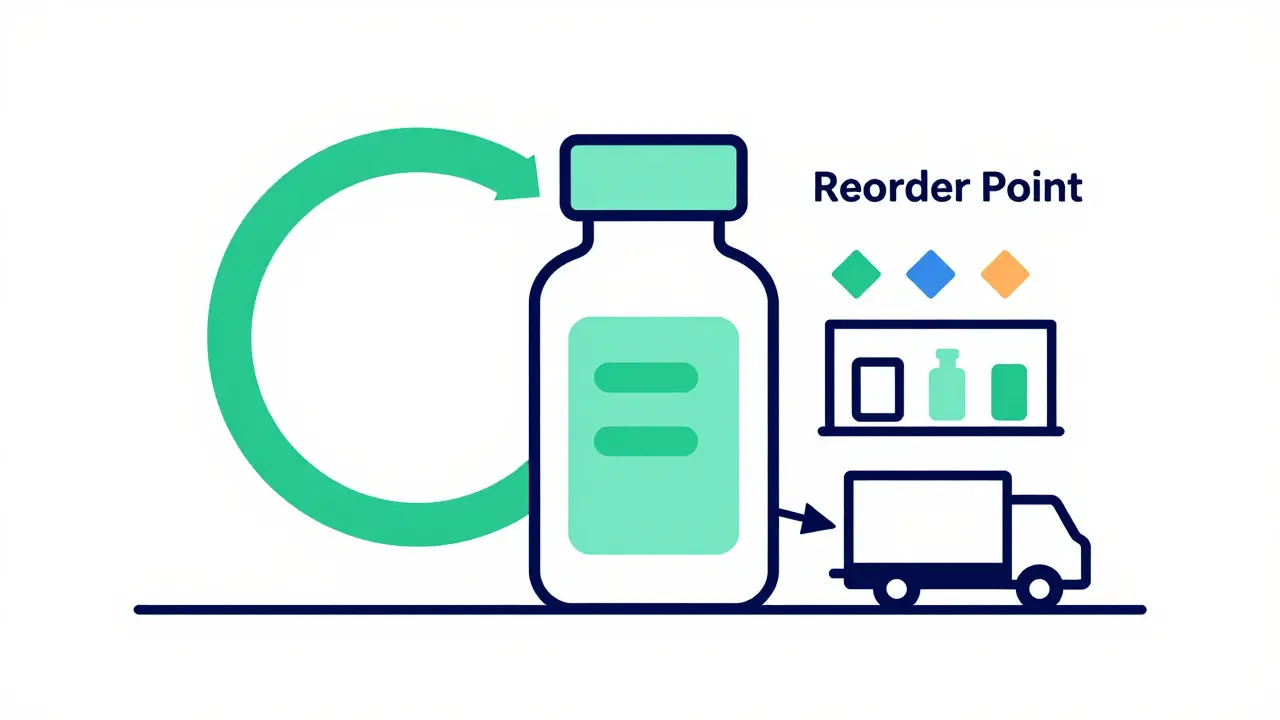
For fast-moving generics, like metformin or atorvastatin, you shouldn't be ordering a set amount every Tuesday. Instead, use a Reorder Point (ROP). The formula is simple: (Average Daily Usage × Lead Time in Days) + Safety Stock. If you use 10 bottles of a generic a day, it takes 3 days to arrive, and you want 5 bottles as a safety buffer, your ROP is 35. When your shelf hits 35, the system triggers an order. This keeps your stock lean-usually just a week's worth for high-volume items-which prevents the nightmare of finding ten expired bottles in the back of the shelf.
| Attribute | Generic Medications | Brand-Name Medications |
|---|---|---|
| Acquisition Cost | 30-50% Lower | High (Premium) |
| Inventory Volume | High (Bulk/Fast-moving) | Low (Selective/Slow) |
| Demand Stability | Volatile during transitions | Steady until generic launch |
| Risk of Expiration | Higher due to volume/pricing | Lower due to high value/low stock |
Managing the Brand-to-Generic Transition
The most dangerous time for your inventory is when a patent expires and a new generic hits the market. If you don't pivot fast, you'll be left holding thousands of dollars in obsolete brand-name stock. I've seen managers lose over $3,000 in a single transition period because they didn't scale down their brand orders quickly enough.
When a generic is announced, you need to immediately adjust your perpetual inventory system. Use the "open-to-buy" formula weekly during these shifts: Planned Sales + Planned Markdowns + Planned End of Month Inventory - Planned Beginning of Month Inventory. This allows you to ramp up the generic orders while aggressively cutting the brand-name volume.
Don't just rely on the computer, though. Keep a close eye on formulary changes. If a major insurance provider switches their preferred generic, your demand could spike overnight. If you're too lean, you'll face stockouts; if you're too aggressive, you're overstocked. The trick is to start with a lean inventory for new generics and let the actual volume build up over the first few weeks.
Operational Tactics to Reduce Waste
Software is great, but your staff's habits determine your actual waste. One of the most effective ways to keep your generic counts accurate is a strict 24-hour rule: any unclaimed prescription must be returned to stock within one day. This simple SOP can reduce inventory discrepancies by over 20%.
Another game-changer is medication synchronization (MedSync). By aligning a patient's generic maintenance refills to a single date per month, you turn unpredictable demand into a scheduled event. This makes your generic forecasting incredibly accurate and reduces the need for massive safety stocks.
Also, consider your physical layout. For high-turnover items like analgesics or antacids, maintain three or four units on the shelf. Patients are subconsciously hesitant to buy the very last bottle of a product-it looks like the "leftover" or "damaged" one. Keeping a small buffer of visible stock prevents lost sales.
The Role of AI and Predictive Analytics
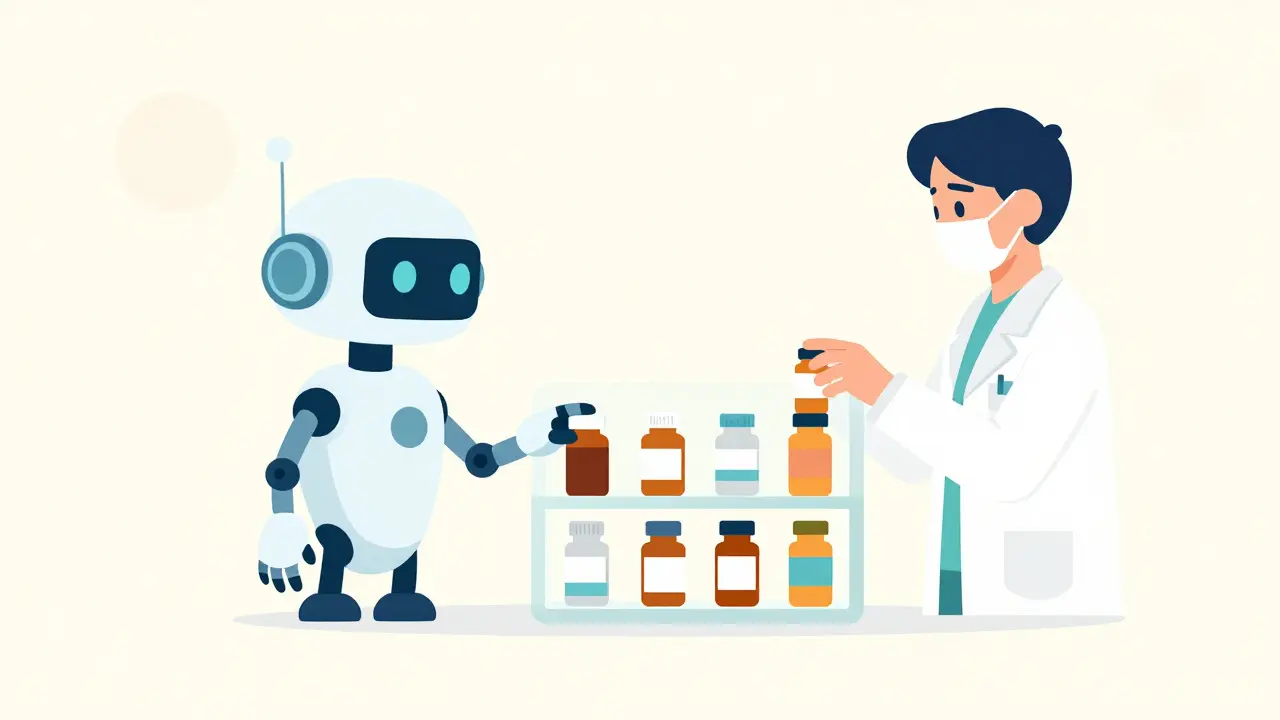
We're seeing a huge shift toward AI-powered systems that do the heavy lifting. Modern tools now offer predictive analytics for transition periods, which can cut inventory imbalances by nearly 30%. Some high-end systems can automatically add a generic to your permanent assortment after just four requests, ensuring you don't miss a trend.
However, a word of caution: don't let the algorithm make 100% of the decisions. Blindly following an AI can lead to "therapeutic abandonment." For example, if a system stocks a generic based on cost but ignores the patient's specific preference or a clinician's nuanced requirement, the patient might leave for another pharmacy. Use the data as a guide, but keep the clinical context in mind.
How much of my inventory should be generics?
For most independent pharmacies, the optimal generic inventory value is between 65% and 75% of the total inventory. Because generics move faster and cost less, this allows you to maintain high volume without over-extending your capital.
What is the best way to handle generics with short shelf lives?
Implement a proactive expiry tracking system. Because generics are often priced competitively, they can move in bulk but may have shorter dates. Use a "First-In, First-Out" (FIFO) system and set alerts for products 90 days from expiration to prioritize their dispensing or arrange for supplier returns.
How do I stop stockouts on fast-moving generics?
Stop using fixed order quantities. Instead, use the Reorder Point (ROP) formula: (Average Daily Usage × Lead Time) + Safety Stock. This ensures that as your volume grows, your order triggers happen earlier, preventing the shelf from going empty.
Should I trust AI for my inventory ordering?
AI is excellent for spotting trends and managing transitions, but it lacks clinical judgment. Use AI for the baseline calculations and replenishment, but manually review orders during therapeutic class transitions or when switching preferred suppliers.
How does medication synchronization help inventory?
MedSync makes demand predictable. Instead of random spikes in generic refills throughout the month, you know exactly how many bottles of a specific generic you need for the first week of the month, allowing you to lower your safety stock and reduce carrying costs.
Next Steps for Implementation
If you're currently using a basic manual system, don't try to automate everything overnight. Start by identifying your top 20 fast-moving generics-the ones that fit the 80/20 rule. Apply the ROP formula to these first and monitor your stockout rate over 30 days.
Once you're comfortable, move toward a full dynamic min/max system. Train your staff on the 24-hour return-to-stock rule and start a pilot for medication synchronization with a small group of chronic-care patients. These incremental steps will protect your margins and ensure your patients always get their medication on time.