
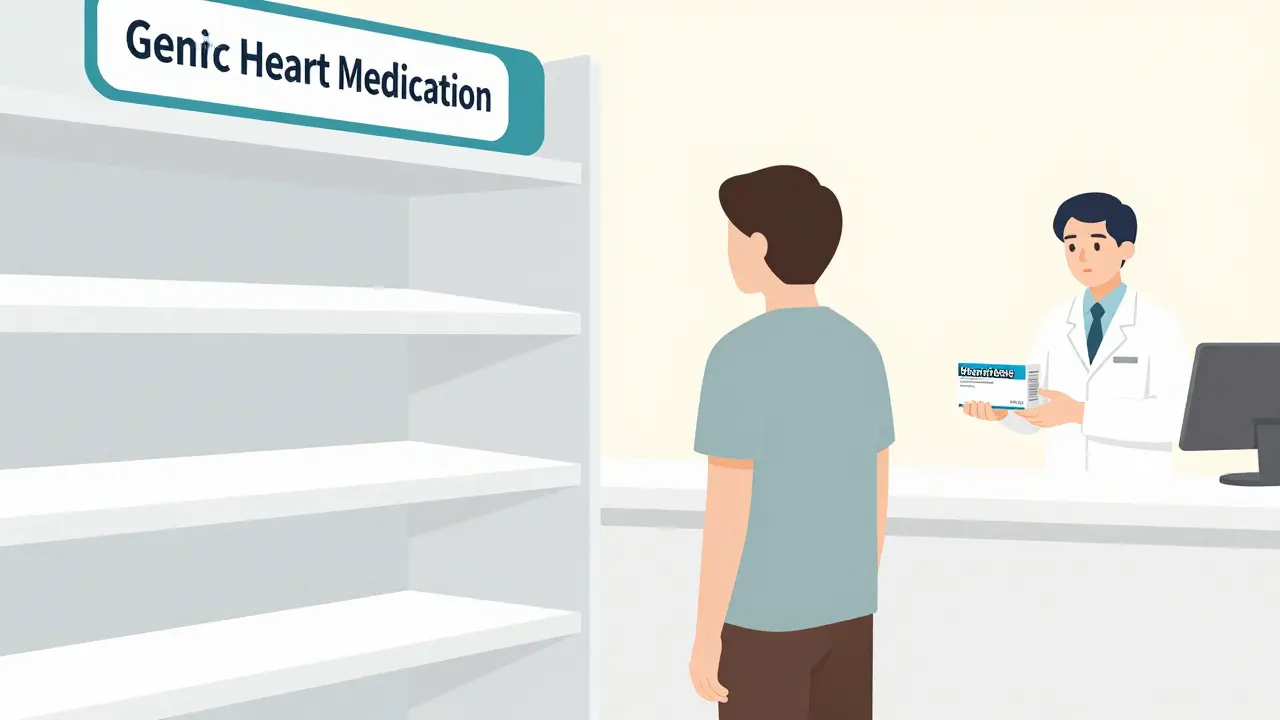
It’s 2026, and your doctor prescribes a generic version of a heart medication you’ve taken for years. You walk into the pharmacy, only to be told it’s out of stock. Again. The pharmacist says they’re waiting on a shipment from India. No one knows when it’ll arrive. You’re handed a brand-name version - three times the price. This isn’t rare. It’s becoming the norm.
Here’s the paradox: we have more generic drugs than ever, and they’re cheaper than ever. But we’re running out of them. Why? The answer isn’t simple. It’s not that there are too few makers. It’s that there are too many - but only for the easy stuff. For the critical, low-margin drugs? There are barely any left.
The Promise of Generic Drugs
Generic drugs were supposed to fix the cost crisis in medicine. After a brand-name drug’s patent expires, any company can copy it. The FDA doesn’t require new clinical trials - just proof that the generic works the same way. That cuts costs by 80-90%. In the U.S., nine out of every ten prescriptions are filled with generics. That’s not just convenient - it’s life-saving for millions.
These drugs save the U.S. healthcare system over $300 billion a year. UnitedHealthcare reported $313 billion in savings from generics in 2023 alone. Without them, Medicare and Medicaid would collapse under the weight of branded drug prices. Patients who can’t afford insulin, antibiotics, or blood pressure meds rely on generics to stay alive.
The Race to the Bottom
But here’s what happens after a generic enters the market: the price drops fast. The first company to launch might charge 30% less than the brand. The second drops to 50%. By the third or fourth, it’s 70-80% cheaper. Within three years, prices often fall to 20% of the original brand price. That’s great for insurers. Not so great for manufacturers.
For simple pills - like metformin or lisinopril - dozens of companies compete. You can buy a 30-day supply of generic metformin for under $4 at Walmart. That’s a win. But when prices drop that low, profit margins vanish. And when margins vanish, manufacturers leave.
Centers for Medicare & Medicaid Services found that prices for 50 common generics have risen 15.7% annually since 2018 - not because of inflation, but because manufacturers quit. When a company stops making a drug, no one else steps in. Why? The profit isn’t worth the risk.
The Hidden Barriers to Entry
Not all generics are created equal. Some are easy to make. Others? Not even close.
Producing a simple tablet? You need a clean room, a tablet press, and a few quality checks. Easy. But sterile injectables? That’s a different world. You need a $200-500 million facility with ISO Class 5 cleanrooms, real-time air monitoring, and 18-24 months of regulatory validation. Only a handful of companies in the world can do it.
That’s why five manufacturers control 46% of the sterile injectable market. When one of them shuts down - like what happened with a major epinephrine auto-injector plant in 2023 - the entire system cracks. No one else can ramp up fast enough. The FDA issued 147 warning letters for data integrity violations in 2023 - up 23% from 2022. Many of these came from plants in India and China, where cost-cutting often means cutting corners on quality control.
Even when companies want to enter the market, they’re blocked. Regulatory delays, complex supply chains for raw materials, and the risk of FDA shutdowns make it too risky. So they stick to the safe stuff: high-volume, low-risk pills. The dangerous stuff? Left to the few who can still afford it.

Who’s Left Standing?
The generic market isn’t crowded - it’s concentrated. IQVIA found that 35% of generic drug markets have fewer than three active manufacturers. For 12% of them? There’s only one.
That’s not competition. That’s a monopoly by default.
Companies like Teva, Sandoz, Mylan (now Viatris), Aurobindo, and Lupin dominate. They have the scale, the regulatory experience, and the global supply chains. Smaller players can’t compete. And the big ones? They’re not investing in low-margin drugs. They’re chasing biosimilars - complex, high-priced copies of biologic drugs like Humira or Enbrel. Those bring $100 million in annual revenue per product. A generic version of a 50-year-old antibiotic? Maybe $2 million.
So the market splits: one side is hyper-competitive and cheap. The other side is a ghost town. And the drugs in between - the ones hospitals rely on every day - are the ones that vanish first.
Why Shortages Hit Where It Hurts Most
It’s not random. The drugs that disappear are the ones that are essential, cheap, and hard to make.
Cardiovascular meds. Antibiotics. Chemotherapy agents. Anesthetics. Epinephrine. These aren’t luxury drugs. They’re the backbone of emergency care, cancer treatment, and infection control. And according to the American Medical Association, 78% of physicians saw at least one generic shortage in 2023. Over 40% said these shortages frequently impacted patient care.
One hospital pharmacist in Ohio told me: “We had to use a different antibiotic for a septic patient because the generic ran out. It worked - but it cost $1,200 per dose instead of $12. The insurance denied it. The patient paid out of pocket. That’s not healthcare. That’s gambling.”
When a shortage hits, patients don’t just pay more. They get worse care. Delays in chemotherapy. Delayed surgeries. Infections that don’t clear. All because the cheapest version of a drug vanished - and no one made a backup.

What’s Changing in 2026?
The Inflation Reduction Act’s drug price negotiation rules start rolling out in 2026. For the first time, Medicare will directly negotiate prices for 10 high-cost drugs - including some generics. That’s good for patients. But for manufacturers? It’s a threat.
Mordor Intelligence estimates these negotiations could squeeze generic margins by 15-25%. That means even more companies will exit low-margin markets. The FDA’s Drug Competition Action Plan has approved more first generics than ever - 40% more since 2017. But compliance enforcement has also jumped 32%. More approvals. More shutdowns. More instability.
The European Medicines Agency says the sweet spot for supply security is 4-6 manufacturers per essential drug. Right now, only 65% of essential generics meet that standard globally. The rest? One or two suppliers. One factory fire. One regulatory notice. And the drug disappears.
The Real Problem Isn’t Too Few Makers - It’s Too Few Willing to Stay
We don’t need more manufacturers. We need better incentives.
Right now, the market punishes reliability. The company that makes a drug consistently, maintains quality, and doesn’t chase the highest bid? They get priced out. The company that underbids, cuts corners, and then disappears? They win - until the next shortage.
What if the government guaranteed a minimum price for essential generics? What if manufacturers got a 3-5 year exclusivity window for drugs with fewer than three suppliers? What if the FDA prioritized inspections for drugs with only one source?
These aren’t radical ideas. They’re basic supply chain logic. You don’t let a city run on one power plant. You don’t let a hospital rely on one supplier for antibiotics. Yet that’s exactly what we’re doing.
Generic drugs saved us from unaffordable medicine. But now, the system that made them cheap is breaking them. We can’t fix this by making prices lower. We have to make them sustainable.
Comments (9)
It’s not about competition. It’s about incentive design. We reward speed and price, not stability or reliability. The market punishes the good actors and rewards the ones who vanish after a quarter’s profit.
That’s not capitalism. That’s a broken feedback loop.
Every time I hear someone say ‘just make more generics,’ I think of the hospital in Nebraska that had to cancel 14 chemo sessions last year because the generic doxorubicin ran out.
It’s not a supply issue. It’s a moral one.
Who really benefits from this? The CEOs of the big pharma conglomerates who bought up the small generics makers and then gutted them for margins.
It’s not a market failure-it’s a corporate strategy executed perfectly.
From a public health systems engineering perspective, the current market architecture exhibits severe path dependency and lack of redundancy in critical pharmaceutical supply chains.
Minimum viable manufacturer thresholds, coupled with strategic stockpiling and tiered pricing guarantees, are non-negotiable components of resilience.
Without these, we are not managing a drug supply-we are gambling with patient mortality rates.
Further, the absence of longitudinal manufacturer performance metrics prevents adaptive policy intervention.
We must decouple volume-based reimbursement from essential drug production.
Otherwise, the system remains inherently unstable.
Stop pretending this is about ‘competition.’ This is corporate sabotage disguised as free market.
Big Pharma let generics thrive just long enough to kill the competition-then bought up the few remaining manufacturers and let them rot.
And now they’re crying about ‘shortages’ so they can jack up prices again.
It’s a scam. And the FDA is complicit.
Bro, I get it. But let’s not forget-India makes 60% of the world’s generics. We’re not just talking about profits here. We’re talking about global health infrastructure.
When a factory in Telangana gets shut down for a paperwork error, the whole world feels it.
Maybe we need to stop treating drug manufacturing like a Silicon Valley startup and more like a public utility.
And yeah, maybe pay the workers better too-these aren’t just pills, they’re lifelines.
They’re hiding the truth: the whole system is rigged by the WHO and the FDA to push people toward vaccines and biologics.
Why? Because they get kickbacks from the big pharma lobbyists.
Generic drugs are cheaper, yes-but they’re also easier to track. And if you can’t track them, you can’t control the population.
Don’t fall for the ‘affordability’ lie. This is control.
It’s fascinating how people romanticize ‘competition’ while ignoring that true competition requires sustainable margins.
What we have is not competition-it’s predatory underbidding followed by market abandonment.
And now we’re surprised when the system collapses?
Of course it does. You don’t build a bridge out of toothpicks and expect it to hold weight.
And yet, we call this ‘innovation.’