
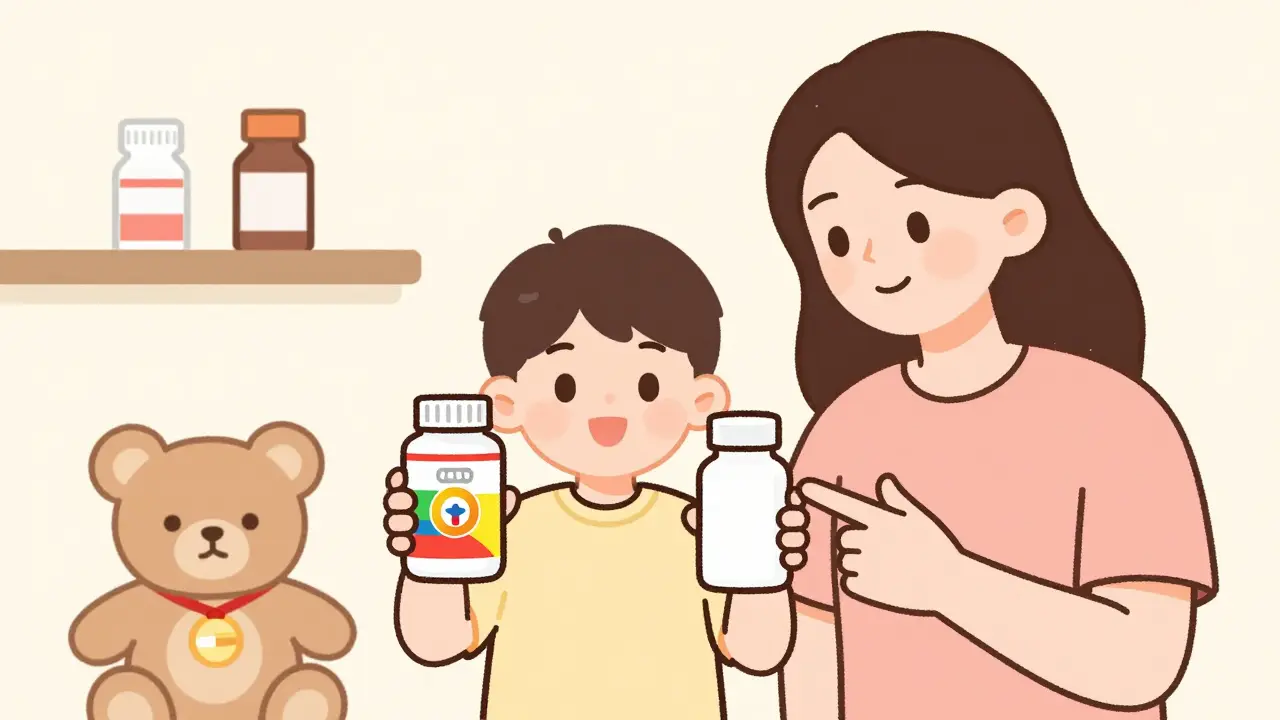
Most parents assume kids don’t need to know the difference between a brand-name pill and a generic one. But here’s the truth: children see medicines everywhere - on kitchen counters, in school nurse’s offices, in TV ads. And if they don’t understand what those pills are, they might grab the wrong one, share them with friends, or think all medicines are the same. Teaching kids about generic drugs isn’t about pharmacy jargon. It’s about safety, clarity, and building smart habits early.
Why Kids Need to Know About Generic Drugs
Generic drugs are just as safe and effective as brand-name ones. They have the same active ingredients, work the same way, and are held to the same FDA standards. But most kids don’t know that. They see the colorful packaging of a brand-name medicine like “Tylenol” and think that’s the only kind that works. Meanwhile, their doctor prescribed a generic version - maybe even the same pill, just in a plain bottle.
When kids don’t understand this, they can get confused. They might refuse to take their medicine because it looks different. Or worse - they might think a generic version is “weaker” and ask for the expensive one. Or they might mistake a sibling’s generic cough syrup for candy because it doesn’t have a familiar logo.
Real-world example: A 7-year-old in Ohio accidentally swallowed a generic version of his brother’s ADHD medication because it looked like a gummy bear. The pill was plain white, with no branding. The boy didn’t know it wasn’t candy. He ended up in the ER. This isn’t rare. According to the American Academy of Pediatrics, accidental ingestion of medications by children under 10 is one of the top causes of pediatric poisonings - and confusion over packaging plays a role in nearly 1 in 5 cases.
How to Explain Generic Drugs to Young Kids (Ages 3-8)
For little ones, forget the word “generic.” Use simple comparisons they already understand.
- “Same medicine, different wrapper.” Show them two bottles - one with the brand name, one plain. Say, “This one says ‘Tylenol,’ and this one says ‘acetaminophen.’ But they both fix headaches the same way. Just like your red shirt and blue shirt both keep you warm.”
- Use toys or stuffed animals. Pretend a teddy bear is sick. Give it a “brand-name” pill and then a “generic” pill. Watch it get better both times. Kids remember stories better than lectures.
- Make a “medicine detective” game. Teach them to always ask: “Is this for me?” and “Who gave it to me?” Never let them take anything without checking. This builds safety habits that last a lifetime.
Programs like Generation Rx have free printable kits for this age group. One activity uses matching cards: one side shows a brand name, the other shows the generic name. Kids pair them up. It’s fun, visual, and sticks.
Teaching Kids 9-12: The Science Behind It
Older kids can handle a little more detail. They’re curious. They ask why things cost different prices. Use that.
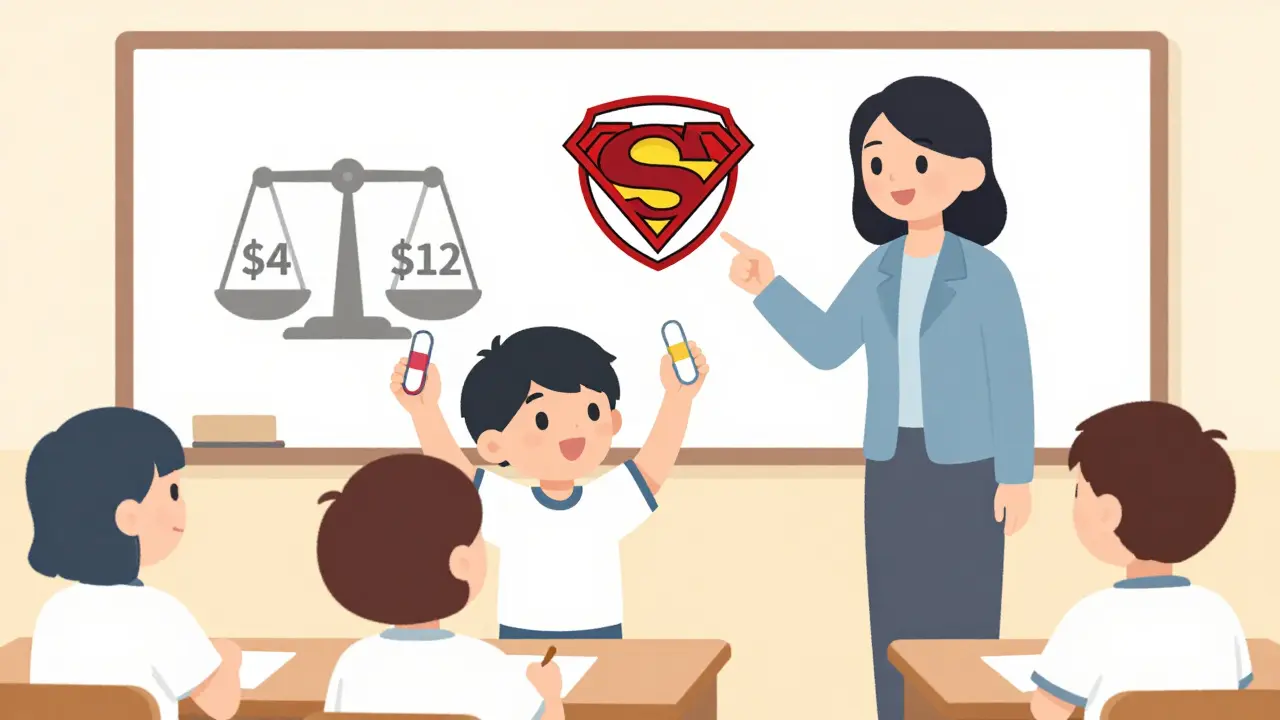
- “The brand paid for the logo. The generic didn’t.” Explain that companies spend millions on ads, fancy packaging, and TV commercials. Generic makers don’t. So the medicine costs less - but it still works.
- “The FDA checks both.” Tell them the FDA is like a superhero inspector. It makes sure every pill - brand or generic - is safe and does what it says. No shortcuts.
- Compare prices. Show them a real receipt. “This bottle of ibuprofen costs $4. This one costs $12. Same pills. Same strength. Why pay more?”
One 5th-grade teacher in Texas used a classroom experiment: she gave students two identical-looking pain relievers - one brand, one generic. Then she had them rate how much their headache hurt before and after. Every single kid said both worked the same. The lesson? Kids believe what they see. Not what they’re told.
What Not to Do
Don’t scare them. Don’t say, “Generic drugs are dangerous.” That’s false - and it makes kids distrust all medicine.
Don’t say, “Brand-name is better.” That’s misleading. It teaches them to value labels over facts.
Don’t skip the “why.” If you just say, “This is cheaper,” they’ll think it’s low quality. But if you say, “It’s the same medicine, just without the fancy ad,” they get it.
And never use scare tactics. A 2023 study from the Journal of School Health found that programs using fear-based messages (“If you take the wrong pill, you’ll die!”) made kids more curious - not less. Honest, calm facts work better.
How Schools Are Helping
More schools are adding medication safety into health class - not just drugs like alcohol or vaping, but everyday medicines too.
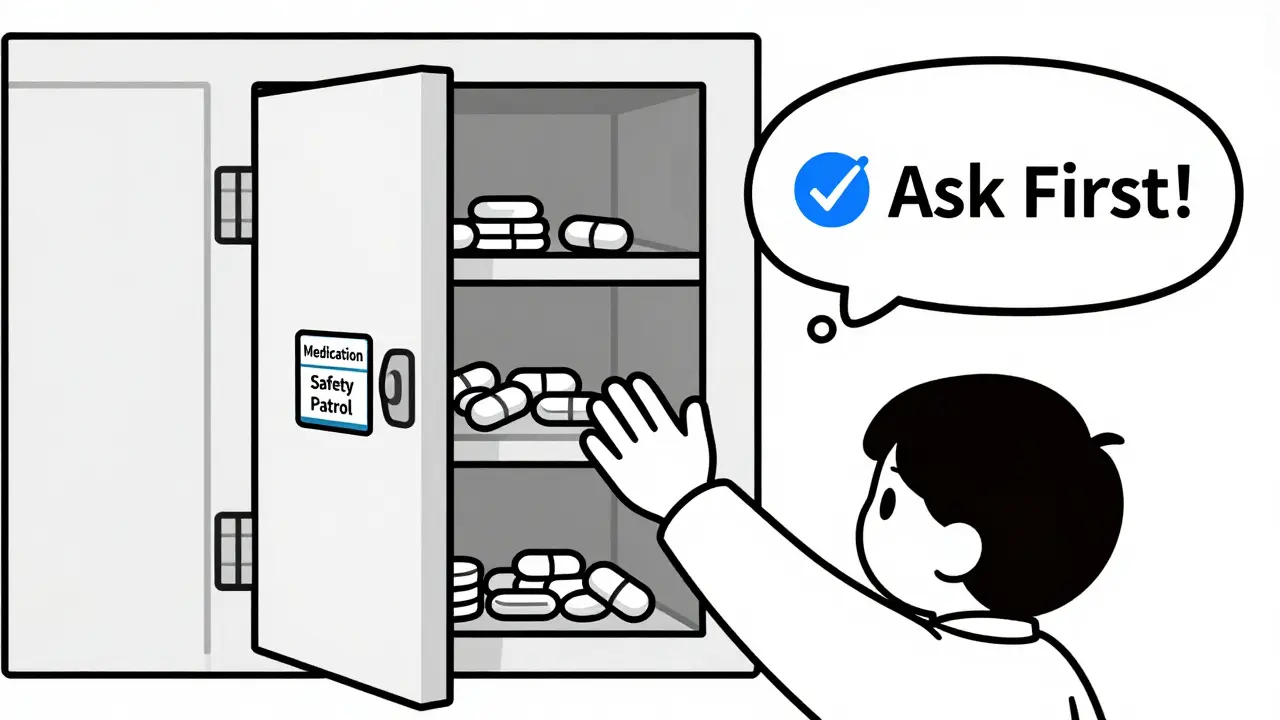
Programs like Generation Rx are free and used in over 15,000 U.S. schools. They give teachers lesson plans, posters, and even videos. One popular module is called “Medication Safety Patrol.” Kids get a badge (literally) and learn to spot unsafe medicine habits: leaving pills on the counter, sharing meds with friends, not reading labels.
Teachers say the biggest change? Kids now tell their parents, “We don’t need the brand-name one. The other one is just as good.” And parents? They’re shocked - and grateful.
What Parents Can Do at Home
- Keep medicines out of sight. Store them in a locked cabinet, not on the counter. Even if you think your kid is “too young” to reach them.
- Use the same bottle every time. If you switch from brand to generic, keep the same container. Don’t let the pill change shape or color without explaining why.
- Let them help. Let your 8-year-old pick out the pill from the bottle (with supervision). Say, “Can you find the one for your earache?” This builds ownership and awareness.
- Ask your pharmacist. When you pick up a prescription, ask: “Can you explain this to my child?” Many pharmacists have kid-friendly handouts.
What Happens When Kids Understand
When children learn that generic drugs are safe and equal, three big things happen:
- They take their medicine. No more refusing because it “looks different.”
- They stop sharing pills. They know medicine isn’t candy - even if it looks like it.
- They save money. Families can choose the cheaper option without guilt or fear.
A 2022 study from the CDC found that kids who received even one clear lesson about generic drugs were 60% less likely to accidentally take the wrong medicine. That’s not just smart - it’s life-saving.
Final Thought: It’s Not About Drugs - It’s About Trust
Teaching kids about generic drugs isn’t about pharmacy labels. It’s about teaching them to question, to compare, to trust facts over marketing. It’s about giving them tools to make smart choices - not just with pills, but with everything they’ll face as they grow up.
Start small. Keep it simple. Be honest. And remember: a child who understands medicine today is less likely to be confused - or hurt - tomorrow.
Are generic drugs really as good as brand-name ones?
Yes. Generic drugs must meet the same strict standards as brand-name drugs set by the FDA. They contain the same active ingredients, work the same way, and are tested to be just as safe and effective. The only differences are in the color, shape, or packaging - not the medicine inside.
Why do generic drugs cost less?
Brand-name companies spend millions on advertising, fancy packaging, and marketing. Generic makers don’t. They only pay to make the medicine. Once a brand-name drug’s patent expires, other companies can make the same pill without paying for research and development - so the price drops.
Can I let my child take a generic version of my medicine?
No. Never let a child take medicine meant for someone else - even if it’s generic. Every prescription is made for a specific person, weight, and condition. What works for you could be dangerous for them. Always check with a doctor or pharmacist before giving any medicine to a child.
How do I explain this to my toddler?
Use simple comparisons: “This medicine is like your blue shirt and your red shirt - different colors, but both keep you warm.” Show them two bottles side by side. Say, “They both fix your tummy ache. One just costs less.” Keep it visual, not technical.
What if my child refuses to take the generic pill because it looks different?
Don’t force it. Instead, explain why it looks different. Let them help pick the pill from the bottle. Ask, “Which one do you want to take?” Give them control. Many kids will take it once they understand it’s the same medicine. If they still refuse, ask your pharmacist if they can offer the same medicine in a different form - like liquid or chewable - to make it easier.
Comments (14)
My 6-year-old asked why her medicine looked different this time. I showed her the two bottles side by side and said, "Same medicine, different shirt." She nodded like it was the most obvious thing in the world. Kids get it when you make it real.
Also, we keep all meds in a locked cabinet now. No more "accidental gummy bear" moments.
Respectfully, the approach outlined here is commendable and aligns with global best practices in pediatric health education. In India, where polypharmacy is common and access to branded medications is limited, such foundational knowledge is not merely beneficial-it is essential.
However, cultural context matters. In many households, medicine is not discussed openly with children. Introducing these concepts requires sensitivity, especially when elders hold strong beliefs about brand superiority.
Perhaps integrating these lessons through community health workers or school nurses would yield greater sustainability than relying solely on parental initiative.
There’s something deeply beautiful about teaching kids that value isn’t tied to packaging. We live in a world that tells them expensive = better, flashy = trustworthy, branded = superior. But here, we’re giving them a quiet rebellion: the truth that the most important thing inside isn’t the logo, it’s the science.
When a child learns that a plain white pill can heal just as well as a rainbow-colored one with a cartoon mascot, they’re not just learning about medicine-they’re learning to see through marketing, to question assumptions, to trust evidence over aesthetics.
This isn’t just about preventing accidental poisonings. It’s about raising a generation that doesn’t confuse price with worth, that doesn’t worship symbols, that knows the difference between what’s sold and what’s true.
And honestly? That’s the most life-saving lesson of all.
Maybe we should teach this in kindergarten. Not just for pills. For everything.
The Ohio case is alarming but not surprising. Packaging confusion is a documented risk factor in pediatric ingestions.
One practical fix: pharmacists should be encouraged to use standardized, child-resistant containers for generics-even if they’re plain. Consistency reduces cognitive load for kids.
Also, labeling the bottle with the child’s name and condition in large print helps. Not just for safety, but for ownership.
This is powerful. 🌟
Teaching kids to distinguish between branding and function is one of the most underrated life skills we can give them.
I’ve seen this work in classrooms-when kids get to hold both bottles, compare prices, and see the identical ingredients list, something clicks. They become little health advocates.
Teachers, please use Generation Rx. Parents, ask your pharmacist for kid-friendly handouts. Schools, make this part of health class-not an afterthought.
One lesson today could prevent a hospital visit tomorrow. 💪
I used to be one of those moms who only bought the brand-name stuff. Then my kid got a prescription for a generic antibiotic and I panicked. Turned out? Same exact pill. Same results. Same no-hassle recovery.
Now I’m the mom who tells everyone at the pharmacy, "Skip the brand. Save your money."
And yeah, I still lock the cabinet. But now I also let my 7-year-old pick the pill. She says, "This one looks like a boring rock. But it’s the same as the sparkly one."
And she’s right.
Let me tell you something from Lagos: in our community, many parents think medicine must be colorful to work. If it’s white and plain, they think it’s water.
So when I started teaching kids at the community center using stuffed animals and matching games? It changed everything.
One boy, 8 years old, came up to me after class and said, "Mister, if the medicine is the same, why do the big people say the red one is better?"
I didn’t have a perfect answer. But I told him: "Because the red one has a louder voice. Not a better one."
He got it.
Teach them early. Not just about pills. About truth.