
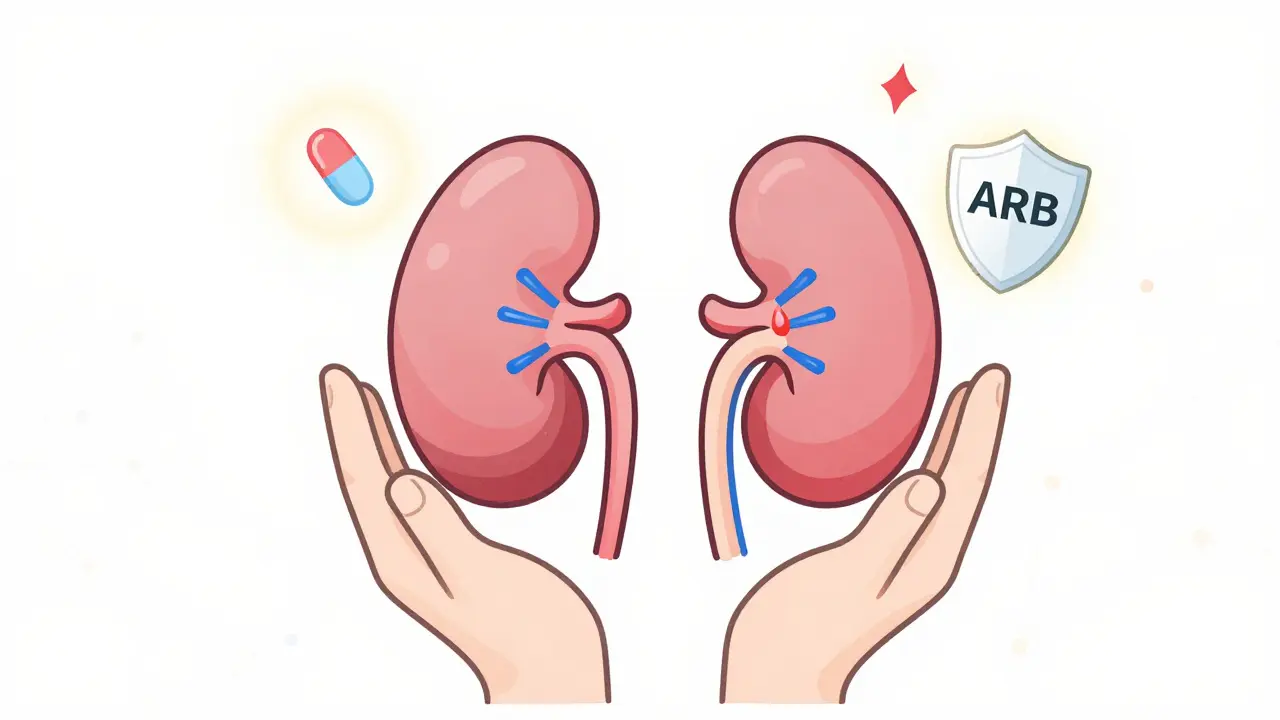
Why Blood Pressure Control Matters in Kidney Disease
If you have chronic kidney disease (CKD), high blood pressure isn’t just a number on a monitor-it’s a silent driver of kidney damage. Every time your blood pressure spikes, it puts extra strain on the tiny filters in your kidneys, called glomeruli. Over time, this pressure cracks those filters, letting protein leak into your urine. That’s proteinuria, one of the earliest warning signs your kidneys are struggling. The worse your blood pressure, the faster your kidney function drops. But here’s the good news: controlling blood pressure isn’t just about avoiding heart attacks. It can actually slow or even stop kidney damage. And two classes of drugs-ACE inhibitors and ARBs-are the most proven tools we have for doing it.
How ACE Inhibitors and ARBs Work Differently-But Get the Same Job Done
Both ACE inhibitors and ARBs target the same system in your body: the renin-angiotensin-aldosterone system, or RAAS. This system is like a hormonal alarm bell that raises blood pressure when your body thinks it’s under stress. In kidney disease, this alarm stays on too long, squeezing your kidneys harder than they can handle.
ACE inhibitors, like lisinopril or enalapril, block the enzyme that turns angiotensin I into angiotensin II-the main hormone that tightens blood vessels and raises pressure. Less angiotensin II means relaxed blood vessels and lower pressure inside the kidneys.
ARBs, like losartan or valsartan, work downstream. Instead of stopping angiotensin II from being made, they block its receptors. So even if angiotensin II is still around, it can’t bind to the receptors and do damage. The result? Similar blood pressure drops and similar protection for your kidneys.
Neither drug cures kidney disease. But both reduce proteinuria by 30-50% and slow the decline in kidney function by 20-40% in people with diabetes or high blood pressure. That’s not small. That’s life-changing.
The Evidence: Why Guidelines Say These Are First-Line Drugs
Since the early 2000s, major medical groups-including the American College of Cardiology, American Heart Association, and KDIGO-have put ACE inhibitors and ARBs at the top of the list for treating high blood pressure in kidney disease. Why? Because the data doesn’t lie.
A 2024 study of 1,237 patients with advanced CKD (eGFR below 20) found those who started an ACE inhibitor or ARB had a 34% lower risk of needing dialysis or a kidney transplant over three years. That’s not a guess. That’s a statistically solid result from real patients. Another study showed patients on these drugs were 25% less likely to reach end-stage kidney disease compared to those on other blood pressure meds.
And it’s not just about survival. It’s about quality. People who stay on these drugs report more stable kidney numbers, fewer hospital visits, and less swelling. One patient on Reddit with stage 4 CKD shared that after switching from a diuretic to lisinopril, his protein levels dropped by half in six months. He’s been on it for five years now, with monthly blood tests and no major issues.
When You Shouldn’t Use Them-and When You Should Doubt Your Doctor
Some doctors still hesitate to prescribe ACE inhibitors or ARBs in advanced CKD. They worry about two things: high potassium and sudden drops in kidney function. And yes, those can happen.
About 10-15% of patients see their potassium rise above 5.0 mmol/L. That’s not dangerous right away, but it needs watching. A 5-10% drop in eGFR within the first few weeks is common and often temporary. It doesn’t mean the drug is hurting you-it often means it’s working. The kidneys are adjusting to lower pressure inside the filters. If your eGFR drops more than 30% from baseline, or if potassium hits 5.5 or higher, then you stop. But if it’s just a 20% dip? Keep going. Monitor. Adjust.
The old thinking-"don’t use these if your kidneys are bad"-is outdated. A 2023 UK trial compared stopping versus continuing ARBs in stage IV and V CKD patients. Those who kept taking them had better kidney function after three years. No extra deaths. No more dialysis. Just better outcomes. The Kidney Disease: Improving Global Outcomes (KDIGO) 2023 guidelines now say: keep them going as long as potassium is under 5.0 and eGFR is above 15.
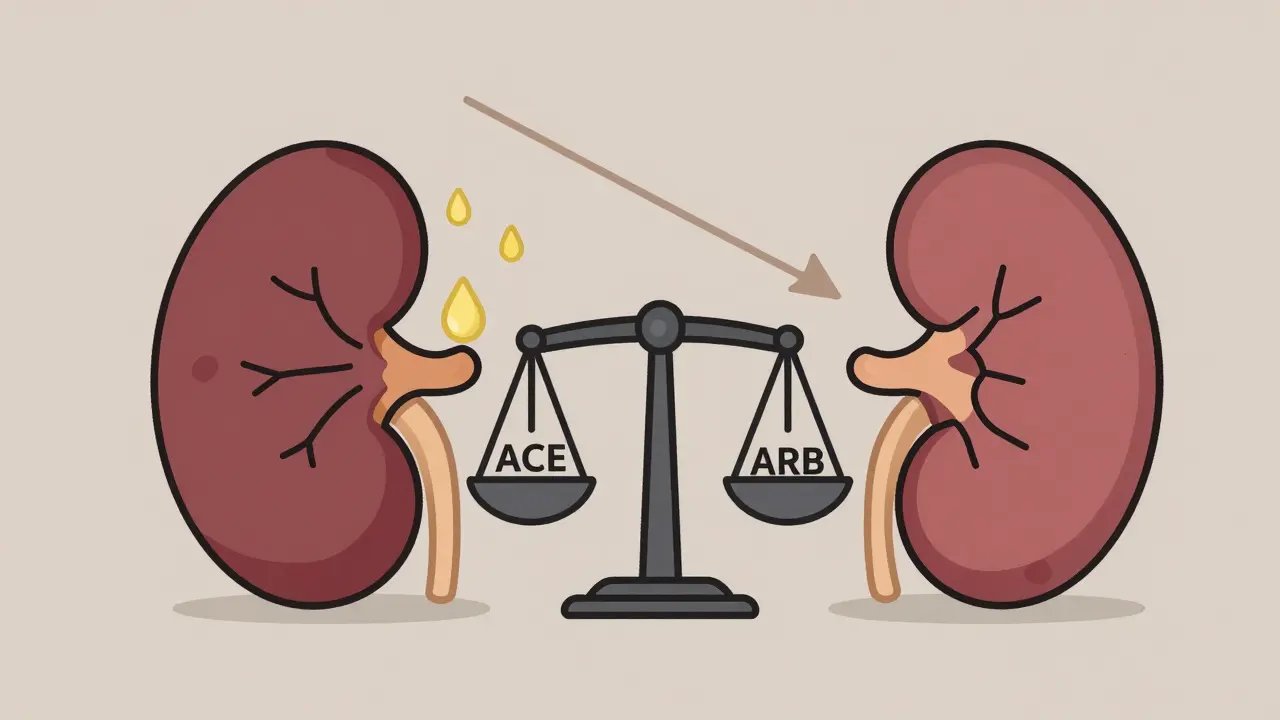
ACE Inhibitors vs. ARBs: Which One Should You Take?
For most people, it doesn’t matter much. Both work equally well on blood pressure and kidney protection. But side effects differ.
ACE inhibitors cause a dry, nagging cough in 5-20% of users. It’s not dangerous, but it’s annoying enough that many people quit. If you’re on lisinopril and suddenly can’t stop coughing at night, that’s probably why. Switching to an ARB like losartan often fixes it.
Angioedema-a rare but serious swelling of the face, lips, or throat-happens in about 1 in 500 people on ACE inhibitors. It’s rare, but if it happens, you need emergency care. ARBs don’t carry this risk.
ARBs are generally better tolerated. But they’re more expensive. If you’re on Medicare or have good insurance, cost might not matter. If you’re paying out of pocket, generic lisinopril costs under $5 a month. Valsartan? More like $30. That’s a real factor.
What About Combining Them?
Some doctors try doubling down by prescribing an ACE inhibitor and an ARB together. The idea? More RAAS blockade = more kidney protection. And yes, studies show this combo reduces proteinuria by another 15-20% compared to either drug alone.
But here’s the catch: it also doubles your risk of acute kidney injury and increases hyperkalemia by 50%. The Veterans Affairs Nephropathy Trial showed this combo led to more hospitalizations for kidney problems and electrolyte crashes. That’s why current guidelines say: don’t combine them unless you’re in a clinical trial. Stick to one. Max out the dose. Add other blood pressure meds if needed.
How to Start Safely: A Simple Monitoring Plan
Starting an ACE inhibitor or ARB isn’t like popping a vitamin. You need to be watched. Here’s what works:
- Get baseline blood tests: eGFR, potassium, and urine albumin-to-creatinine ratio.
- Start with a low dose. Don’t jump to the max right away.
- Check potassium and eGFR again in 1-2 weeks.
- If potassium is under 5.0 and eGFR didn’t drop more than 30%, increase the dose.
- Repeat every 2-4 weeks until you’re at the highest tolerated dose.
- Once stable, check every 3-6 months.
Many patients stop because they panic after a small eGFR dip. But that dip? It’s often the kidneys relaxing. If your doctor tells you to stop because your creatinine went from 1.4 to 1.7, ask: "Is this more than a 30% drop?" If not, it’s probably fine.
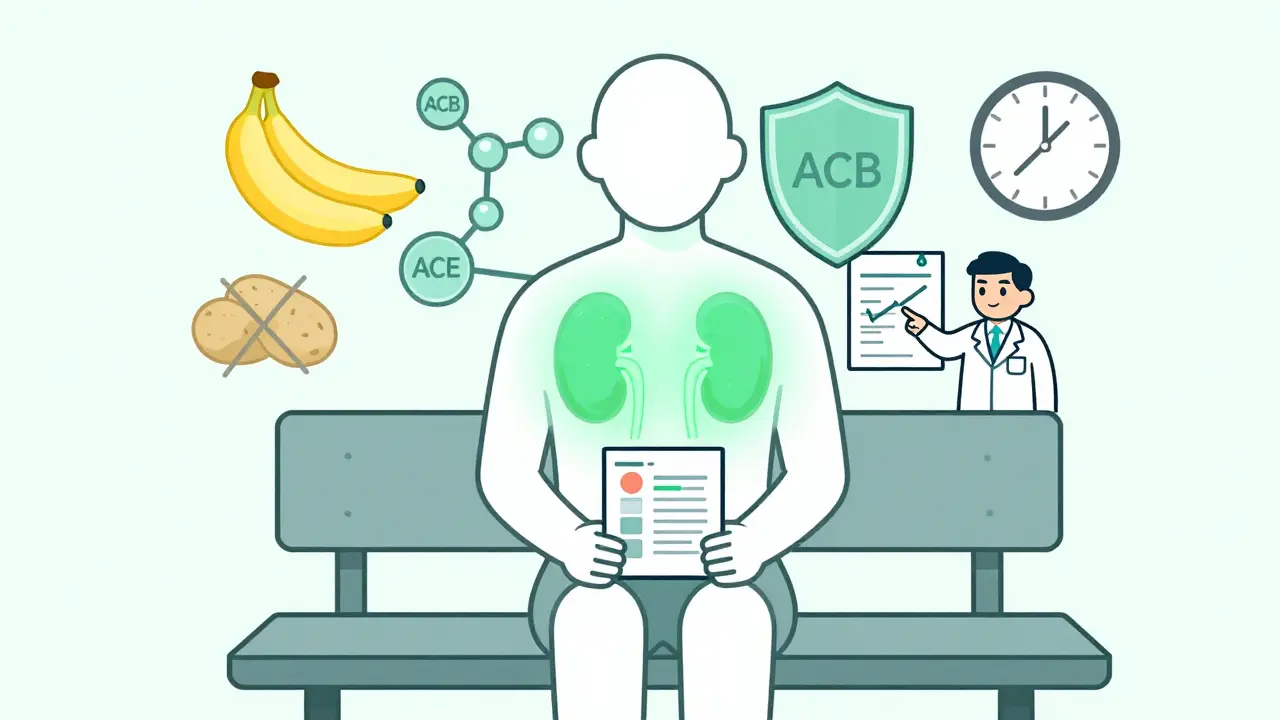
What’s Next? The Future of Kidney Protection
Scientists are already looking beyond ACE inhibitors and ARBs. New drugs like sacubitril/valsartan (Entresto), originally for heart failure, are now being tested in kidney disease. Early results show it slows kidney decline even better than enalapril alone. It’s not approved for CKD yet, but trials are underway.
Meanwhile, the biggest barrier isn’t science-it’s fear. Too many patients with advanced CKD are taken off these drugs because of outdated beliefs. The data says otherwise. If you’re on one of these medications and your doctor wants to stop it because your kidneys are "too bad," ask for the evidence. There’s plenty.
Real Talk: What Patients Are Saying
On patient forums, the stories are mixed but telling. Of 1,243 surveyed by the National Kidney Foundation, 65% said their kidney numbers stabilized after starting an ACE inhibitor or ARB. But 28% quit because of cough. 12% stopped because high potassium forced them to cut out bananas, potatoes, and oranges.
One woman in Melbourne wrote: "I was told to stop my lisinopril when my eGFR hit 22. I didn’t. I got monitored monthly. Two years later, I’m still at 21. My doctor says I’m lucky. I say I’m following the science."
Don’t let fear silence you. These drugs aren’t perfect. But they’re the best tool we have. And if you have kidney disease and high blood pressure, they’re worth fighting for.
Can ACE inhibitors and ARBs reverse kidney damage?
No, they can’t reverse damage that’s already happened. But they can stop or slow further damage significantly. Studies show they reduce protein leakage and lower the risk of needing dialysis by up to 40%. Think of them as a shield-not a repair kit.
Are ARBs safer than ACE inhibitors?
For most people, yes. ARBs cause less cough and no angioedema risk, which are the two biggest reasons people stop ACE inhibitors. Both are equally effective for blood pressure and kidney protection. If you can tolerate an ACE inhibitor, it’s fine. If you develop a cough, switch to an ARB.
Should I stop my ACE inhibitor or ARB if I have advanced kidney disease?
No, unless your potassium is above 5.5 or your eGFR drops more than 30% in a short time. New guidelines from KDIGO and the American Society of Nephrology strongly recommend continuing these drugs even in stage 4 and 5 CKD. Stopping them increases your risk of kidney failure.
How long does it take to see results from these drugs?
Blood pressure usually drops within 1-2 weeks. But kidney protection takes longer. Protein in your urine may take 4-8 weeks to drop noticeably. The real benefit-slowing kidney decline-is measured over months and years. Don’t expect quick fixes. Stick with it.
Can I take these drugs with other blood pressure medications?
Yes. In fact, most people need more than one drug to reach the target blood pressure of under 130/80. Diuretics, calcium channel blockers, or beta-blockers are often added after an ACE inhibitor or ARB is optimized. Just avoid combining ACE inhibitors and ARBs together unless under strict medical supervision.
What foods should I avoid while on these medications?
If your potassium is high, limit high-potassium foods like bananas, oranges, potatoes, tomatoes, spinach, and salt substitutes (which often contain potassium chloride). Avoid licorice, too-it can raise blood pressure and interfere with these drugs. But don’t cut out all fruits and veggies. Work with a dietitian to find safe alternatives.
Final Thoughts: Don’t Let Fear Stop You
These drugs aren’t magic. They’re not risk-free. But they’re the most effective, best-studied way we have to protect kidneys in people with high blood pressure. Underuse is a bigger problem than overuse. If you’re eligible, start. If you’re scared, ask questions. If you’re told to stop, ask why-and ask for the evidence. Your kidneys are counting on you to be informed.
Comments (8)
These drugs aren't magic, but they're the closest thing we've got. I started lisinopril last year after my eGFR dipped to 28. My doc wanted to pull the plug, but I pushed back. Two years later, I'm still at 27. No dialysis. No hospital trips. Just monthly labs and a lot of water.
OMG YES!! I switched from lisinopril to losartan because of the cough-I was coughing so bad I couldn't sleep!! And guess what? My protein levels dropped even more!! Also, no more coughing fits at 3 a.m.!!! ARBs are the real MVPs!!
It is imperative to underscore that the indiscriminate continuation of RAAS inhibitors in patients with advanced chronic kidney disease (CKD) remains a contentious clinical decision, despite recent guideline revisions. The risk-benefit calculus must be individualized, particularly when eGFR falls below 15 mL/min/1.73m² and serum potassium exceeds 5.0 mmol/L, as these parameters are associated with increased mortality in observational cohorts.
Listen-I was told to stop my ARB when my creatinine went from 1.2 to 1.5. I didn’t. I asked for the data. They showed me the 2023 UK trial. I kept going. Now? My numbers are stable. My legs don’t swell. I’m alive. If your doctor says ‘your kidneys are too bad,’ ask them if they’ve read the latest KDIGO guidelines. If they haven’t, go find someone who has. You’re worth fighting for.
Incorrect. The 2024 study cited has significant selection bias-only patients with compliant adherence were included. Real-world data from Indian nephrology centers shows 40% discontinuation rate due to hyperkalemia in stage 4 CKD. ARBs are not safer-they are just more expensive. Generic lisinopril remains the gold standard for resource-limited settings. Do not confuse cost with efficacy.
My mom’s been on losartan for 6 years with stage 3 CKD. She eats her bananas. She doesn’t panic over a 10% eGFR dip. She checks her numbers every 3 months. She’s still walking 5 miles a day. These drugs aren’t scary. Fear is what kills you-not the meds.
Wait-so if my eGFR drops from 25 to 20 after starting lisinopril, that’s okay? I thought that meant my kidneys were failing. Is that really just them adjusting? I’m confused.
Yeah, that 20-30% eGFR drop? It’s not failure-it’s the kidneys sighing in relief. The filters were under siege. Lower pressure = less damage. I saw the same thing. My doc called it a "functional adaptation." I call it my kidneys saying "thank you". Don’t panic. Just monitor. And if you’re on Medicare, ask for the generic. It’s the same drug. Just cheaper.