
Over 22 million Americans have sleep apnea, and most don’t even know it. If you’re using a CPAP machine, you’re already ahead of the curve-but if you’re struggling to wear it, you’re not alone. Nearly half of people who start CPAP therapy quit within the first year. It’s not because the machine doesn’t work. It’s because the mask hurts, the air feels forced, or the machine is too loud. The truth? CPAP machines can transform your sleep, your health, and your life-but only if you can stick with them.
Understanding the Four Main Types of CPAP Machines
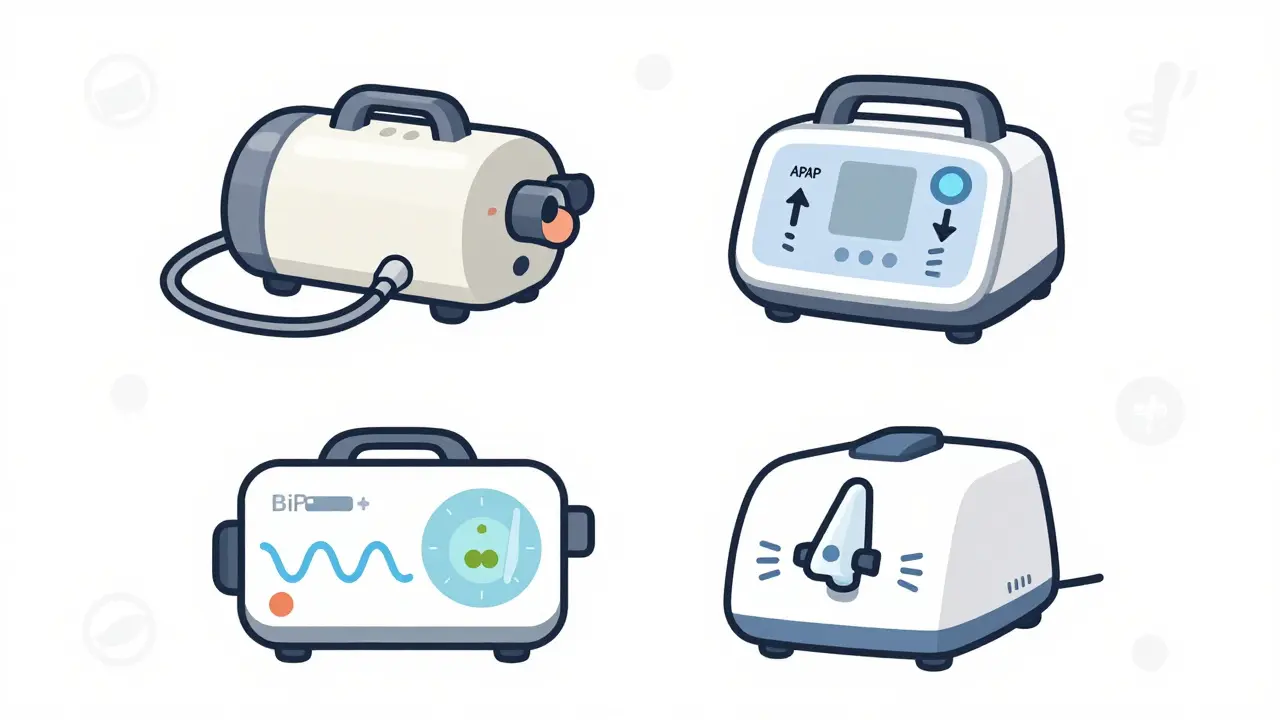
Not all CPAP machines are the same. There are four main types, each built for different needs and sleep patterns. Choosing the wrong one can make your therapy harder than it needs to be.Traditional CPAP delivers one fixed pressure all night. It’s simple, reliable, and the cheapest option-usually between $500 and $1,000. Models like the ResMed AirSense 10 and Philips DreamStation are common. If your breathing pattern is stable and your doctor has already found your perfect pressure setting, this works well. But if you toss and turn, wake up often, or your pressure needs change during the night, this type can feel like breathing through a straw.
APAP (Auto-Adjusting CPAP) is smarter. It constantly monitors your breathing and adjusts pressure on the fly, between 4 and 20 cm H2O. If you snore or have a blocked airway, it increases pressure. If you’re breathing smoothly, it drops it down. This reduces discomfort and makes it easier to fall asleep. Studies show people stick with APAP 15% longer than traditional CPAP. The catch? It costs more-$1,700 to $3,000. Models like the ResMed AirSense 11 AutoSet are popular because they learn your patterns over time and even predict apneas before they happen.
BiPAP gives you two different pressures: higher when you inhale, lower when you exhale. This is a game-changer for people who need high pressure (above 15 cm H2O) or have other lung conditions like COPD. Many users say it feels more natural. But it’s not for everyone. BiPAP machines cost $600 to $1,600, and you’ll need a separate sleep study to set the right pressures. The Philips BiPAP Auto is a top pick for those who’ve struggled with standard CPAP.
EPAP devices aren’t machines at all. They’re small, disposable valves you stick in your nostrils. They create resistance when you breathe out, which keeps your airway open. They cost $50 to $150 a month and are only effective for mild sleep apnea. If your AHI (apnea events per hour) is over 15, EPAP won’t cut it. But for light snorers or people trying CPAP for the first time, they’re a low-risk way to test the waters.
And then there’s the travel CPAP. The ResMed AirMini, for example, weighs less than a pound and fits in your pocket. It’s perfect for road trips or hotel stays. But it doesn’t have a built-in humidifier-you’ll need to buy one separately for $80. It’s also louder than standard machines, at 52 dBA. If you’re sensitive to noise, this might not be your best fit.
Mask Fitting: Why Your CPAP Fails Before It Even Starts
Most people don’t quit CPAP because the machine doesn’t work. They quit because the mask doesn’t fit.There are four main mask types, and your face shape determines which one works.
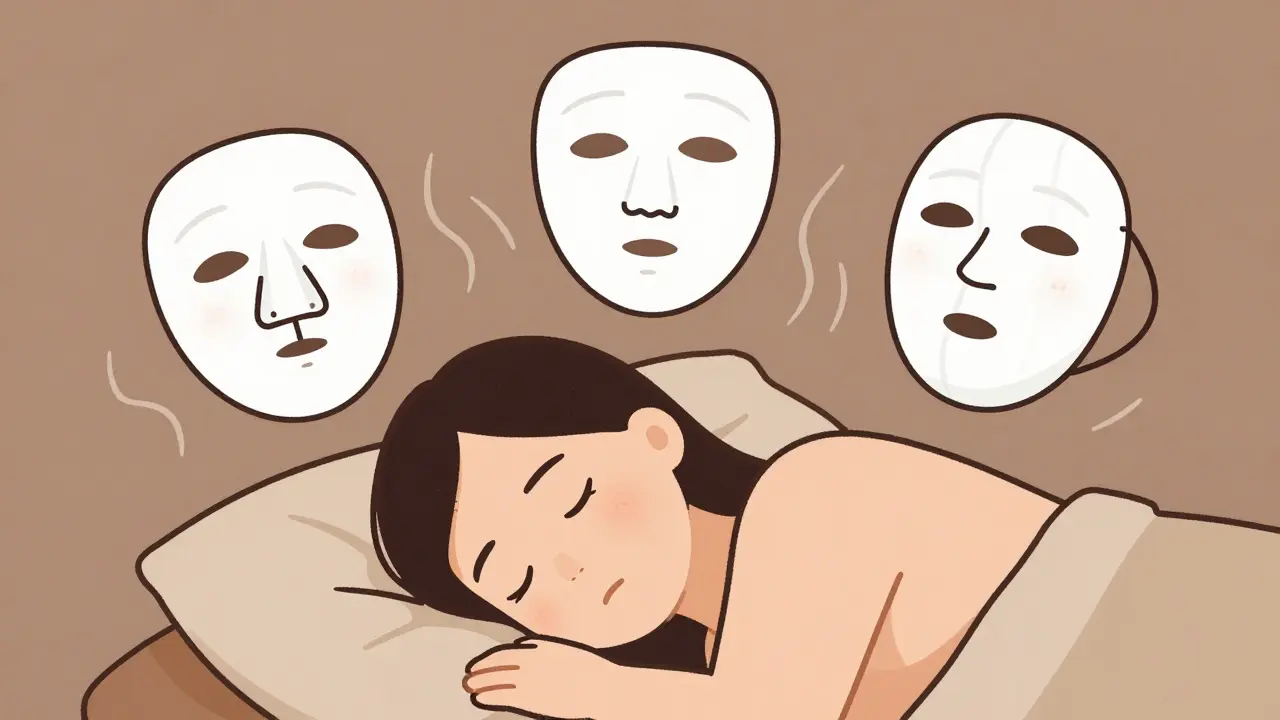
- Nasal pillows: Tiny silicone cushions that sit just inside your nostrils. Best for side sleepers and people who feel claustrophobic. They’re the least obtrusive. Users like u/NasalPillowFan on Reddit say they cut leak rates from 15 L/min to 3 L/min overnight. But if you breathe through your mouth, you’ll wake up with a dry throat.
- Nasal masks: Cover your nose only. Most popular-used by 45% of CPAP users. Good balance of comfort and effectiveness. If you have a deviated septum or mild congestion, this might not seal well.
- Full-face masks: Cover both nose and mouth. Essential for mouth breathers or people with chronic nasal blockages. But they’re bulkier, harder to seal, and cause more skin irritation. About 35% more users report pressure sores with full-face masks than with nasal pillows.
- Hybrid/oral masks: Designed for severe nasal congestion. Rarely used, but critical for the 5% who can’t breathe through their nose at all.
Proper fitting isn’t about guessing. It’s about measurement. Your nasal bridge width, cheekbone structure, and facial contours all matter. A poorly fitted mask causes 60% of air leaks. ResMed says acceptable leak rates should stay under 24 L/min. If you’re leaking more than that, your mask is too loose, too tight, or the wrong type.
Try this: Wear your mask while awake for 10 minutes, turn on the machine, and check for leaks. Look in the mirror. Do you see air puffing out around your cheeks or forehead? Adjust the straps-don’t over-tighten. Then try sleeping with it on for 20 minutes before bed. Many users swear by CPAP pillows with cutouts-they reduce leaks by 40%.
Why People Quit CPAP (And How to Stay on Track)
The data is brutal. Only 46% of people use their CPAP machine 4+ hours a night, 70% of the time. That’s the threshold for therapeutic benefit. The rest? They give up.Here’s why:
- 30% quit because of mask discomfort or pressure sores
- 25% say the machine is too noisy
- 20% can’t tolerate the air pressure
- 15% forget to use it or feel it’s inconvenient
But here’s the good news: adherence isn’t about willpower. It’s about systems.
Start slow. Don’t try to wear it all night on day one. Use it for 2 hours while you watch TV. Then 3 hours while reading. Then sleep with it for 1 hour. Build up over a week. This is called desensitization. It works.
Use the ramp feature. Every modern CPAP has this. It starts at a low pressure and slowly increases over 5 to 45 minutes. Use it. 75% of users who do report better sleep onset.
Turn on the humidifier. Dry mouth and nose are top complaints. Heated humidifiers (set between 86°F and 95°F) cut dryness complaints by 50%. If your machine doesn’t have one, get one. It’s worth the extra cost.
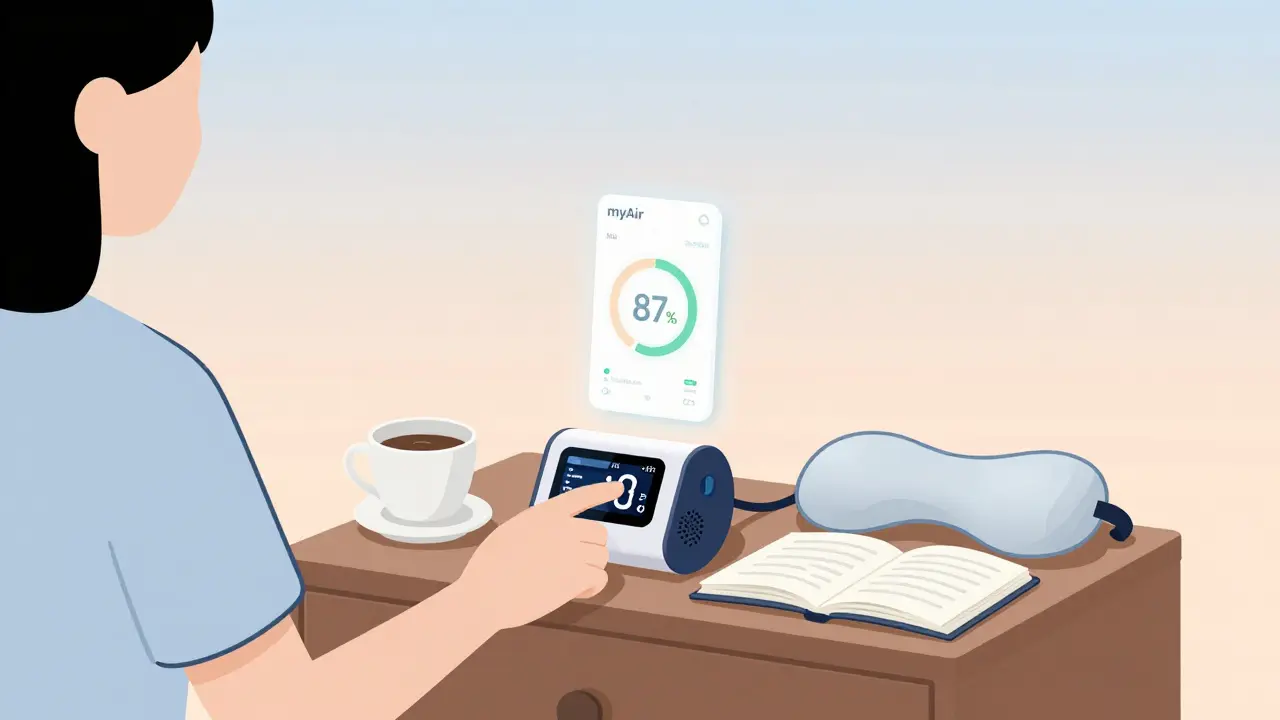
Track your data. Modern machines log your usage, leak rates, and AHI. Use apps like ResMed’s myAir. It gives you daily feedback, coaching, and even rewards for consistent use. Users who use it see 27% higher adherence.
Get help early. If you’re having trouble after two weeks, call your provider. Don’t wait. Most clinics offer free mask fitting sessions. Some even have 60-night trial periods. CPAP.com’s guarantee lets you swap masks or machines if it’s not working. Use it.
What’s New in CPAP Technology (2025)
The field has moved fast. In 2023, ResMed launched the AirSense 11 with AI that predicts apneas before they happen. Philips rolled out the DreamStation 3 with noise levels as low as 25 dBA-quieter than a whisper. Fisher & Paykel’s SleepStyle machine reduces exhalation pressure by up to 50%, making it feel more natural.Telemedicine is changing access. Over 75% of sleep clinics now offer remote titration. That means your doctor can adjust your pressure without you coming in. Saves time, saves money.
Insurance rules are tightening too. Starting in 2024, Medicare and most private insurers require you to use your machine at least 4 hours a night, 90% of the time-or you lose coverage. That’s why tracking features are now mandatory on all FDA-cleared devices.
And the market? It’s growing. The global CPAP industry will hit $10.8 billion by 2030. More people are being screened. More employers-like trucking companies-are requiring CPAP for drivers with sleep apnea. Why? Because untreated OSA increases accident risk by 5x. That’s not just health-it’s safety.
When CPAP Isn’t Enough
CPAP works for 85% of people with obstructive sleep apnea. But not everyone. If you’re still waking up tired, gasping, or your AHI stays above 5 after 3 months of consistent use, something else might be going on.Some people develop treatment-emergent central sleep apnea-where the brain stops sending signals to breathe. This happens in 5-15% of CPAP users. The solution? An ASV machine like the ResMed AirCurve 10. It’s more complex, more expensive ($2,800), and needs a specialist to set up.
Others have nasal obstructions-deviated septum, polyps, chronic allergies. If your nose is blocked, no mask will work well. Talk to an ENT. A simple procedure might fix your problem faster than any machine.
And if you’ve tried everything? Weight loss, positional therapy (sleeping on your side), or oral appliances can help-especially for mild cases. But CPAP remains the most effective non-surgical treatment we have.
Real Stories: What Works
u/SleepyEngineer switched from CPAP to APAP and dropped their AHI from 8.2 to 2.1. They didn’t change their lifestyle. They just changed the machine. u/MaskMaster69 started using a CPAP pillow with a cutout. Their leak rate dropped 40%. Simple. Cheap. Effective. A 58-year-old truck driver in Ohio was told he couldn’t drive unless he used CPAP. He hated it. He tried nasal pillows, then a full-face mask, then switched to APAP. He’s now using it 6 hours a night, 6 days a week. His boss noticed he’s more alert. His wife says he’s stopped snoring. He still doesn’t love it-but he’s alive because of it.Final Thoughts: It’s Not Perfect. But It’s Worth It.
CPAP isn’t glamorous. It’s not a magic cure. It’s a tool. And like any tool, it only works if you use it.You don’t need the most expensive machine. You don’t need the quietest mask. You need the one that fits your face, fits your life, and lets you sleep.
If you’re struggling, you’re not failing. You just haven’t found the right setup yet. Try a different mask. Use the ramp. Get help. Don’t quit after a week. Give it 30 days. And if it still doesn’t work? Ask for alternatives. There are options.
Because the real cost of skipping CPAP isn’t just bad sleep. It’s high blood pressure. Heart attacks. Strokes. Daytime accidents. And lost years.
One night of good sleep isn’t a luxury. It’s a lifeline.
Can I use a CPAP machine without a prescription?
No. In the United States, all CPAP machines require a prescription. This is because they’re classified as Class II medical devices by the FDA. Even if you buy one online, you’ll need a sleep study report and a doctor’s note to get insurance coverage. Some companies sell machines without prescriptions, but these are often outdated, unregulated, or lack safety features. Using one without proper diagnosis can be dangerous.
How long does it take to get used to a CPAP machine?
Most people need 2 to 4 weeks to adjust. The first week is usually the hardest. It’s normal to feel claustrophobic, dry-mouthed, or frustrated. But by day 14, most users report better sleep. The key is consistency. Don’t skip nights. Use the ramp feature. Try different masks. And if you’re still struggling after 30 days, contact your sleep specialist. You’re not failing-you’re just not there yet.
Is APAP better than CPAP for beginners?
For many beginners, yes. APAP adjusts pressure automatically, so you don’t need to guess your ideal setting. It’s especially helpful if your breathing changes at night-like when you sleep on your back, or if you’re congested. Studies show APAP users stick with therapy longer. The downside? It costs more. But if your insurance covers it, APAP is often the smarter first choice. The American Academy of Sleep Medicine now recommends APAP as an initial option, especially if mask fitting is uncertain.
Why does my CPAP machine make me feel bloated?
Swallowing air during CPAP use is called aerophagia. It’s common, especially if your pressure is too high or your mask leaks. When air enters your stomach instead of your lungs, it causes bloating, burping, or gas. Lowering your pressure (if you’re on CPAP) or switching to APAP can help. Using a humidifier reduces mouth breathing, which also cuts swallowed air. If it persists, talk to your doctor-you might need a BiPAP or a different mask.
Can I travel with my CPAP machine?
Yes. All modern CPAP machines are FAA-approved for air travel. You can bring them on board as a medical device-no extra fee. Travel models like the ResMed AirMini are designed for this. But remember: most don’t have built-in humidifiers. Pack a battery if you’re flying internationally, and always carry your prescription in case security asks. Airlines are required to let you use your CPAP during flight if it’s FAA-approved.
What happens if I stop using my CPAP machine?
Your sleep apnea symptoms will return within days. Snoring, gasping, and daytime fatigue come back. More importantly, your risk of high blood pressure, heart attack, stroke, and type 2 diabetes rises again. Studies show consistent CPAP users cut cardiovascular events by 20-30%. Stopping therapy undoes those benefits. If you’re quitting because it’s uncomfortable, talk to your doctor. There are better masks, better machines, and better ways to adapt. Don’t give up without exploring your options.
Comments (11)