
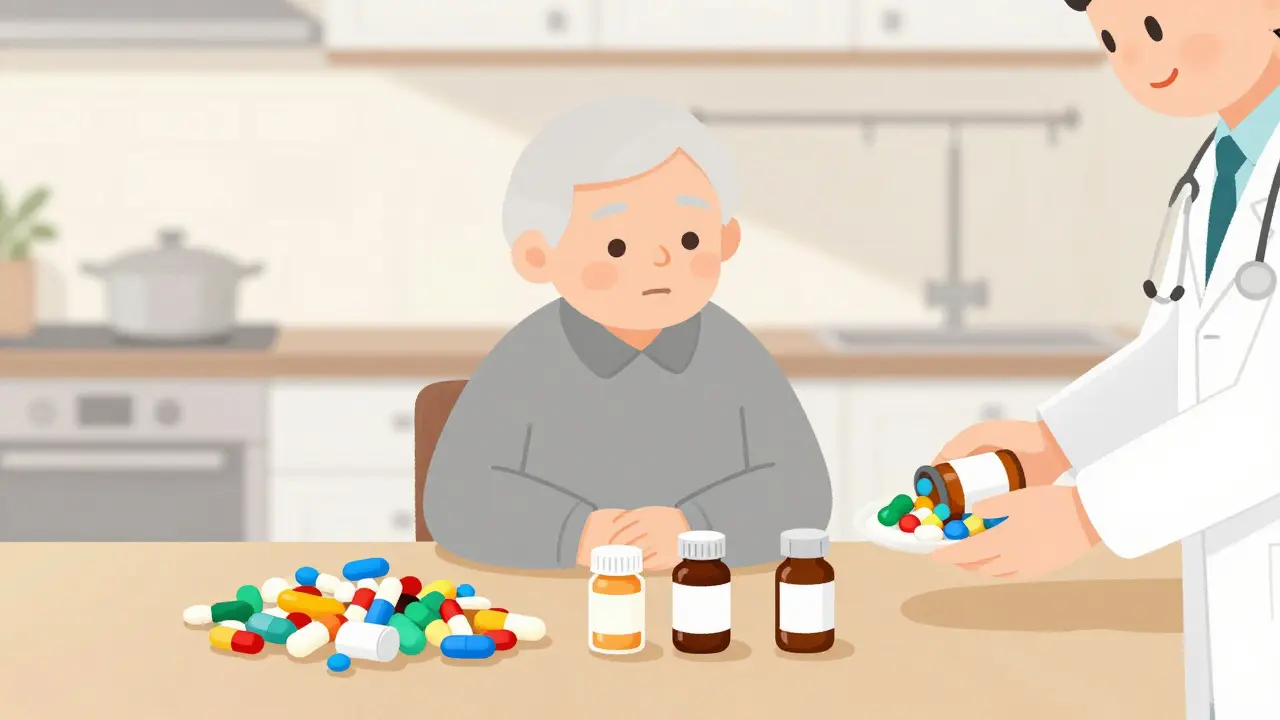
More than 40% of older adults in the U.S. take five or more prescription drugs daily. Twenty percent take ten or more. For many, these medications were started years ago-for high blood pressure, cholesterol, acid reflux, or sleep issues. But what if some of them aren’t helping anymore? What if they’re actually making things worse?
What Is Deprescribing, Really?
Deprescribing isn’t just stopping pills. It’s a careful, planned process of reviewing every medication a person takes and deciding which ones can be safely reduced or stopped. The goal isn’t to cut drugs for the sake of cutting them. It’s to improve quality of life by removing medications that no longer do more good than harm.According to the American Geriatrics Society, deprescribing means reducing or stopping medications that might be causing harm or no longer offering benefit. This isn’t a one-size-fits-all decision. It depends on the person’s health, life expectancy, goals, and what matters most to them.
Think of it this way: a statin might have been essential after a heart attack at age 65. But at 85, with limited mobility, dementia, and no history of heart disease since, the same drug may offer little benefit while increasing the risk of muscle pain, confusion, or falls. That’s when deprescribing becomes a valid-and often necessary-option.
How It Works: The Five-Step Process
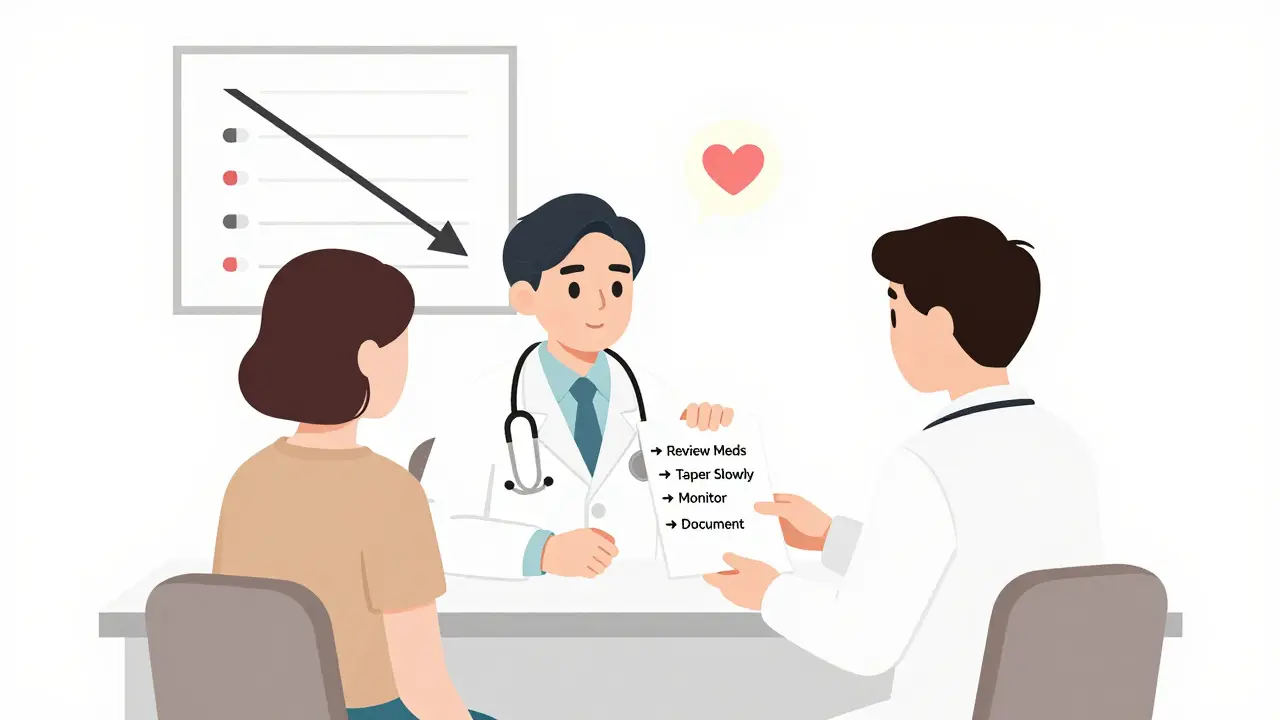
Deprescribing follows a clear, step-by-step method, just like starting a new drug. It’s not random. It’s clinical.- Identify potentially inappropriate medications-These are drugs flagged by guidelines like the Beers Criteria, such as long-term benzodiazepines, anticholinergics, or proton pump inhibitors used beyond six months without clear need.
- Determine if dose reduction or stopping is possible-Not all drugs can be stopped suddenly. Some need slow tapering to avoid withdrawal symptoms.
- Plan the taper-For example, reducing a sleeping pill by 25% every two weeks, or switching from a daily antihypertensive to every other day.
- Monitor closely-Watch for rebound symptoms, new pain, anxiety, sleep problems, or changes in cognition. Some effects appear weeks after stopping.
- Document everything-Why was it stopped? What happened? Did the patient feel better? Did symptoms return? This info helps future care.
One study showed that when clinicians followed this process, patients were 30% more likely to successfully stop a medication without adverse events compared to those who just had pills pulled without planning.
Who Benefits Most?
Deprescribing isn’t for everyone. It’s most valuable for:- Older adults with multiple chronic conditions (like diabetes, arthritis, and heart failure)
- Those with frailty, dementia, or limited life expectancy
- People taking high-risk drugs-like opioids, sedatives, or multiple blood pressure pills
- Patients on preventive meds (like statins or aspirin) with no recent symptoms or events
- Anyone who’s had a new fall, confusion, or unexplained fatigue after starting a new drug
Research from JAMA Network Open found that patients on nine or more medications were the most likely to benefit. In one trial, stopping just two unnecessary drugs led to improved alertness and less dizziness in 68% of participants.
What Does the Research Show?
There’s a common myth: if you stop a drug, something bad will happen. But the data says otherwise.A 2023 review of 57 studies found that deprescribing reduced the average number of medications by 1-2 per person. Sounds small? Here’s the real impact: in a clinic with 2,000 older patients, that’s over 140 unnecessary drugs removed across the board. That’s not just cost savings-it’s fewer side effects, fewer ER visits, fewer falls.
One major study tracked over 1,000 seniors who stopped long-term benzodiazepines. After six months, they had:
- 32% fewer falls
- Improved memory test scores
- No increase in anxiety or insomnia
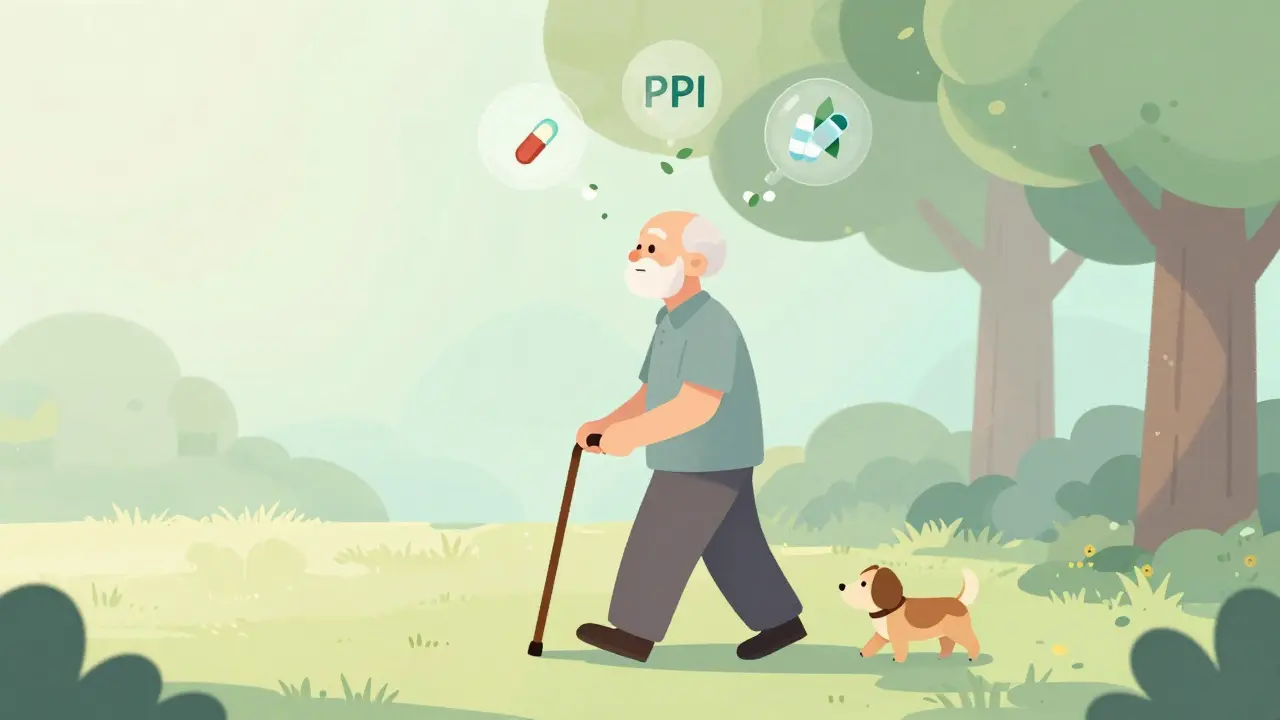
Another trial stopped proton pump inhibitors (PPIs) in 200 patients over 70. After 12 weeks, 70% didn’t need them back. No rebound heartburn. No complications.
And here’s the kicker: in studies that looked at mortality, hospitalizations, or functional decline, there was no increase. In fact, some showed improvement.
Why Don’t More Doctors Do This?
It’s not that doctors don’t care. It’s that the system doesn’t make it easy.Most visits are 15 minutes. There’s no time to review 12 medications. Electronic health records don’t flag what to stop-they only tell you what’s been prescribed. And patients? They often think, “If my doctor gave me this, it must be necessary.”
Research from the American Academy of Family Physicians found that 80% of older adults would be open to reducing medications-if their doctor brought it up. But only 12% of doctors initiated the conversation.
It’s a communication gap. Patients wait for permission to stop. Providers wait for someone to ask. Meanwhile, the pills keep coming.
What About the Risks?
Yes, stopping some drugs can cause problems. Withdrawal from antidepressants can cause brain zaps. Stopping beta-blockers too fast can spike blood pressure. Stopping corticosteroids can trigger adrenal crisis.That’s why deprescribing isn’t about quitting cold turkey. It’s about planned, gradual, monitored withdrawal. Every step is tailored. Every patient is watched.
For example, stopping an SSRI? Reduce by 25% every 2-4 weeks. Check in every two weeks. Ask about mood, sleep, dizziness. If symptoms return, pause. If they don’t, keep going.
The key is never assuming. Always test. Always observe. Always document.
The Bigger Picture: A Public Health Shift
By 2030, one in five Americans will be over 65. That means more people on more drugs. More side effects. More hospitalizations from medication errors.Deprescribing is becoming a public health priority. The Institute for Healthcare Improvement has built implementation models for clinics. Pharmacies in Australia and Canada now offer “medication reviews” with pharmacists trained in deprescribing. In Melbourne, some GP clinics now include a “medication check-up” as part of annual health assessments for patients over 70.
Tools are also improving. New AI-powered systems can scan a patient’s full medication list and flag high-risk combinations-like three drugs that all cause dizziness. Pilot programs in U.S. clinics using these tools saw a 15% drop in inappropriate prescriptions in just six months.
What’s Next?
The next frontier isn’t just stopping pills-it’s personalizing the decision.Researchers are exploring how genetics affect how people metabolize drugs. For example, some people process benzodiazepines slowly due to a gene variant. For them, even low doses can cause confusion. Tailoring deprescribing based on genetic risk could make it safer and more precise.
There’s also work on decision aids-simple apps or printed guides that help patients and doctors talk about what matters most. “Do you want to live longer, or live better?” is a question that’s changing how people think about their meds.
One patient in Sydney told her doctor, “I don’t want to die tomorrow. I want to walk my dog without falling.” That’s the kind of goal that should guide every prescription.
What You Can Do
If you or someone you care for is on multiple medications:- Ask: “Which of these are still necessary?”
- Ask: “What happens if I stop one?”
- Ask: “Are we still treating the original problem-or just side effects from other drugs?”
- Bring a full list of every pill, vitamin, and supplement to your next appointment.
- Don’t be afraid to say: “I’d like to try going slower on this one.”
Deprescribing isn’t giving up. It’s choosing quality over quantity. It’s recognizing that sometimes, less is more.
Is deprescribing safe for older adults?
Yes, when done properly. Research shows that stopping unnecessary medications in older adults is safe and often improves quality of life. Studies tracking patients for up to a year found no increase in hospitalizations or deaths after deprescribing. In fact, many saw fewer falls, better sleep, and improved mental clarity. The key is doing it slowly, with monitoring, and under medical supervision.
Can I stop my meds on my own?
Never. Some medications, like antidepressants, blood pressure drugs, or steroids, can cause serious withdrawal symptoms if stopped suddenly. Even “harmless” supplements can interact. Always talk to your doctor or pharmacist first. Deprescribing is a medical process-not a DIY project.
What if my symptoms come back after stopping a drug?
That’s why monitoring is part of the process. If symptoms return, your doctor will reassess. Sometimes, it means the drug was still needed. Other times, the symptom was caused by something else-like dehydration, poor sleep, or another medication. The goal isn’t to eliminate all symptoms, but to make sure you’re not taking pills just to mask side effects from other pills.
Does deprescribing save money?
Yes, but that’s not the main goal. In one Australian study, a single clinic saved over $12,000 in pharmacy costs in one year by reducing unnecessary prescriptions. But the bigger savings are in avoided hospital visits, falls, and emergency care. A 2023 study found that for every 100 patients who underwent deprescribing, 5-8 fewer were admitted to hospital for medication-related issues.
How do I know if I’m on too many medications?
You might be if you’re on five or more regular prescriptions, especially if you’re over 70. Other signs: feeling foggy, dizzy, or tired most days; having recent falls; taking pills for symptoms that started after a new drug was added; or taking drugs that were prescribed years ago for a condition you no longer have. A medication review with your GP or pharmacist can help sort it out.
Comments (8)
My grandma was on 12 meds. She was always nodding off at the dinner table. We asked the doctor to cut a few - benzos, a PPI, and that weird sleep aid she’d been on since 2010. Within three weeks, she was telling stories again, laughing at her own jokes. No crashes. No rebound anything. Just her back. Turns out, she didn’t need half of it. Doctors act like pills are holy relics. They’re not. They’re tools. Sometimes, you just need to put the hammer down.
Also, her blood pressure didn’t go nuts. Her memory didn’t vanish. She just stopped being a zombie.
Deprescribing isn’t anti-medicine. It’s pro-wellness. We’ve built a healthcare system that equates activity with value - if a pill is prescribed, it must be doing something. But medicine isn’t a checklist. It’s a conversation between biology, context, and human goals. A statin at 72 with no cardiac history isn’t prevention - it’s inertia. And inertia in medicine is just as dangerous as neglect.
The real tragedy isn’t stopping meds. It’s continuing them because no one had the time, the training, or the courage to ask: ‘Is this still serving you?’
My dad’s doc just took him off his daily aspirin. Dad’s 82, never had a heart attack. Was on it since 2008 ‘cause his cousin did it. No one ever checked if it still mattered. Turns out, the risk of bleeding was higher than any benefit. He’s fine. No clot. No drama. Just one less pill in his cup.
Ask your doc: ‘Why am I still on this?’ It’s a legit question. Not rude. Smart.
Oh wow, a whole article about stopping pills? Who knew? Next you’ll tell us breathing isn’t always necessary and gravity’s just a suggestion. Meanwhile, my aunt’s on 17 meds and still walks her poodle every morning. Maybe the problem isn’t the pills - it’s the people who think ‘less is more’ means ‘ignore science.’
Deprescribing sounds cute until you’re the one having a seizure because someone ‘felt’ a benzo wasn’t needed anymore.
Let’s be clear: deprescribing is a systems-level intervention requiring multidisciplinary coordination, pharmacovigilance protocols, and patient-centered outcome metrics. The current EHR infrastructure is not interoperable enough to support longitudinal deprescribing trajectories without manual annotation. We need standardized CDS alerts based on Beers Criteria, polypharmacy risk scores, and functional status biomarkers - not anecdotal stories from Reddit.
That said, the 30% success rate in tapering studies is statistically significant (p<0.01) and aligns with the 2022 AGS guidelines. The real barrier isn’t clinical - it’s reimbursement. CMS doesn’t pay for med reviews. So docs don’t do them. Fix the payment model, not the pills.
my uncle just got off his omeprazole and now he’s not burping all day. like, actual magic. he said he felt like he could taste food again for the first time in 10 years. i mean… who knew? i always thought those pills were just ‘safe.’ turns out, they’re just lazy. my mom’s still on 9 things and says ‘but my doctor said to take them!’ - bro, maybe ask why? 😅
AMERICA NEEDS TO STOP TREATING MEDS LIKE CANDY. 🇺🇸 We don’t need more pills - we need more common sense. My cousin’s grandma got off 5 meds and started walking again. Now she’s gardening, cooking, laughing. Meanwhile, the system keeps pushing more drugs because that’s how they make money. This isn’t healthcare. It’s pharmaceutical marketing with a stethoscope. 🚫💊
Stop giving seniors pills to fix the side effects of other pills. It’s a pyramid scheme. And we’re all paying for it.
Let’s not romanticize this. You’re talking about removing life-saving interventions based on anecdotal ‘improvements’ and emotional appeals. You cite a 32% reduction in falls - but falls are multifactorial. Did you control for physical therapy? Nutrition? Vitamin D? No. You cherry-picked one metric and called it a win.
And let’s not forget: the JAMA study you love? It had a 14% dropout rate because patients panicked when their meds were pulled. The ‘no increase in mortality’ claim? That’s a 1-year window. What about 3? 5? You’re gambling with geriatric physiology and calling it ‘patient autonomy.’
Deprescribing sounds noble until someone dies because their beta-blocker was ‘unnecessary’ and they had a silent MI. Then you’ll blame the system. But the system didn’t pull the pill - you did. And you didn’t even have the data to back it up.