
Opioid Driving Safety Calculator
Opioid Driving Safety Calculator
This calculator helps you determine when you're likely to be safe to drive after taking opioids. Results are based on general guidelines from medical literature and are not a substitute for professional medical advice.
Results
Estimated time until safe to drive:
Enter your information above to see results
Safety information will appear here
Important: Laws vary by state. Even if you're within the estimated safe time, your prescription does not guarantee legal protection. Check your state's specific laws about driving on opioids.
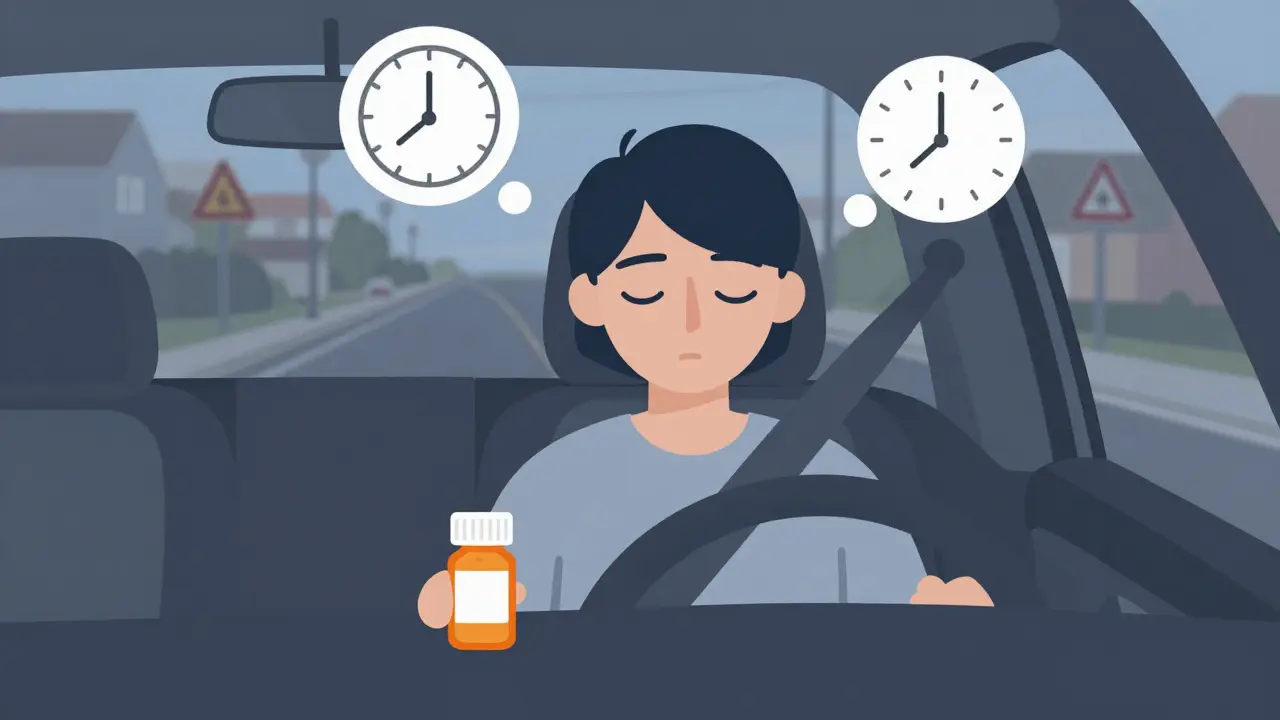
Driving while on opioids isn’t just risky-it’s illegal in many places, and many people don’t realize how dangerous it really is. If you’re taking opioids for pain, you might think that as long as you’re following your doctor’s instructions, you’re safe to drive. But that’s not true. Even prescribed opioids can slow your reactions, blur your vision, and make it hard to think clearly-all of which turn a simple trip to the grocery store into a potential hazard.
How Opioids Affect Your Ability to Drive
Opioids don’t just numb pain. They also slow down your brain. The National Institute on Drug Abuse says these drugs can cause drowsiness, dizziness, and seriously mess with your judgment. That’s not a vague warning-it’s a measurable risk. Studies show that being under the influence of opioids while driving can double your chance of being in a crash. Think about that. Two times more likely to crash than when you’re sober. And it doesn’t matter if you’re on a low dose. Even 5 mg of oxycodone twice a day can be enough to impair you.
Unlike alcohol, where we know that a blood concentration of 0.08% means impairment, opioids don’t have a clear threshold. One person might feel fine after taking hydrocodone, while another can barely keep their eyes open on the same dose. Why? Because everyone’s body reacts differently. And if you’re mixing opioids with alcohol, sleep aids, or even over-the-counter antihistamines, the effect multiplies. The National Highway Traffic Safety Administration warns that drug-impaired driving is harder to detect because people rarely use just one substance. That’s why police can’t just test for a number-they have to look for signs.
Legal Consequences Are Real-And Vary Wildly
In the U.S., laws around driving on opioids are a patchwork. Sixteen states have zero-tolerance laws: if any trace of a drug is in your system, you’re guilty. Five states have per se laws, meaning specific levels of certain opioids (like fentanyl or oxycodone) automatically equal impairment. But in other states, prosecutors have to prove you were actually driving poorly-swerving, failing to stop, or missing signals. That’s harder to do, and it gives some drivers a false sense of security.
Canada treats opioid impairment the same as drunk driving. If you’re caught driving while impaired by opioids, you face the same penalties as if you had a blood alcohol level over the limit. That includes license suspension, fines, and even jail time. And in Australia? While there’s no specific law for opioids alone, police can charge you with driving under the influence of a drug if they believe your ability to drive is impaired. Blood tests are used, and even legal prescriptions offer no protection.
Here’s where it gets messy: some states let you defend yourself if you have a valid prescription. Utah says if a doctor prescribed it, you’re okay-unless you were driving recklessly. Georgia allows a defense for people under 21 if the dose was therapeutic. Wisconsin puts the burden on you to prove you had a prescription. But here’s the catch: if you’re pulled over and fail a field test, it doesn’t matter what your prescription says. The officer doesn’t care if your doctor said it was fine. The law doesn’t care either.
What Police Look For
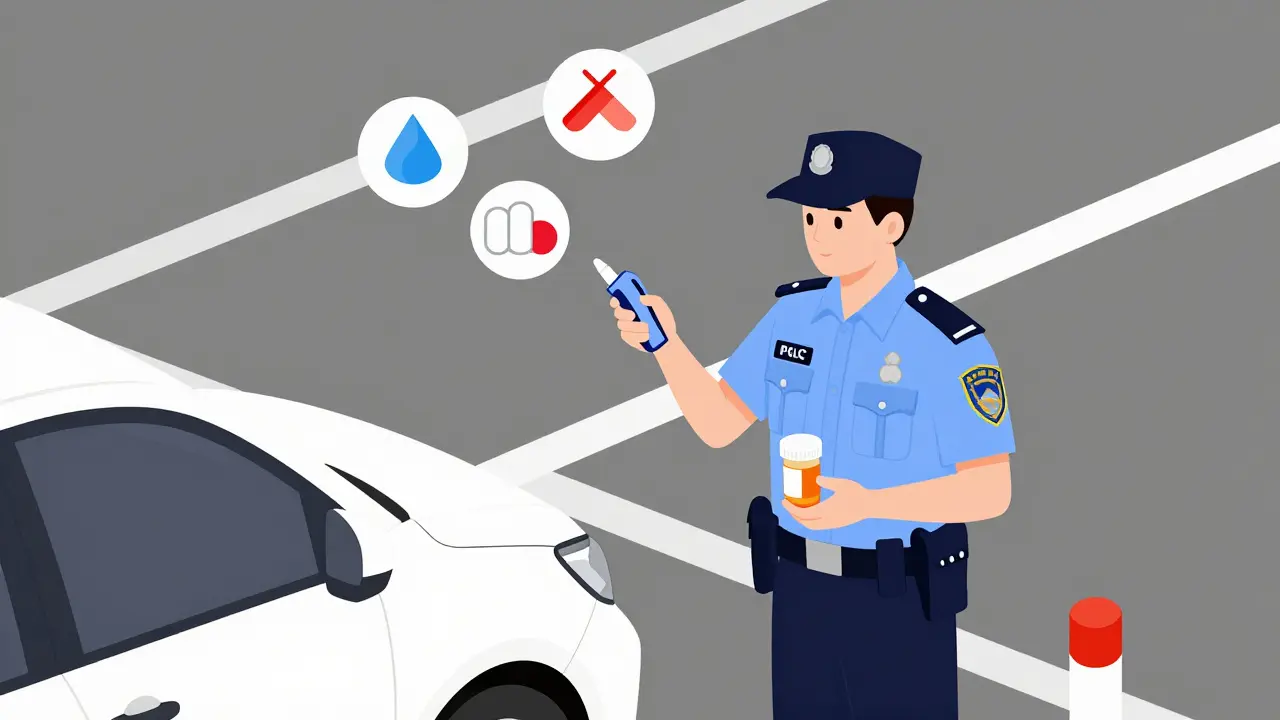
When officers suspect drug impairment, they don’t just hand you a breathalyzer. They use the Standardized Field Sobriety Test (SFST)-the same ones used for alcohol. That means walking in a straight line, standing on one foot, and following a pen with your eyes. But because opioids cause more mental fog than physical uncoordination, these tests aren’t always reliable. That’s why trained Drug Recognition Experts (DREs) step in. They use the Drug Evaluation and Classification (DEC) program, which includes checking your pupils, blood pressure, pulse, and muscle tone. Then they may demand a blood, urine, or oral fluid sample.
Oral fluid testing is becoming common. As of 2023, 47 U.S. states use devices like the Dräger DrugTest 5000 to detect opioids at the roadside. These machines can pick up fentanyl, oxycodone, and hydrocodone in minutes. No more waiting days for lab results. And in March 2024, seven more states were considering per se laws for opioids, meaning we’re moving toward stricter enforcement, not less.
Real People, Real Consequences
You might think, "I’ve been driving on my meds for years. Nothing’s happened." But stories from Reddit, patient forums, and court records tell a different story. One user, u/PainPatient88, wrote: "My doctor said it was fine to drive on 5mg oxycodone twice daily. I failed a field sobriety test after my prescription was filled." Another, u/RecoveryJourney, said: "I got a DUI on my pain meds-even though I was taking exactly as prescribed. Cost me $12,000 and my license for six months." A 2022 survey of 1,247 chronic pain patients found that 63% didn’t know driving on prescribed opioids could lead to a DUI. And 28% admitted they’d driven within an hour of taking their dose. On Drugs.com, 78% of opioid reviews included warnings about driving impairment. One user wrote: "The pharmacist told me it was fine. Now I have a DUI on my record." These aren’t rare cases. They’re happening every day.
What You Should Do
If you’re on opioids, here’s what you need to do:
- Ask your doctor-not your pharmacist-how the medication affects driving. Ask specifically: "Will this make me unsafe behind the wheel?" Don’t assume it’s okay because it’s prescribed.
- Wait-at least 3 to 4 hours after an immediate-release opioid like hydrocodone. For extended-release versions like OxyContin, wait 6 to 8 hours. Your body doesn’t process it the same way every time.
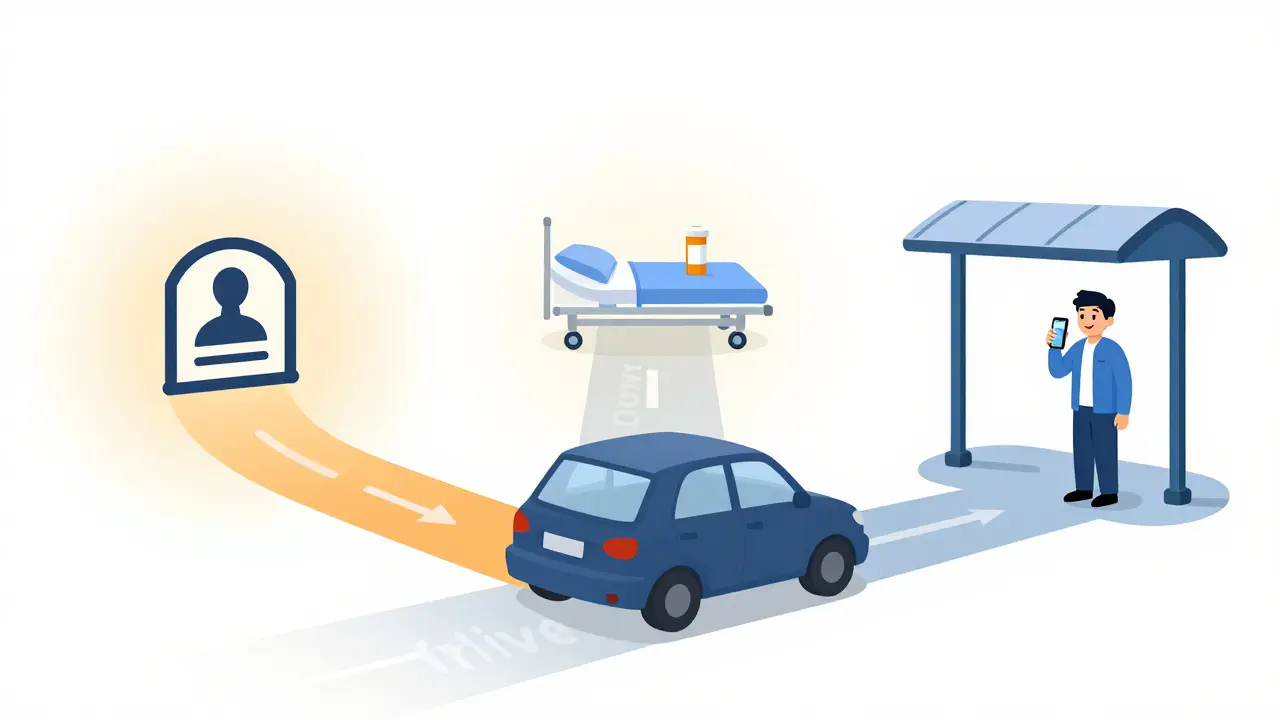
- Plan ahead. If you know you’ll be taking your dose before a trip, arrange a ride. Use public transport. Call a friend. Uber. It’s not worth risking your license, your job, or someone else’s life.
- Know your state’s laws. If you live in a zero-tolerance state, even a trace of the drug can get you charged. There’s no "I didn’t know" defense.
- Never mix opioids with alcohol, sleep aids, or anxiety meds. That combo is a recipe for disaster.
The California Office of Traffic Safety says it plainly: "Plan ahead for a sober driver if you plan to use an impairing drug." And yes-that includes your prescription.
What’s Changing
The government is catching up. The FDA now requires "Do Not Drive" warnings on all opioid packaging. The National Highway Traffic Safety Administration has poured $15.7 million into drug-impaired driving enforcement in 2023 alone-a 22% jump since 2021. They’re training 5,000 more Drug Recognition Experts by 2025. And companies like UPS now require employees on opioids to go through medical review. Since 2021, they’ve cut medication-related incidents by 37%.
But the biggest threat isn’t prescription opioids anymore. It’s fentanyl. The DEA reports a 262% increase in fentanyl-related impaired driving cases between 2020 and 2023. These are deadly potent, often mixed with other drugs, and undetectable without the right equipment. The Transportation Research Board says we need scientifically validated limits for opioids within five years. Right now, we’re flying blind.
Final Reality Check
You’re not alone if you rely on opioids for pain. But driving while impaired isn’t a personal choice-it’s a public safety issue. Your doctor didn’t give you a license to drive. The law didn’t either. And no amount of "I’ve done it before" changes the facts: opioids make you a worse driver. Period.
If you’re unsure, don’t drive. Call someone. Wait. Take the bus. It’s not a hassle-it’s a necessity. Your life, and the lives of others, depend on it.
Can I drive if I have a prescription for opioids?
Having a prescription doesn’t make it legal to drive while impaired. In many states, any detectable amount of an opioid in your system can lead to charges. Even if your doctor prescribed it, you can still be charged with drugged driving if you’re impaired. Always check with your doctor about how the medication affects your ability to drive safely.
How long should I wait after taking an opioid before driving?
For immediate-release opioids like hydrocodone or oxycodone, wait at least 3 to 4 hours. For extended-release versions like OxyContin or MS Contin, wait 6 to 8 hours. But these are general guidelines-everyone metabolizes drugs differently. If you feel drowsy, dizzy, or mentally foggy, don’t drive. Those are signs you’re still impaired.
Do police test for opioids during traffic stops?
Yes. Police use Standardized Field Sobriety Tests to check for impairment. If they suspect drugs, they may call a Drug Recognition Expert (DRE) who can perform a more detailed evaluation. Many states now use oral fluid testing devices that can detect opioids like fentanyl, oxycodone, and hydrocodone within minutes. Blood or urine tests may follow. A prescription won’t stop the test.
Is it safer to drive on opioids than alcohol?
No. Opioids impair cognitive function and reaction time just as badly as alcohol-and sometimes worse. Studies show opioid use doubles crash risk. Unlike alcohol, there’s no clear legal limit for opioids, so enforcement is inconsistent. But that doesn’t make it safer. In fact, the unpredictability makes it more dangerous.
What should I do if I’m pulled over while on opioids?
Stay calm and polite. You are not required to answer questions about your medication. You can refuse field sobriety tests in some states, but refusing a blood or oral fluid test may lead to automatic license suspension. Do not argue with the officer. Document everything afterward. Contact a lawyer who specializes in drug-impaired driving cases. Your prescription is not a legal shield.
Comments (12)