
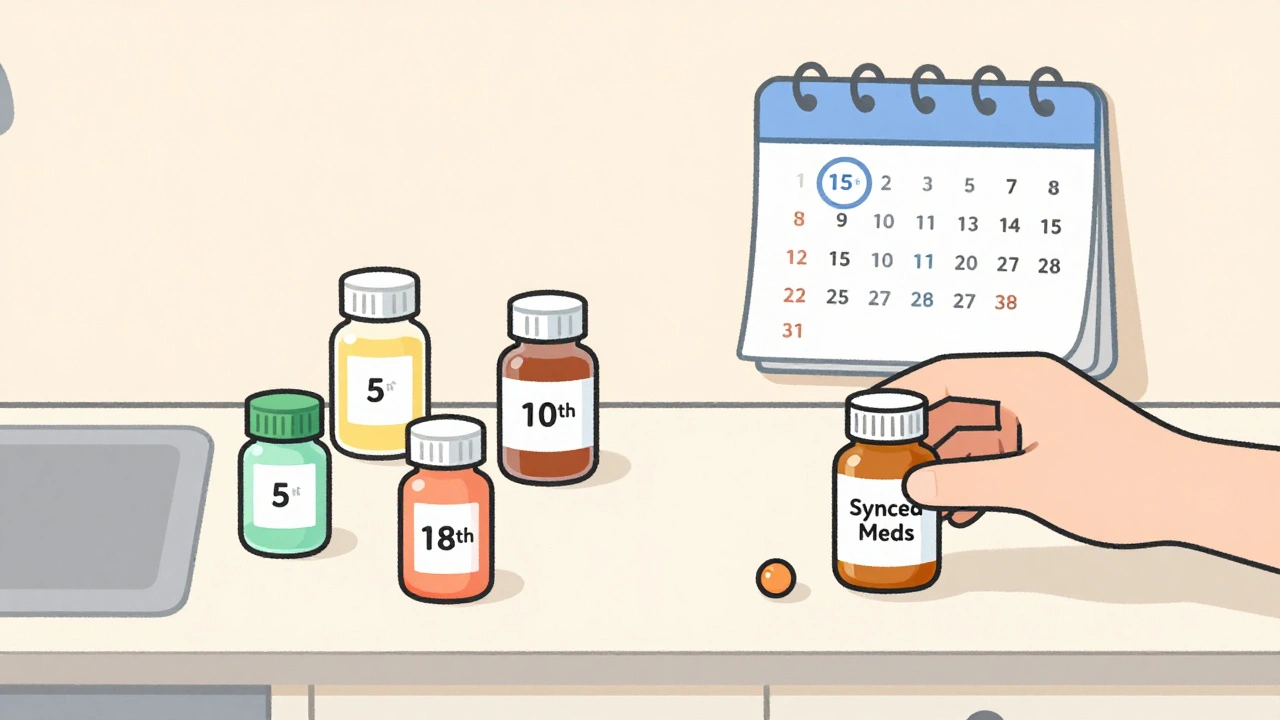
Managing multiple medications is exhausting. If you’re taking pills for high blood pressure, diabetes, cholesterol, and arthritis-all with different refill schedules-it’s easy to miss a dose. You might run out of one med before the others, forget when to pick up your next prescription, or just get overwhelmed. This isn’t just inconvenient. Missed doses lead to hospital visits, worsening health, and higher costs. But there’s a simple fix most people don’t know about: refill synchronization.
What Is Refill Synchronization?
Refill synchronization, also called med sync, is when your pharmacy lines up all your regular medications to be refilled on the same day each month. Instead of having to go to the pharmacy four or five times a month, you go once. Your pharmacist adjusts your prescriptions so everything lines up. If you take lisinopril on the 5th, metformin on the 10th, and atorvastatin on the 18th, they’ll work with your doctor and insurance to shift those dates so they all come due on, say, the 15th.This isn’t magic. It’s logistics. And it works. Studies show patients who use med sync improve their medication adherence by 3 to 8 percentage points on average. That might sound small, but for someone with heart disease or diabetes, that jump can mean the difference between staying out of the hospital and ending up in the ER.
Why Does It Work?
The biggest reason people miss doses isn’t because they don’t care-it’s because it’s too complicated. Your brain can’t keep track of five different refill dates, especially when you’re juggling work, family, and appointments. Med sync removes that mental load.When everything is synced, you develop a routine. You know: “On the 15th, I pick up my meds.” No more guessing. No more last-minute panic. Pharmacists also proactively check for new prescriptions, drug interactions, or changes in your health. You’re not just getting pills-you’re getting ongoing support.
One patient in Farmington, Missouri, had hypertension, type 2 diabetes, and high cholesterol. Before med sync, her adherence was only 65%. After syncing all five of her medications to one monthly date, her adherence jumped to 92%. Her blood pressure dropped. Her A1C improved. She didn’t have to call her doctor once in six months.
How It Works: The Four-Step Process
Getting started is easier than you think. Here’s how it actually happens:- Initial consultation - You sit down with your pharmacist (in person or over the phone). They review every medication you take, including over-the-counter and supplements. They check which ones are for long-term use-these are the ones that can be synced.
- Synchronization plan - The pharmacist calculates how to align your refills. They might give you a few extra pills at first so you don’t go without. For example, if your last refill of metformin was two weeks ago but your sync date is in a month, they’ll give you enough to cover the gap.
- Monthly refill - On your sync date, your medications are ready. You can pick them up, get them delivered, or even have them shipped to your home. Most pharmacies send a text or email reminder the day before.
- Monthly review - Your pharmacist checks in. Did you start a new med? Did your doctor change your dose? Are you having side effects? This isn’t just about refills-it’s about keeping you safe.
This process takes about 20 to 30 minutes the first time. After that, monthly check-ins are just 5 to 10 minutes. The time investment pays off in fewer missed doses and less stress.
Who Benefits the Most?
Med sync isn’t for everyone. It works best for people who:- Take three or more maintenance medications (like for blood pressure, diabetes, cholesterol, thyroid, or depression)
- Have chronic conditions that require daily, long-term treatment
- Struggle with remembering when to refill prescriptions
- Use a retail pharmacy (not mail-order)
Patients on mail-order services see smaller benefits because their refill cycles are already fixed by the insurer. But if you pick up your meds at CVS, Walgreens, or your local pharmacy, med sync can be a game-changer.
It’s especially powerful for seniors. Medicare Advantage patients enrolled in med sync showed a 0.08 to 0.11 improvement in PDC (Proportion of Days Covered)-that’s a 10% increase in adherence for some drug classes. That’s not just a statistic. It’s fewer falls, fewer strokes, fewer hospital stays.

What’s Holding People Back?
The biggest roadblock? Insurance.Many plans won’t let you refill a prescription early-even if it’s for synchronization. If your last refill was 20 days ago but your sync date is in 10 days, your insurance might block the early refill. That’s where your pharmacist steps in. They call your doctor to get a new prescription or work with your insurer to get an exception.
Another issue? Patient confusion. Some people think, “Why are you giving me extra pills?” or “Is this safe?” That’s why counseling matters. Pharmacists need time to explain the plan clearly. A 2021 Reddit thread from a pharmacy intern said it best: “The biggest hurdle is getting patients to understand why we’re adjusting their initial refill quantities.”
And not all pharmacies offer it. As of 2022, 87% of chain pharmacies (CVS, Walgreens, Rite Aid) have formal med sync programs. But only 45% of independent pharmacies do. If your local pharmacy doesn’t offer it, ask. Demand matters.
Real Results: The Numbers Don’t Lie
Let’s look at hard data:- Patients in med sync programs are 3 to 6 times more likely to stay on their meds than those without synchronization.
- One study found 68% of med sync users never ran out of medication-compared to just 42% of non-users.
- Medicare Advantage patients with synchronized refills had a PDC of 0.87, versus 0.84 for those without-meaning they had medication available 87% of the time.
- For cardiovascular drugs alone, a 1% increase in adherence saves Medicare $206 million a year.
And it’s growing fast. In 2014, about 355,000 people were enrolled. By 2022, that number jumped to 12 to 15 million. Why? Because it works-and because payers are starting to pay for it.
What’s New in 2025?
Med sync is no longer just a pharmacy perk. It’s becoming part of the healthcare system.CVS now links med sync to its digital health app. You get text reminders, refill tracking, and even alerts if you miss a pickup. Walgreens launched “Sync & Save” in early 2023, combining synchronization with copay discounts on common meds like metformin and atorvastatin.
Kroger Health is piloting virtual pharmacist visits tied to sync days. You pick up your meds, then hop on a 10-minute video call with your pharmacist to review how you’re doing. No extra appointment needed.
By 2025, the American Pharmacists Association predicts 75% of U.S. pharmacies will offer formal med sync programs. It’s becoming standard practice-not a bonus.
How to Get Started
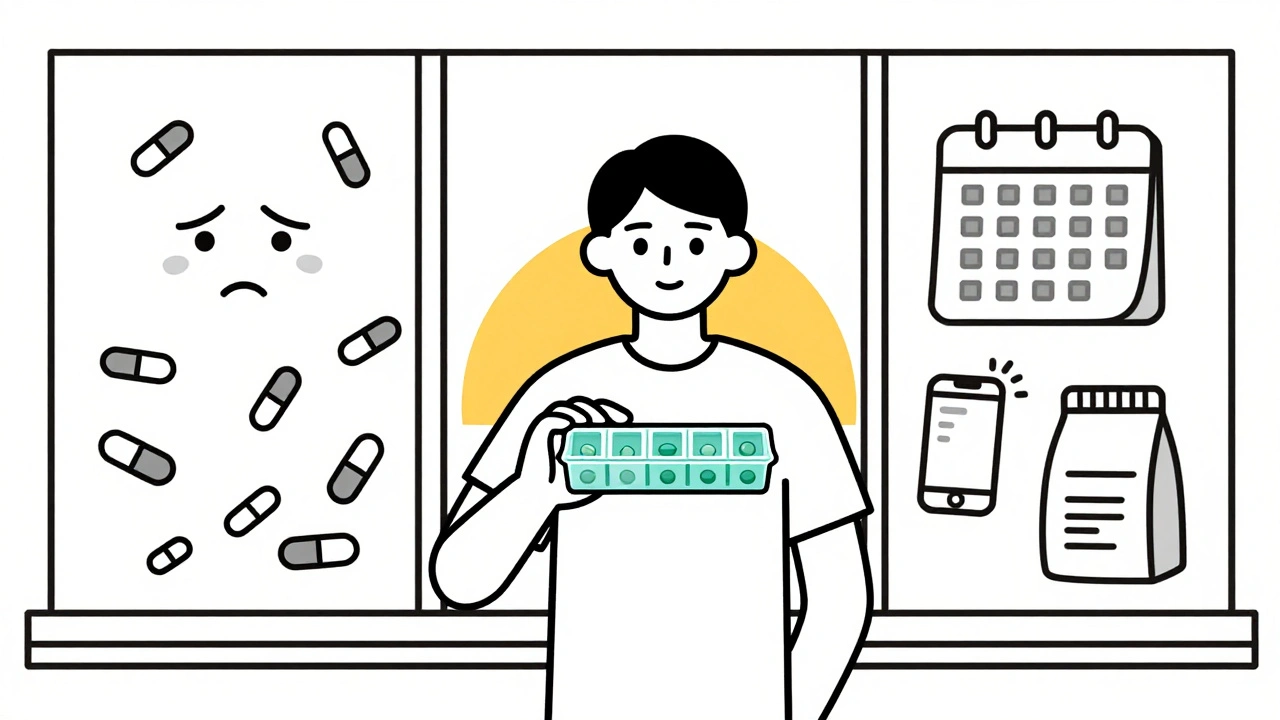
If you’re taking three or more maintenance meds, here’s what to do:- Call your pharmacy. Ask: “Do you offer medication synchronization?”
- If they say yes, schedule a time to meet with the pharmacist. Bring your list of all medications-including vitamins and OTCs.
- Ask: “Can you help me sync all my refills to one day?”
- Be patient. It might take a few weeks to get insurance approvals and doctor notes.
- Once it’s set, mark your calendar. Show up every month. Talk to your pharmacist. Ask questions.
If your pharmacy says no, ask why. Then ask them to consider starting it. Patient demand drives change.
What If It Doesn’t Work?
Sometimes, insurance won’t budge. Or your meds have different dosing schedules-like one you take once a day and another you take twice. That’s okay. You can still sync most of them. Even syncing three out of five meds helps.Or maybe you’re not ready for monthly visits. Try a hybrid: sync your chronic meds, but keep your pain meds or antibiotics on their original schedule. Progress, not perfection.
And if your pharmacist doesn’t explain it well? Find another one. This isn’t just a refill service-it’s a care service. You deserve someone who takes the time.
Final Thought: It’s Not About Pills. It’s About Control.
Medication adherence isn’t about being disciplined. It’s about design. If your system is broken, no amount of willpower will fix it. Refill synchronization fixes the system. It turns chaos into routine. Confusion into clarity. Stress into peace.You don’t have to be perfect. You just have to be consistent. And with med sync, consistency becomes easy.
Can I sync my medications if I use mail-order pharmacy?
Mail-order pharmacies usually have fixed refill cycles set by your insurance, so true synchronization is harder. But you can still ask your pharmacist to help you align your retail and mail-order refills as closely as possible. Some insurers now allow limited early refills for sync purposes-ask your pharmacist to call in a request.
Does med sync cost extra?
No. Refill synchronization is typically a free service offered by pharmacies. It’s built into your pharmacy’s medication management program. Some pharmacies even offer free delivery or discounts as part of the program. You’re not paying for the sync-you’re paying for the same meds, just more conveniently.
What if I start a new medication?
Your pharmacist will handle it. If you get a new prescription, they’ll adjust your sync date or add the new med to your monthly refill. You don’t have to do anything. Just let your pharmacist know when you start a new drug.
Can I sync medications with different dosing schedules?
Yes. Even if you take one pill once a day and another twice a day, your pharmacist can still sync them. They’ll give you enough supply to cover the difference-for example, a 30-day supply of your once-daily pill and a 60-day supply of your twice-daily pill, so they both refill on the same date.
Is med sync only for seniors?
No. While it’s most common among Medicare patients, anyone taking multiple chronic medications can benefit. Younger adults with conditions like asthma, depression, or rheumatoid arthritis often see the biggest improvements because they’re juggling work, family, and meds. Age doesn’t matter-complexity does.
Comments (13)