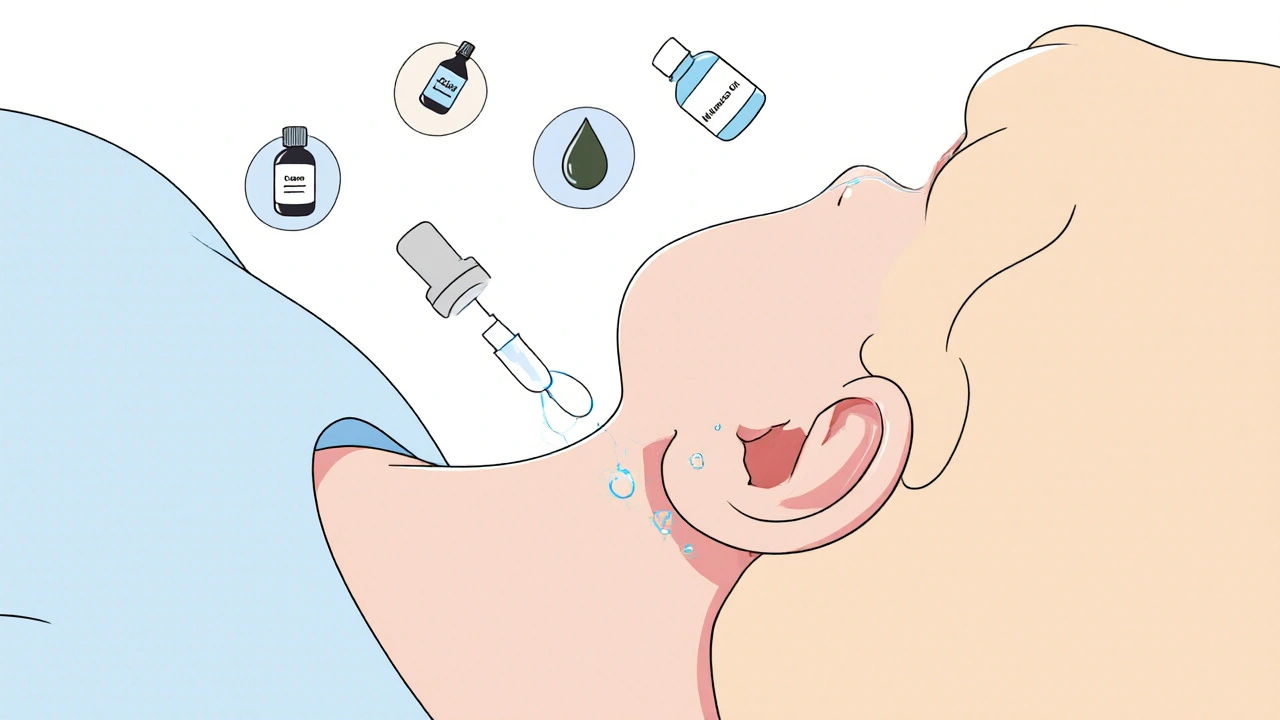
Earwax Softener: What Works, What Doesn’t, and How to Use It Safely
When your ears feel blocked or muffled, it’s often not an infection—it’s just earwax softener, a product designed to break down hardened earwax (cerumen) so it can drain naturally. Also known as cerumenolytics, these solutions are meant to make earwax removal easier and safer than using cotton swabs or other risky methods. Most people don’t realize earwax is actually protective—it traps dust, repels water, and keeps your ear canal from getting infected. But when it builds up, especially in older adults or people who use hearing aids, it can cause hearing loss, dizziness, or even pain.
Not all earwax softeners are created equal. Some are oil-based, like mineral oil or olive oil, and work slowly over days. Others use hydrogen peroxide or carbamide peroxide, which fizz and break down wax faster. Cerumen impaction, the medical term for earwax that’s stuck and causing symptoms is common in people over 65, kids with narrow ear canals, or those who clean their ears too often. That’s why many doctors recommend softeners before professional removal. But here’s the catch: if you have a perforated eardrum, an ear infection, or tubes in your ears, using any softener can cause serious harm. Always check with your doctor first.
Ear drops, the most common form of earwax softener come in bottles with droppers, and most instructions say to lie on your side for 5–10 minutes after applying them. That’s not just for comfort—it lets the liquid reach deep into the canal. You might feel a slight tingling or bubbling, especially with peroxide-based drops, but sharp pain means stop immediately. And don’t use a syringe to flush your ear unless your provider tells you to. Home irrigation can push wax deeper or damage your eardrum if done wrong.
Some people swear by home remedies—warm oil, vinegar mixes, even baby oil. But science doesn’t back most of them. A 2020 study in the British Journal of General Practice found that over-the-counter earwax softeners worked better than olive oil alone. And if you’ve tried softeners for a week and still feel blocked, it’s not that the product didn’t work—it’s that you might need professional cleaning. Audiologists and ENTs use gentle suction or irrigation tools that are far safer than anything you can do at home.
What you’ll find in the articles below are real comparisons: which earwax softeners actually dissolve wax fast, which ones are safest for kids, and what to do if you’ve been using them for months with no results. You’ll also learn how to tell the difference between earwax buildup and something more serious—like an infection or a hearing issue. No fluff. No marketing hype. Just what works, what doesn’t, and how to avoid the mistakes most people make when dealing with clogged ears.