
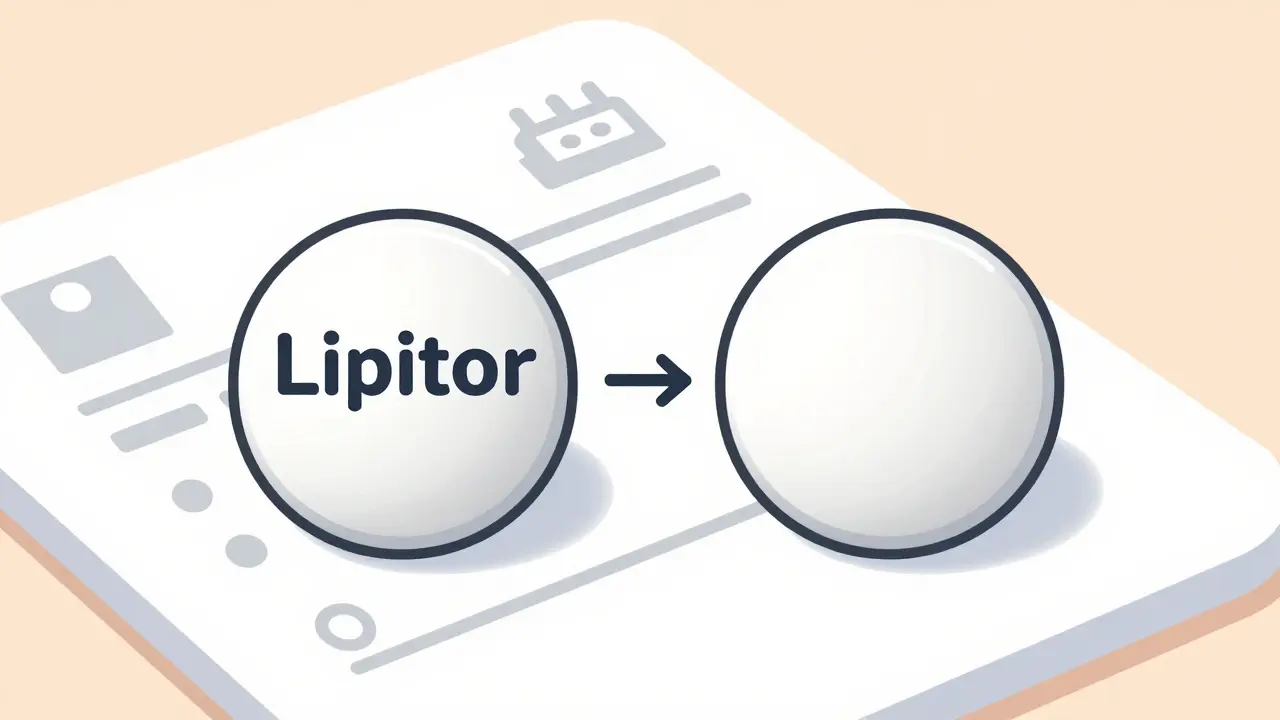
When your doctor prescribes a medication, you might get a pill that looks nothing like the brand-name version you saw on TV. That’s because you’re likely getting a generic. But not all generics are the same. There are two main types: authorized generics and traditional generics. And the difference between them can affect what’s actually in your medicine, how much you pay, and even how your body responds.
What Is an Authorized Generic?
An authorized generic is the exact same drug as the brand-name version - down to the last inactive ingredient. The only difference? It doesn’t have the brand name on the bottle or the pill. It’s made by the same company that makes the brand-name drug, using the same factory, same formula, same quality controls. It’s like buying the same coffee beans but in a plain bag instead of the branded one. The FDA calls it an "approved brand name drug that is marketed without the brand name on its label." That means if your doctor prescribes Lipitor, and you get an authorized generic, you’re getting the exact same atorvastatin tablets that Pfizer makes - just without the Pfizer name on it. Even the color, shape, and markings are identical, unless the manufacturer changes them slightly for legal reasons. Here’s the catch: authorized generics don’t go through the usual generic approval process. They’re sold under the original brand’s New Drug Application (NDA). That means the FDA doesn’t need to re-approve them. All the manufacturer has to do is notify the FDA they’re launching it. That’s why they can hit the market faster - sometimes even before the first traditional generic arrives.What Are Traditional Generics?
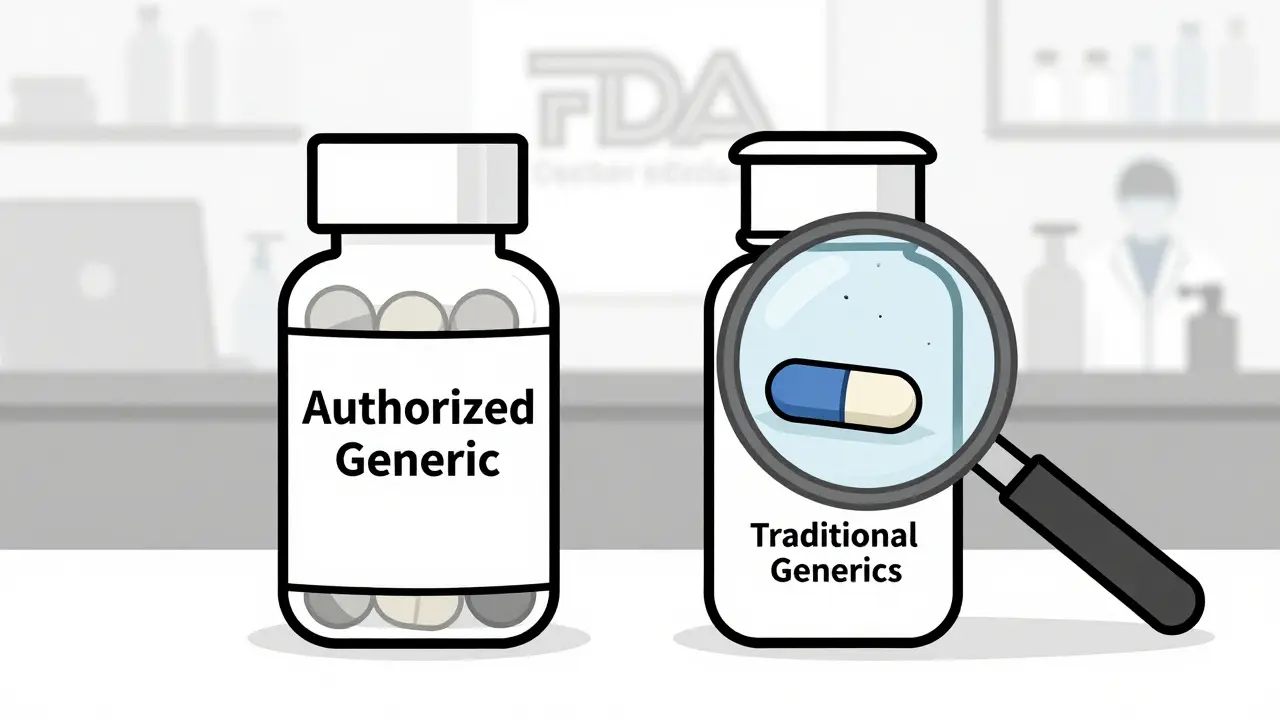
Traditional generics, sometimes called "typical generics," are made by different companies. They have the same active ingredient, strength, and dosage form as the brand-name drug. But here’s where things change: the inactive ingredients - things like fillers, dyes, binders, and coatings - can be different. These differences might sound small, but they matter. For most people, it makes no difference. But for drugs with a narrow therapeutic index - where even tiny changes in blood levels can cause problems - those inactive ingredients can affect how the drug is absorbed. Think about epilepsy meds, blood thinners like warfarin, or thyroid drugs. In those cases, switching between traditional generics can sometimes lead to unexpected side effects or reduced effectiveness. Traditional generics must prove they’re bioequivalent to the brand-name drug. That means they must deliver the same amount of active ingredient into your bloodstream at the same rate. But proving bioequivalence doesn’t mean identical ingredients. It just means the end result is close enough to work safely. They go through the Abbreviated New Drug Application (ANDA) process. That’s cheaper and faster than developing a new drug, but still takes time. And once approved, the first generic company to file an ANDA can get 180 days of exclusive rights to sell it - a big incentive to challenge patents.Key Differences at a Glance
| Feature | Authorized Generic | Traditional Generic |
|---|---|---|
| Manufacturer | Same as brand-name drug | Different company |
| Active Ingredients | Identical | Identical |
| Inactive Ingredients | Identical to brand | May differ |
| Regulatory Path | Under brand’s NDA | ANDA approval |
| Appears in FDA Orange Book? | No | Yes |
| When Can It Launch? | Can launch before patent expires | Only after patent expires or is challenged |
| Therapeutic Equivalence | Identical to brand | Bioequivalent, but not identical |
Why Does This Matter to You?
If you’re on a medication where consistency matters - like asthma inhalers, seizure drugs, or hormone therapies - the difference between these two types of generics can be real. Patients on Singulair (montelukast), for example, often report that the authorized generic works just like the brand, but some traditional generics seem less effective. That’s not in their head. It’s because the inactive ingredients in the traditional version might be changing how the drug dissolves in the gut. Pharmacists can substitute a generic without asking you - unless your doctor writes "dispense as written" or "DAW" on the prescription. But if you’ve had a bad reaction to a traditional generic before, you should ask your pharmacist: "Is this an authorized generic?" Here’s the thing: most people never notice a difference. For blood pressure pills, antibiotics, or antidepressants, traditional generics work fine. But for drugs where even a 5% change in absorption can cause trouble, you want the authorized version.Cost and Insurance
Authorized generics are often cheaper than the brand-name drug - sometimes as low as 20% of the price. But they’re usually not the cheapest option. Traditional generics often cost even less because multiple companies are competing to make them. Insurance companies usually prefer traditional generics because they’re cheaper. But if you’ve had issues with a traditional version, your insurer might cover the authorized generic if your doctor explains why. Some Medicare Part D plans even list authorized generics as preferred options for certain drugs. You can check your plan’s formulary - the list of covered drugs - to see what they prefer. If you’re paying out-of-pocket, ask your pharmacy for the lowest-cost option. Sometimes the authorized generic is priced higher than a traditional one, even though it’s the same drug.How to Tell Them Apart
This is the hardest part. Authorized generics aren’t listed in the FDA’s Orange Book, which is the main tool pharmacists use to check therapeutic equivalence. So unless your pharmacist knows the drug well, they might not realize what they’re dispensing. The best way to know? Look at the pill. If it looks exactly like the brand-name version - same shape, color, imprint - it’s likely an authorized generic. If it’s a different color or shape, it’s probably a traditional generic. You can also ask your pharmacist directly: "Is this an authorized generic?" They can check the manufacturer’s name. If it’s the same company that makes the brand, it’s authorized. If it’s Teva, Mylan, or Sandoz, it’s traditional. The FDA publishes a quarterly list of authorized generics, but it’s not easy to find. Most patients don’t know it exists. That’s why education matters.
What’s Changing in 2025?
Brand-name drugmakers are using authorized generics more strategically. Instead of waiting for traditional generics to enter the market, they’re launching their own version first. This lets them keep control over the product, capture price-sensitive customers, and undercut the competition before it even starts. Between 2010 and 2020, over 200 authorized generics hit the U.S. market. That number is growing. And for complex drugs - like inhalers, injectables, or extended-release pills - authorized generics are becoming the preferred path. Why? Because it’s harder to replicate those formulations exactly with a traditional generic. The FDA is also pushing for better labeling and transparency. In 2022, they updated rules requiring manufacturers to notify them before launching an authorized generic. That’s a small step toward making this information easier for patients and doctors to access.When to Ask for an Authorized Generic
You should consider asking for an authorized generic if:- You’ve had problems switching between traditional generics
- You’re on a drug with a narrow therapeutic index (like warfarin, levothyroxine, or phenytoin)
- You’re on an inhaler, nasal spray, or injectable - where formulation matters more
- You’ve noticed changes in how the drug works after switching
- You’re paying cash and the authorized generic is priced similarly to the traditional one
Final Thought: It’s Not About Cheaper - It’s About Consistent
The goal of generics is to lower costs without lowering quality. Authorized generics do that by offering the exact same product at a lower price. Traditional generics do it by offering a similar product at an even lower price. The choice isn’t always clear-cut. But if your health depends on precision - whether you’re managing asthma, epilepsy, or heart disease - you deserve to know exactly what’s in your medicine. Don’t assume all generics are the same. Ask. Check. Advocate. Your body will thank you.Are authorized generics as safe as brand-name drugs?
Yes. Authorized generics are made by the same company, in the same facility, using the exact same formula as the brand-name drug. The only difference is the label. They’re held to the same FDA quality standards and have the same safety profile.
Can I switch between authorized and traditional generics?
For most people, yes. But if you’re on a drug with a narrow therapeutic index - like warfarin, levothyroxine, or seizure medications - switching between types can cause changes in how your body absorbs the drug. Talk to your doctor before switching, especially if you’ve noticed side effects or reduced effectiveness.
Why aren’t authorized generics listed in the FDA’s Orange Book?
Because they’re not approved under the ANDA process. The Orange Book only lists drugs that went through generic approval. Authorized generics are sold under the original brand’s NDA, so they don’t appear in the database. That’s why pharmacists may not know they’re authorized generics unless they check the manufacturer.
Do authorized generics cost more than traditional generics?
Sometimes, but not always. Authorized generics are usually cheaper than the brand-name drug but can be slightly more expensive than traditional generics because there’s less competition. However, for some drugs, especially those with complex formulations, the authorized version may be priced the same or even lower.
How do I know if my pharmacy is giving me an authorized generic?
Ask your pharmacist directly. You can also check the pill’s appearance - if it looks identical to the brand-name version, it’s likely an authorized generic. Look up the manufacturer name on the bottle. If it’s the same company that makes the brand (like Pfizer, AstraZeneca, or Merck), then it’s authorized. If it’s Teva, Mylan, or Sandoz, it’s traditional.
Can my doctor prescribe an authorized generic by name?
Not directly - because they don’t have their own brand names. Your doctor will write the brand-name drug or the generic active ingredient. But they can write "dispense as written" or "DAW" to prevent substitution. If you want an authorized generic, you’ll need to ask your pharmacist to check the manufacturer.
Comments (9)
They're lying to us about generics. I swear the authorized ones make me feel weird too. Same pill, same company, but my anxiety spikes. They're testing us. They want us dependent. I read somewhere the FDA gets paid by pharma to look the other way. You think your pill is safe? It's not. It's never been.
I lived in India for a year and saw how generics work there. Same active ingredient, different fillers, and sometimes the pill dissolves slower or faster depending on the humidity. It’s wild how much environment affects absorption. I switched back to brand-name when I got back to the US just to be safe.
My grandma takes levothyroxine and she’s been on the same authorized generic for five years. One day the pharmacy switched her to a traditional one and she started feeling like she’d been dipped in ice water. No energy. No warmth. We went back to the authorized one and boom - she was herself again. Don’t underestimate the little stuff. Your body notices.
In India, generics are everything. We don’t have choice most times. But if a medicine doesn’t work, we go back to the doctor. No one cares about authorized or not. We care if it works. If your body reacts, tell your doctor. Simple.
The regulatory distinction between NDA and ANDA is critical. Authorized generics bypass bioequivalence testing not because they’re superior, but because they’re identical by design. This is not a marketing gimmick - it’s a regulatory artifact. Patients deserve transparency, but not emotional appeals disguised as science.
Man, I used to freak out about generics until I realized most of them work just fine. My blood pressure med? Traditional generic. Been stable for three years. Don’t stress too hard. Your body’s tougher than you think. But hey, if it makes you feel better to ask for the authorized one, go for it. No shame in peace of mind.
Authorized generics are a corporate strategy, not a patient benefit. The same company that patents the drug then produces a cheaper version to undercut competitors before they even enter the market. This isn’t about quality - it’s about monopolistic control disguised as choice. The FDA’s silence on this is complicity. The Orange Book exclusion? A smokescreen. You’re being manipulated into thinking you have options when you don’t.
So let me get this straight - we’re supposed to be grateful that Big Pharma lets us buy their exact same pill without the logo, but if we get the same active ingredient from someone else, suddenly we’re playing Russian roulette with our thyroid?
It’s like buying a Toyota Camry and being told the one made by Toyota is "authentic" but the one made by another factory with the same blueprints is "risky."
Who’s really keeping us safe here? The FDA? Or the fact that no one wants to admit the entire generic system is a game of musical chairs with placebo fillers?
Interesting. I’ve never thought about the pill appearance as an indicator. Just checked my last prescription - it’s a white oval with "10" on it. The brand is blue oval with "Lipitor." Mine’s different. So… traditional. I wonder if that’s why I’ve been feeling a bit off lately. Might ask my pharmacist next time.