
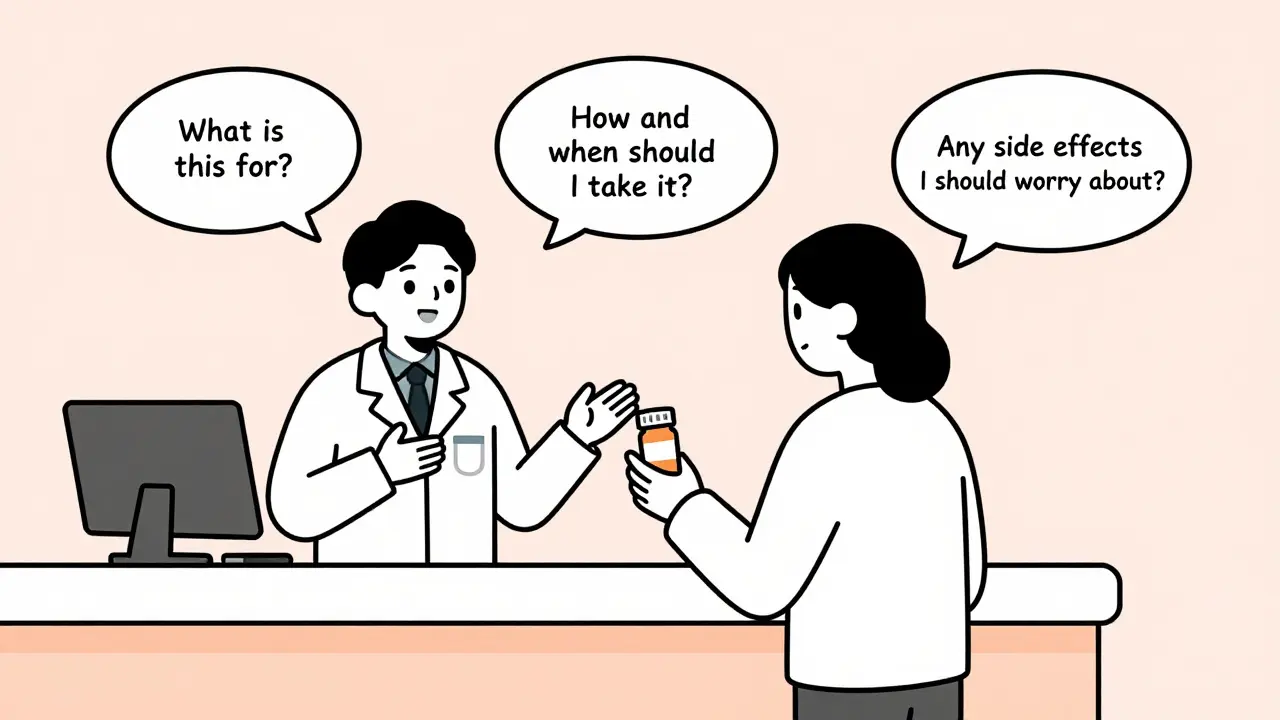
Every time you pick up a new prescription, you’re holding more than just pills - you’re holding a tool that can heal you… or hurt you. The difference often comes down to one thing: what you ask at the pharmacy counter. Most people walk away with their meds and never think twice. But in 2026, that’s no longer enough. Medication errors are still one of the leading causes of preventable harm in healthcare. The CDC says over 106,000 emergency room visits each year are tied to bad reactions from drugs - many of which could have been avoided with a simple conversation.
What is this medication used for?
This sounds basic, but it’s the most overlooked question. You might get a script for something like lisinopril and assume it’s for high blood pressure. Maybe it is. But your doctor might have prescribed it for kidney protection after a recent diabetes diagnosis. If you don’t know why you’re taking it, you won’t know if it’s working - or if something’s wrong. Pharmacists see this all the time: patients taking meds they don’t understand, skipping doses because they think it’s "just for show," or stopping because they felt fine. Ask: "What condition is this meant to treat?" And don’t stop there. Follow up with: "Will this fix the problem, or just manage it?"
How and when should I take this medication?
Dosage isn’t just about how many pills. It’s about timing, food, and even body position. Some pills need to be taken on an empty stomach - eat too soon after, and they won’t absorb. Others need to be taken with food to avoid stomach damage. Levothyroxine, for example, must be taken first thing in the morning, 30 to 60 minutes before eating - and never with coffee or calcium supplements. Taking it wrong can mean your thyroid levels stay off for weeks. Ask: "Should I take this with food, or on an empty stomach?" "Can I take it at night instead of morning?" "Do I need to wait before or after eating?" And always confirm the exact dose: "Is this 5 mg or 50 mg?" A single zero can be deadly.
What side effects should I expect - and which ones mean I need to call a doctor?
Everyone knows drugs can cause nausea or drowsiness. But not everyone knows when those side effects become dangerous. Warfarin can cause bruising - that’s normal. But if you start bleeding from your gums, having nosebleeds that won’t stop, or passing dark, tarry stools, that’s an emergency. Your pharmacist can tell you the difference between "mild and common" and "serious and urgent." Ask: "What side effects are normal?" "Which ones should I never ignore?" "When should I go to urgent care?" Some medications, like statins, can cause muscle pain that turns into rhabdomyolysis - a rare but life-threatening condition. If you’re taking one, you need to know the warning signs.
Does this interact with my other medications, supplements, or foods?
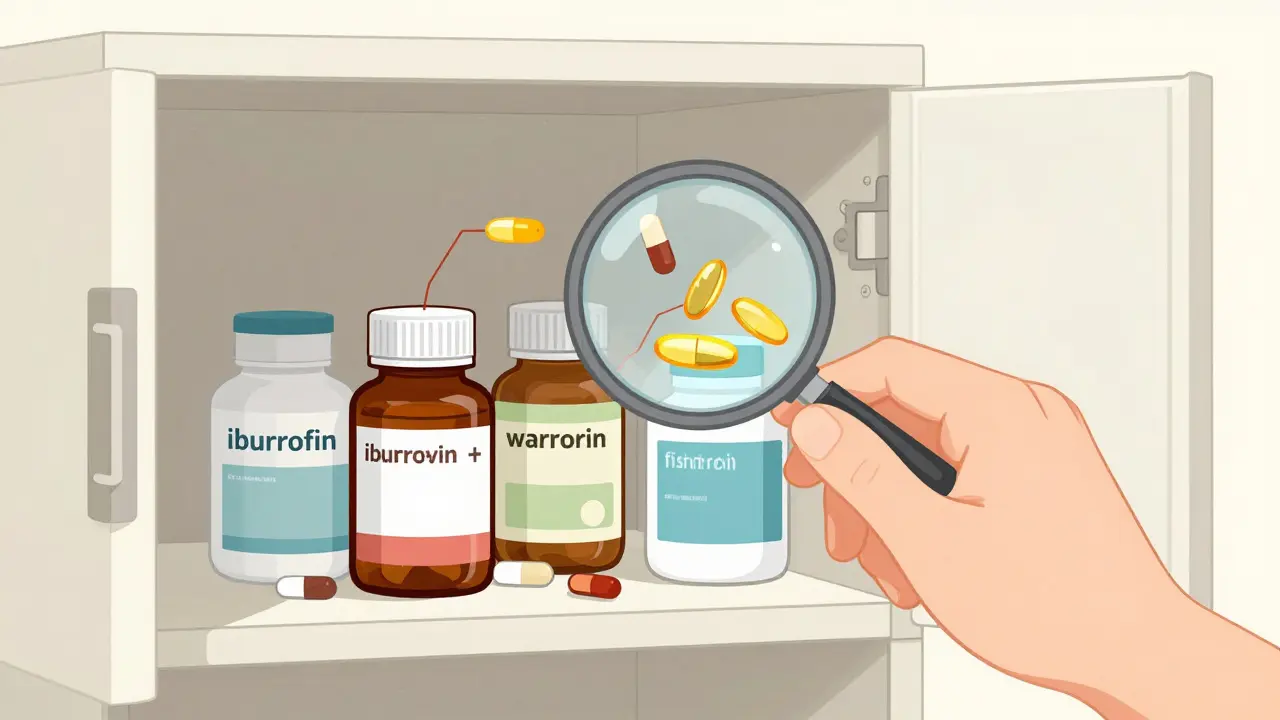
This is where most people get caught. You might be taking ibuprofen for arthritis, warfarin for blood clots, and a daily fish oil supplement. Sounds harmless - until you learn that combining them can increase your risk of internal bleeding by 40-60%, according to FDA reports. Even grapefruit juice can wreck the effect of simvastatin or amlodipine. Herbal supplements like St. John’s Wort can make birth control fail or reduce the power of antidepressants. Bring your whole medicine cabinet. Ask: "What else am I taking that could clash with this?" Include vitamins, CBD, herbal teas, and even over-the-counter cold meds. Your pharmacist will check 10-15 items you forgot to mention.
Is there any ingredient that might cause an allergic reaction?
Most people think allergies mean rashes or swelling. But some reactions are silent - like a sudden drop in blood pressure or trouble breathing hours after taking a pill. You might not know you’re allergic to lactose or tartrazine (a yellow dye) until you have a reaction. Pharmacists have access to full ingredient lists that doctors don’t always see. Ask: "Does this contain any dyes, preservatives, or fillers I should avoid?" If you’re allergic to peanuts, shellfish, or latex, make sure your pill doesn’t contain related compounds. One patient in Edinburgh discovered her chronic headaches were caused by a dye in her metformin - switching brands solved it.
How should I store this medication properly?
Heat, light, and moisture can turn medicine into junk - or worse, poison. Insulin left in a hot car can lose 30% of its potency in under an hour. nitroglycerin tablets expire in weeks if not kept in their original bottle. Some meds need refrigeration; others must stay dry. Ask: "Should I keep this in the fridge?" "Can I leave it in my purse or glove compartment?" "Does it need to stay in the original packaging?" A Reddit user in the r/pharmacy community shared how her father’s epinephrine pen failed during an allergic reaction because he’d stored it in his sun-baked truck. That’s not a rare mistake - it’s common.
May I repeat back what you just told me?
This isn’t just a polite gesture - it’s a safety tool. A 2020 study in the Journal of the American Pharmacists Association found that when patients repeated instructions back, communication errors dropped by 31%. Pharmacists at Pocono Pharmacy started using this "teach-back" method in 2023 and saw a 44% drop in readmissions. Say: "So, just to make sure I got it right - I take this twice a day, after meals, and I shouldn’t drink grapefruit juice?" If they say yes, you’re golden. If they correct you - you just avoided a mistake.
What should I do if I miss a dose?
Life happens. You oversleep. You forget. You’re traveling. But the answer isn’t "just take two next time." For some drugs, like oral contraceptives or antibiotics, doubling up can cause nausea, dizziness, or even treatment failure. For others, like blood pressure meds, skipping a dose can spike your numbers dangerously. Ask: "If I miss a dose, what should I do?" "Should I skip it? Double it? Take it as soon as I remember?" Write it down. Don’t rely on memory.
Are there any lifestyle changes I should make while taking this?
Some medications require more than just swallowing a pill. Fluoxetine can make you more sensitive to sunlight - you might burn easier. doxycycline can cause severe sunburns if you’re out in the sun. diuretics mean you need to drink more water and watch your salt. methotrexate requires avoiding alcohol. Ask: "Should I change how I exercise, drink, or spend time outside?" "Will this affect my sleep, mood, or energy?" Your pharmacist knows these hidden effects better than your doctor.
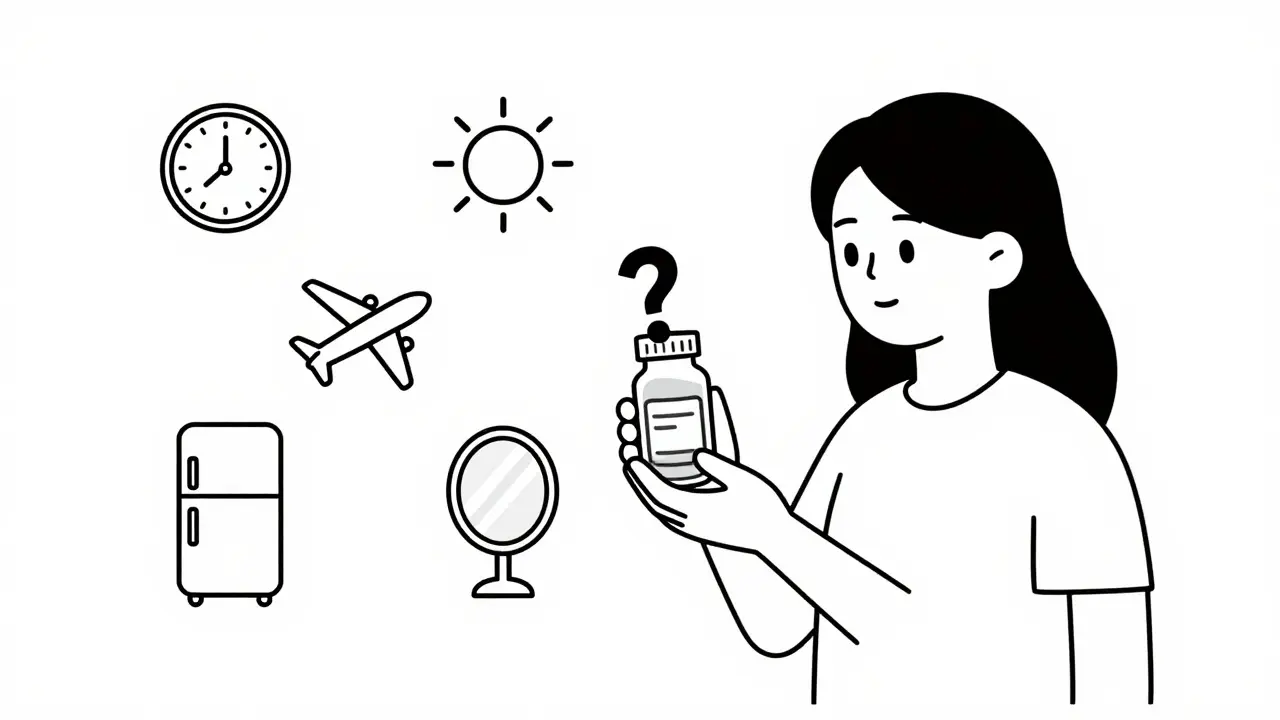
Can I get this in a different form - like liquid, patch, or capsule?
If you have trouble swallowing pills, you’re not alone. But many people don’t ask for alternatives. Some medications come in patches, liquids, or dissolvable tablets. metoprolol has a liquid form for kids and elderly patients. estradiol is available as a patch, gel, or pill. Ask: "Is there another way to take this that might be easier?" Even small changes - like switching from a tablet to a capsule - can improve absorption and reduce side effects.
How long should I take this?
Antibiotics? You finish the full course. But what about painkillers? Blood pressure meds? Antidepressants? Some are meant for short-term use. Others are lifelong. If you’re not sure, you might stop too soon - or keep taking something you no longer need. A 2023 study found that 37% of elderly patients were still taking medications they’d been prescribed years ago - with no ongoing need. Ask: "Is this a short-term fix, or something I’ll need for months or years?" "Should I have a review in three months?" "Will my doctor check if I still need it?"
What if I’m traveling or going on vacation?
Time zones, heat, lost luggage - they all mess with your meds. Ask: "Can I take this on a plane?" "Do I need to keep it cool?" "How do I refill it if I’m away longer than expected?" Some countries have different rules - you can’t bring certain painkillers into the UK from the US. Your pharmacist can help you plan ahead. Bring your meds in original bottles with labels. Never pack them in checked luggage.
What should I do if I notice a change in how the pill looks?
One patient in Scotland noticed her levothyroxine pill was a different color. She thought it was a new brand - but it was actually a completely different drug. The pharmacy had misfilled it. According to ISMP, 18% of dispensing errors happen because pills look different from what the patient expects. Always check: "Is this the same as last time?" "Why does it look different?" "Can you confirm the name and dose?" If something looks off - don’t take it. Ask to speak to the pharmacist.
What’s the most important question to ask at the pharmacy?
The most important question is: "What is this medication used for?" Without knowing why you’re taking it, you can’t tell if it’s working or if something’s wrong. Many patients take meds for years without understanding their purpose - which increases the risk of misuse, missed doses, or dangerous interactions.
Can I ask the pharmacist about over-the-counter drugs I’m taking?
Yes - and you should. Pharmacists need to know everything you’re taking, including vitamins, herbal supplements, eye drops, and even topical creams. Many dangerous interactions happen with OTC products. For example, taking ibuprofen with a blood thinner can raise bleeding risk. Even something as simple as a cold medicine with pseudoephedrine can spike your blood pressure if you’re on heart medication.
Do I need to bring all my medications to the pharmacy?
Always. Bring your pill bottles, supplement jars, patches, and even creams. Pharmacists can spot duplicate prescriptions, dangerous combinations, or expired meds you forgot about. A Johns Hopkins study showed that bringing all medications to a review reduces polypharmacy risks by 29%. Many errors happen because doctors and pharmacists only see part of the picture.
Are pharmacists really trained to catch drug interactions?
Absolutely. The American Pharmacists Association found that 89% of pharmacists catch potentially harmful interactions during patient consultations, and 67% prevent serious adverse events just by talking to patients. Pharmacists don’t just fill prescriptions - they’re trained to analyze your entire medication profile. They use databases that flag interactions you’d never know about.
What if I feel rushed at the pharmacy?
It’s okay to ask for more time. Say: "I have a few questions about my meds - can we take five extra minutes?" Most pharmacists will accommodate you. If they don’t, ask if you can schedule a Medication Therapy Management (MTM) appointment - these are free under Medicare Part D and designed for people on multiple medications. You can also ask for a printed guide or use the BeMedWise checklist, which over 247,000 people downloaded in 2023.
Medication safety isn’t about being paranoid - it’s about being smart. The system isn’t perfect. Pharmacies are busy. Prescriptions get misread. Pills look alike. But you have more power than you think. Asking five simple questions can cut your risk of harm in half. Don’t wait until something goes wrong. Make every pharmacy visit a safety check - not just a pickup.
Comments (14)
Love this breakdown! Seriously, so many people treat pharmacies like vending machines. I used to just grab my scripts and bolt - until my grandma almost had a stroke because she didn’t know her blood pressure med was interacting with her fish oil. Now I ask EVERYTHING. Pharmacists are the unsung heroes of healthcare. Bring your whole medicine cabinet. Say "what’s this for?" even if it feels dumb. It saves lives. 💪💊
This article is basic. In India we’ve been doing this for decades. Pharmacist knows everything. No need for 12 questions. Just listen. Take medicine. Done. Westerners overcomplicate everything. We don’t need checklists. We have experience. Simple.
Look. I get it. Ask questions. But let’s be real - most pharmacists are overwhelmed. I’ve been there. 12 people in line. You ask "what’s this for?" and they sigh like you just asked them to solve world hunger. I’m not saying don’t ask - I’m saying don’t expect a TED Talk. Sometimes the answer is "it’s for blood pressure" and you just have to trust the system.
Wow. A whole article about asking questions. Groundbreaking. Next up: "Top 10 Ways to Remember to Brush Your Teeth". This is the kind of content that makes me wonder if journalism is dead.
Stop overcomplicating. Just ask one thing: what’s this for? Everything else is noise.
Did you know the government puts tracking chips in pills? Not the kind you think. They use the dye in meds to monitor your behavior. I read it on a forum. That’s why they want you to ask questions - to normalize surveillance. Don’t take anything unless you’ve cross-checked the batch number with the FDA’s secret database. I’ve got screenshots.
I used to trust pharmacists. Then I got prescribed a generic version of my antidepressant. Same name. Different color. I didn’t ask. Three weeks later I was crying in a Walmart parking lot. Turns out the filler was soy. I’m allergic. They didn’t tell me. No one ever tells you. Now I ask about every ingredient like it’s a bomb. I carry a printed list. I have a spreadsheet. I’m not paranoid. The system is rigged.
Brilliant piece. I’m a pharmacist in Manchester and I’ve seen this firsthand. One guy came in for his statin - never asked what it was for. Turned out he’d been taking it for 7 years after a heart scare… and his cholesterol was normal. He’d been on it because his doc was lazy. We caught it. He stopped. His liver enzymes went back to normal. Ask. Always ask. It’s not about being difficult. It’s about being alive.
Yesss!! This is why I always bring my whole pillbox to the counter 🙌 I used to just hand over the script and leave. Now I say "I’m a little nervous about this one - can we go over it?" and they always slow down. One time I asked about grapefruit and they said "oh wow, you’re the first person this week who knew to ask!" 😊 You’re not being annoying - you’re being smart. And you’re helping them too!
I’ve been managing chronic pain for 12 years and I’ve learned the hard way that every medication has a hidden layer. I used to think the label was enough. Then I found out my muscle relaxer was worsening my sleep apnea. My pharmacist caught it because I told her I was snoring louder. She said, "That’s not in the pamphlet, but I’ve seen it three times this month." Now I bring a notebook. I write down every side effect, even if it seems silly. I’ve saved myself from three ER trips. It’s not paranoia - it’s self-advocacy. And if you’re too tired to ask? Write it down. Text it. Whisper it to your dog. Just don’t let silence be your default.
I work in a pharmacy. We have a 3-minute window to fill 15 scripts. Most people just nod and walk away. But the ones who ask? They’re the ones who come back with thank-you notes. One lady asked if her new blood pressure med was okay with her yoga routine. Turns out it was fine - but we ended up talking for 20 minutes. She cried. Said she’d never felt seen. I don’t get paid for that. But I’ll never forget it. Don’t be afraid to ask. You’re not wasting time. You’re building safety.
good points. i always ask about interactions. even with my coffee. my pharmacist laughed but said "most people dont even know coffee can mess with antibiotics." so now i ask. simple. free. lifesaving. thanks for the reminder.
Let’s be honest: the most important question isn’t "what’s this for?" - it’s "are you sure this is the right drug?" I’ve seen 17-year-olds get 80-year-old prescriptions. I’ve seen people get insulin labeled as metformin. The system is broken. Pharmacists are overworked. Labels are misprinted. The FDA doesn’t even audit 30% of generics. You think asking "what’s this for?" fixes that? No. You need to demand a printed pill ID, check the NDC number, and compare it to the original prescription. Or you’re gambling with your life.
My sister in Delhi takes 12 pills a day. No one asks her anything. She just gets refills from a roadside shop. I told her to ask questions. She said, "What for? The man smiles. He gives me the right color. That’s enough." I cried. This isn’t about education. It’s about access. We need pharmacies in villages. Not just checklists.