
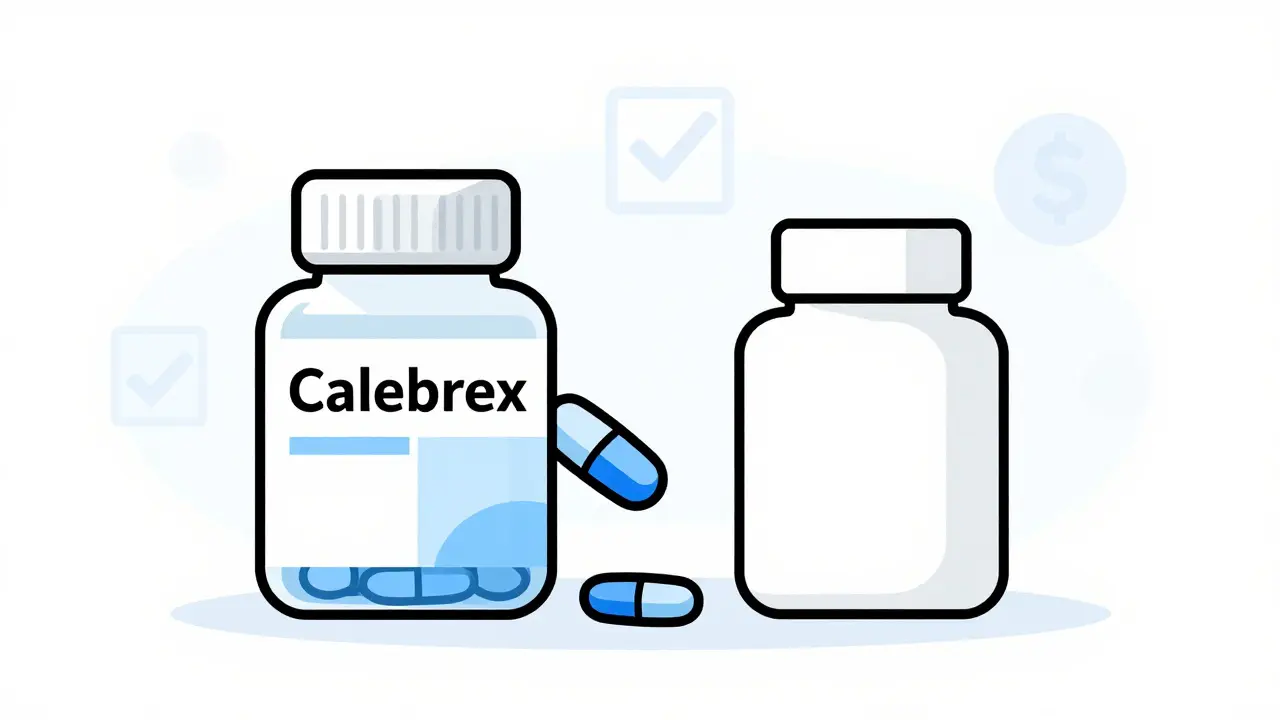
When your prescription costs too much, you might hear your pharmacist say, "There’s an authorized generic available." But what does that actually mean? And more importantly - which drugs have one?
An authorized generic isn’t just another cheap version of your medicine. It’s the exact same pill, capsule, or inhaler you’ve been taking - same active ingredient, same inactive ingredients, same manufacturer, same factory. The only difference? No brand name on the label. That’s it.
The U.S. Food and Drug Administration (FDA) defines it clearly: an authorized generic is a brand-name drug sold without the brand name on the packaging. It’s made under the original drug’s approval, not a separate generic application. That means no guesswork about whether it works the same. If your doctor prescribed you Celebrex, and you get an authorized generic of celecoxib, you’re getting the exact same chemistry inside the pill.
Why Authorized Generics Exist
Brand-name drug makers don’t just sit back when their patents expire. They fight to keep some of the market. One way? Launch their own generic version - under a different label, at a lower price. This is called an authorized generic. It’s not a loophole. It’s legal, FDA-approved, and happens in plain sight.
Think of it like this: you own a popular coffee shop. When a new competitor opens down the street selling the same beans and brewing method, you don’t shut down. You open a second location, sell the same coffee in plain cups, and charge less. That’s what pharmaceutical companies do with authorized generics.
Why do they do it? Two reasons: first, to keep customers from switching to other generic brands that might cut corners on fillers or coatings. Second, to slow down the price drop. Studies show that when an authorized generic enters the market, prices for traditional generics fall 15% less in the first year than they would otherwise. It’s a business move - but it also gives patients a reliable, low-cost option.
How Authorized Generics Are Different From Regular Generics
Regular generics must match the brand’s active ingredient and prove they work the same way - but they can use different fillers, dyes, or binders. That’s fine for most people. But for some medications, those tiny differences matter.
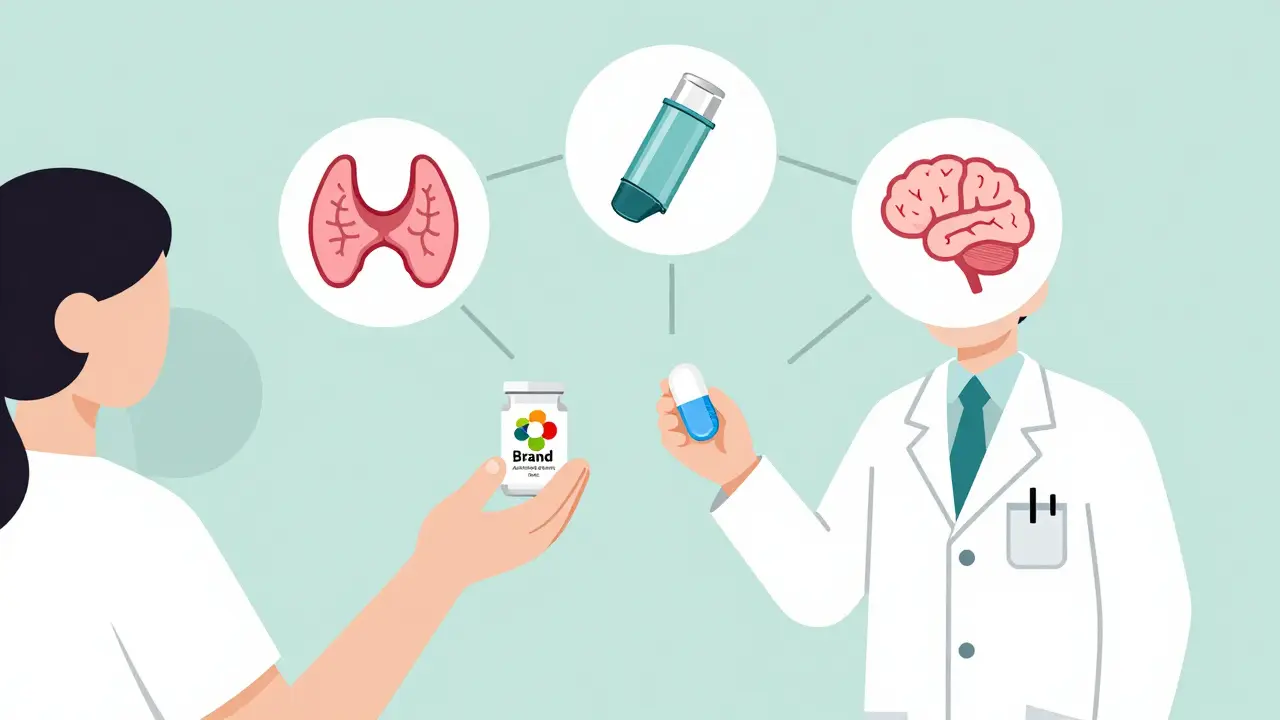
Take levothyroxine, used for thyroid replacement. Even small changes in inactive ingredients can affect how well it’s absorbed. Patients who switched from brand-name Unithroid to a regular generic sometimes reported fatigue, weight gain, or heart palpitations. When they switched to the authorized generic - same formulation, same manufacturer - symptoms often disappeared.
Same goes for colchicine, used for gout. Traditional generics had different coatings that caused stomach upset in some patients. The authorized generic, made by the original maker, didn’t. That’s why doctors and pharmacists often recommend authorized generics for drugs with a narrow therapeutic index - where the difference between a helpful dose and a harmful one is small.
Another key difference? The FDA doesn’t list authorized generics in the Orange Book, where traditional generics are published. That’s because they don’t go through the Abbreviated New Drug Application (ANDA) process. They’re covered under the original brand’s approval. So if you’re looking for them, you won’t find them in standard generic drug databases. You have to check the FDA’s official authorized generic list - updated as recently as October 2025.
Drugs With Authorized Generics in 2026
Not every brand-name drug has an authorized generic. Only about 10% do. But for the ones that do, the options are growing. Here are some of the most commonly prescribed ones available right now:
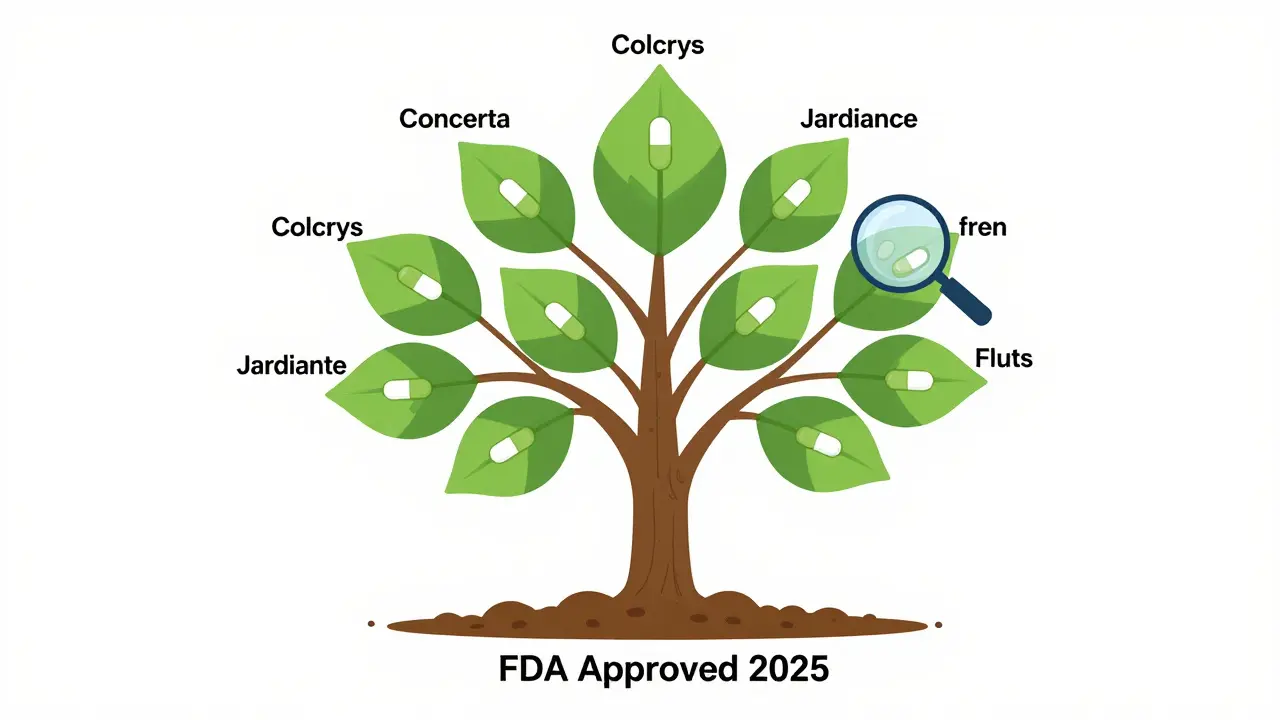
- Colcrys (colchicine) - Used for gout. The authorized generic is made by Prasco Laboratories and is chemically identical to the original. Many patients report fewer stomach issues with the authorized version.
- Concerta (methylphenidate ER) - For ADHD. The authorized generic is sold under Watson/Actavis and has the same extended-release mechanism. Parents often choose this when their child had side effects from other generics.
- Celebrex (celecoxib) - A COX-2 inhibitor for pain and inflammation. Greenstone Pharmaceuticals makes the authorized generic. Patients who had skin reactions to other generics found relief switching to this one.
- Unithroid (levothyroxine) - Thyroid hormone replacement. Jerome Stevens Pharmaceuticals produces the authorized version. Clinically, it’s the gold standard for patients who struggled with other generics.
- ProAir HFA (albuterol sulfate) - An inhaler for asthma. Teva’s authorized generic launched in 2019 after the brand’s patent expired. It’s now widely available and often cheaper than the brand.
- Jardiance (empagliflozin) - A newer diabetes medication. In late 2025, Boehringer Ingelheim launched its authorized generic, making this one of the most recent additions to the list.
- Prozac (fluoxetine) - The original SSRI antidepressant. An authorized generic has been available since 2018 and is stocked by most major pharmacies.
- Prilosec (omeprazole) - A common heartburn drug. The authorized version is widely used and often the lowest-cost option at pharmacies like CVS and Walgreens.
The FDA’s official list includes over 200 authorized generics as of October 2025. New ones are added every few months, especially after major patents expire. If your medication is expensive, ask your pharmacist: "Is there an authorized generic for this?" They can check the FDA’s database or their pharmacy system’s manufacturer codes.
Why Your Pill Looks Different
You might open your prescription and think, "This isn’t what I got last month." The shape, color, or imprint might be different. That’s normal. Authorized generics are allowed to look different from the brand name - they just have to be chemically identical.
Pharmacists are trained to recognize this. But patients often get confused. A 2022 survey by the American Pharmacists Association found that 40% of patients who switched to an authorized generic thought it was a mistake or a lower-quality product. That’s why counseling matters.
Good pharmacists will say: "This is the exact same medicine, just without the brand name. The company that made your old prescription made this one too. No changes to how it works inside your body."
How to Find Out If Your Drug Has an Authorized Generic
Don’t guess. Ask. Here’s how:
- Check the FDA’s official Listing of Authorized Generic Drugs (updated October 2025). You can search by brand name or generic name.
- Ask your pharmacist directly. They can look up the manufacturer code in their system. Authorized generics often show up with a note like "AG" or "Authorized Generic" next to the generic name.
- Use GoodRx or SingleCare. These apps often flag authorized generics with a special badge and show price comparisons.
- Call your insurance provider. Some plans prioritize authorized generics because they’re cheaper than the brand but cost the same as traditional generics.
If your drug isn’t on the list, it doesn’t mean you’re out of luck. You might still get a traditional generic - just know it could have different fillers. For critical meds like warfarin, levothyroxine, or seizure drugs, stick with the authorized version if available.
What to Do If Your Pharmacy Doesn’t Stock It
Some pharmacies don’t carry authorized generics because they’re less common. But that doesn’t mean you can’t get one.
Ask them to order it. Most pharmacies can get it within 1-2 days. If they say no, ask for a different location. Chain pharmacies like CVS, Walgreens, and Rite Aid often stock them. Independent pharmacies may need a little more time - but they can usually source them.
Insurance may not automatically cover it, but they’re required to cover it if it’s on the FDA list. If you’re denied, file a formulary exception. Cite the FDA listing and your doctor’s note that you need the identical formulation.
Bottom Line: Should You Use an Authorized Generic?
If your drug has one - yes, use it. It’s the safest, most predictable generic option available. You get the same quality as the brand, at a fraction of the cost. No hidden differences. No guesswork.
For chronic conditions where small changes matter - thyroid, epilepsy, heart rhythm, or psychiatric meds - it’s not just a cost-saving trick. It’s a safety feature.
And if your drug doesn’t have an authorized generic yet? Keep checking. More are added every year. In 2024 alone, over 30 new authorized generics hit the market. By 2027, experts predict that number will grow by 5-7% annually.
The bottom line? Don’t settle for a generic just because it’s cheap. Ask if there’s an authorized one. If there is - take it. Your body will thank you.
Comments (13)
So if I'm getting my thyroid med from a big chain pharmacy and it looks totally different, I should ask if it's the authorized generic? This is game-changing info. I've been wondering why my energy crashed last month.
Okay but let's be real here - the whole authorized generic thing is just pharma's way of keeping their profits up while pretending they're helping patients. They make the exact same pill, slap a new label on it, and call it a win. Meanwhile, real generics are perfectly fine for 95% of people. Stop overcomplicating this.
This is such an important post!! 🙌 I'm a pharmacist and I can't tell you how many patients panic when their pill changes color or shape. We always explain: 'Same factory, same chemist, same you - just no fancy logo.' Seriously, if your med has an authorized generic, grab it. Especially for thyroid, seizure, or heart meds. It's not a gamble.
Wow. Another feel-good article from Big Pharma apologists. Let me guess - next you'll be telling us that insulin prices are fair because 'authorized generics exist'? This is manipulation disguised as education. The fact that we need to hunt down these 'authorized' versions just proves the system is broken. Stop patting yourselves on the back.
My uncle in Nigeria takes medicine from India. He never heard of this. But he says if the pill works, why care who made it? Maybe this is for rich countries only.
So let me get this straight - the same company that charges $500 for Celebrex is now selling the exact same pill for $12 and calling it a 'generous' move? What a surprise. They're not helping us. They're just trying to outmaneuver the other generics. Still, I'll take the cheaper pill. Even if it's a corporate power play, I'm not turning down savings.
Authorized generic? Sounds like marketing jargon to make people feel better about paying less. I just want the cheapest thing that works. Who cares who made it?
Just checked my prescription for Concerta - yep, it's the authorized generic. My son’s been on it for 6 months now, no issues. I used to stress about the other generics because of stories online. This post cleared up so much. Thanks for the clear breakdown.
For those unfamiliar with the regulatory framework, the key distinction lies in the NDA vs. ANDA pathways. Authorized generics are produced under the originator’s NDA, meaning bioequivalence is pre-established via the brand’s clinical data. Traditional generics undergo ANDA review, which requires in-vitro and in-vivo equivalence testing - a process that can introduce variability in excipient profiles. This is why, for narrow-therapeutic-index agents like levothyroxine, the AG option remains clinically superior.
Back home in India, we have a similar thing - 'same medicine, different name'. But here, they call it 'branded generic'. People trust it more because the same company made it. This post made me realize - maybe we're not so different after all.
As someone who’s been on Prozac for 12 years, I switched to the authorized generic last year. No difference. But I had to fight my insurance to cover it. They kept trying to push me to a cheaper generic that made me nauseous. The authorized version? Zero side effects. Just because it’s cheaper doesn’t mean it’s low quality - it’s just unbranded.
So... the pharmaceutical industry is basically like a magician. They take the same card, hide it under a napkin, call it 'authorized', and now you're supposed to be impressed they didn't steal your money? I'm not buying it. But I'll take the pill. Because I'm not rich enough to be principled.
Why is no one talking about how the FDA’s list is outdated?! I called my pharmacy yesterday - they said Jardiance’s authorized generic was available. I checked the FDA site - it wasn’t listed yet. That’s not just a delay - that’s a systemic failure. People are getting the wrong meds because of this! Someone needs to fix this. NOW.