
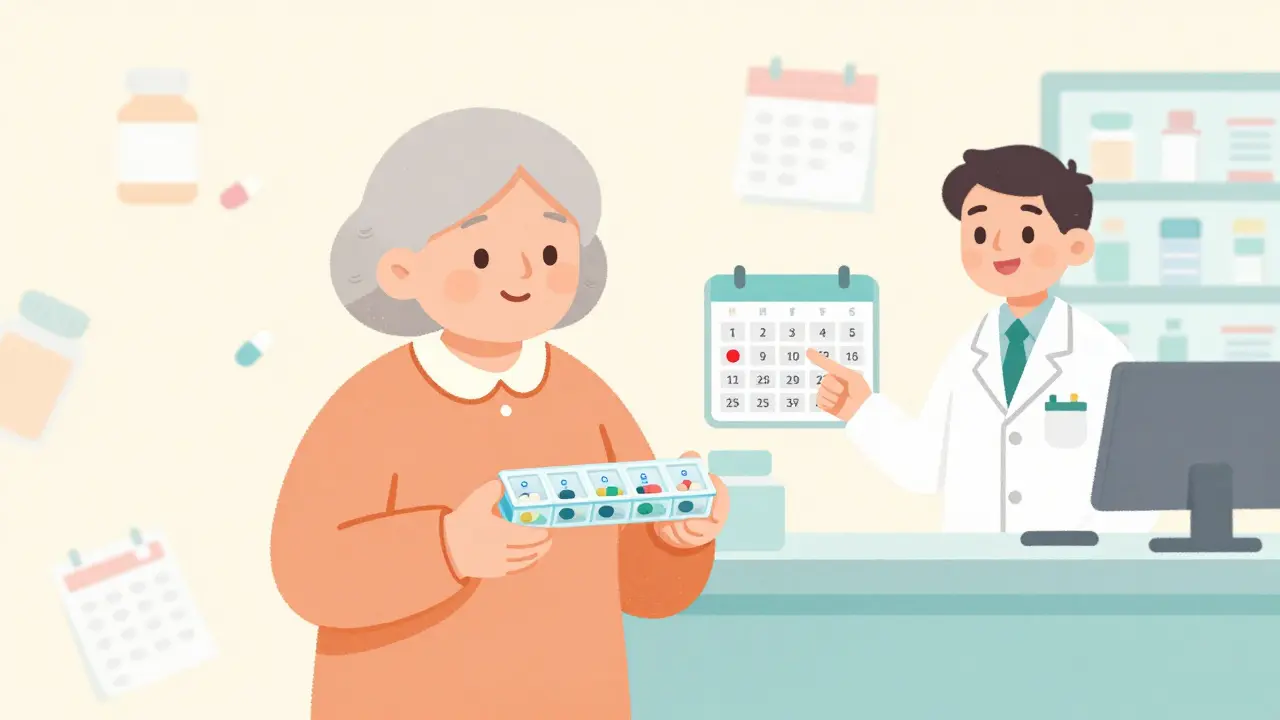
Managing multiple prescriptions is exhausting. If you’re taking five, six, or even eight medications for chronic conditions like diabetes, high blood pressure, or arthritis, you’re probably juggling refill dates, pharmacy trips, and copay bills every month. And every time you pick up a prescription, you pay. Again. And again. That’s not just inconvenient-it’s expensive. And worse, it makes you more likely to skip doses just to save money. The good news? There’s a simple, free service most pharmacies offer that can cut your copays in half and reduce your pharmacy visits from 12 times a year to just four. It’s called medication synchronization.
What Is Medication Synchronization?
Medication synchronization (or med sync) is when your pharmacy aligns all your chronic medication refills to one day each month. Instead of getting one prescription every week or two, you get them all at once-on the same day. That means fewer trips to the pharmacy, fewer copay transactions, and less chance of running out or mixing up your pills. It’s not magic. It’s a structured process that pharmacies have been using since the early 2010s. By 2014, the American Pharmacists Association had published official guidelines for it. Today, 87% of major pharmacy chains-CVS, Walgreens, Rite Aid, and others-offer it for free. And it’s not just for seniors. Anyone taking three or more maintenance medications for long-term conditions can benefit.How It Works: The Four-Step Process
Getting started is easy. You don’t need a doctor’s note. You just walk in-or call-and ask. Here’s what happens next:- Enrollment: You tell your pharmacist you want to sync your prescriptions. They’ll check your current meds, including over-the-counter drugs and supplements, to make sure nothing conflicts.
- Comprehensive review: The pharmacist looks at every prescription’s refill cycle. Some are 30-day supplies, others are 90-day. They’ll figure out how to bring them all into alignment.
- Short fills: This is the tricky part. To get everything on the same date, you might need a smaller amount of one or two meds for the first month. For example, if your blood pressure pill is due in 10 days but your cholesterol med is due in 45, you might get a 10-day supply of the BP pill now, then get everything together in 35 days. It’s temporary. Most people say it’s worth the short adjustment.
- Monthly pickup: After the first cycle, every month on your chosen day-say, the first Tuesday-you walk in and pick up all your meds at once. No more scrambling. No more surprise refills.
Why This Saves You Money
Let’s say you take seven medications. If they’re on different refill schedules, you’re making 12 pharmacy visits a year. At $25 per copay, that’s $300 annually. With med sync, you make four visits. That’s $100. You just saved $200. But it’s not just about the number of visits. A 2008 NIH study found that for every 10% increase in out-of-pocket costs, people take 2.3% fewer of their meds. That’s not just a statistic-it’s real. People skip pills because they can’t afford the next copay. Med sync reduces the frequency of those hits to your wallet, making it easier to stick with your treatment. And it’s not just about cash. CMS data shows that Medicare patients using med sync had 23.6% fewer hospital visits due to medication errors or missed doses between 2020 and 2022. Fewer trips to the ER means less stress, less time off work, and lower overall costs.What About Combination Medications?
Sometimes, the best way to reduce copays isn’t to sync refills-it’s to combine pills. If you’re taking separate pills for blood pressure and heart failure, your doctor might switch you to a single pill that contains both drugs. That’s called a fixed-dose combination. Between 2018 and 2023, the FDA approved 127 new combination medications. MaxCareRx reported that patients using these single-dose combinations saw a 27% drop in missed doses. No syncing needed. One pill. One copay. One day. But here’s the catch: combination pills aren’t available for every drug pair. They’re only made for common combinations where the doses are stable and safe together. If your meds are still separate, med sync is your next best option.
Watch Out for Copay Accumulators
There’s a hidden trap in some insurance plans. Since 2017, many insurers have started using copay accumulator programs. These programs don’t count manufacturer coupons (like the $50 off your specialty drug) toward your deductible or out-of-pocket maximum. That means if you’re using a $5,000-a-year coupon for a high-cost medication, your insurer might say, “We’re not counting that toward your $7,000 deductible.” So even after you’ve spent $7,000 on other meds, you still have to pay full price for your specialty drug because the coupon didn’t count. A 2023 KFF report showed patients on these programs saw their monthly costs jump from $50 to $650. That’s not a typo. That’s $7,800 extra per year. The fix? Always ask your pharmacist: “Does my plan use a copay accumulator?” If they say yes, ask if your drug manufacturer offers an alternative funding program-some now give direct financial aid to patients outside the insurance system.Specialty Medications Are the Big Challenge
Specialty drugs-like those for MS, rheumatoid arthritis, or cancer-make up less than 20% of prescriptions but account for 42% to 70% of total drug spending. These are expensive. And they’re often the ones with the best copay assistance. But with copay accumulators and maximizers, that help is being stripped away. The JMCP August 2024 primer warned that these programs “increase the complexity of specialty medication access.” If you’re on a specialty drug, don’t assume your copay card will help. Talk to your pharmacy. Ask if the manufacturer has a patient assistance program that bypasses insurance entirely. Some companies now offer direct grants or co-pay cards that don’t trigger accumulators.Real People, Real Results
On Reddit, a user named PharmD_John shared that he synced his 72-year-old mother’s eight medications. Her pharmacy visits dropped from 12 to 4 a year. She saved $120 in gas and time. And her refill adherence went up 40%. Another user, ChronicWarrior87, had a different story. He lost his $5,000 manufacturer coupon to a copay accumulator. His monthly cost jumped from $50 to $650. He wasn’t alone. Trustpilot reviews of Walgreens’ med sync program show 68% of positive comments praise the “reduced confusion,” but 32% complain about the initial short-fill period causing temporary gaps. That’s why communication matters. Make sure your pharmacist knows your schedule. If you’re going on vacation, ask for an early refill. If you’re running low, don’t wait until the last day-call ahead.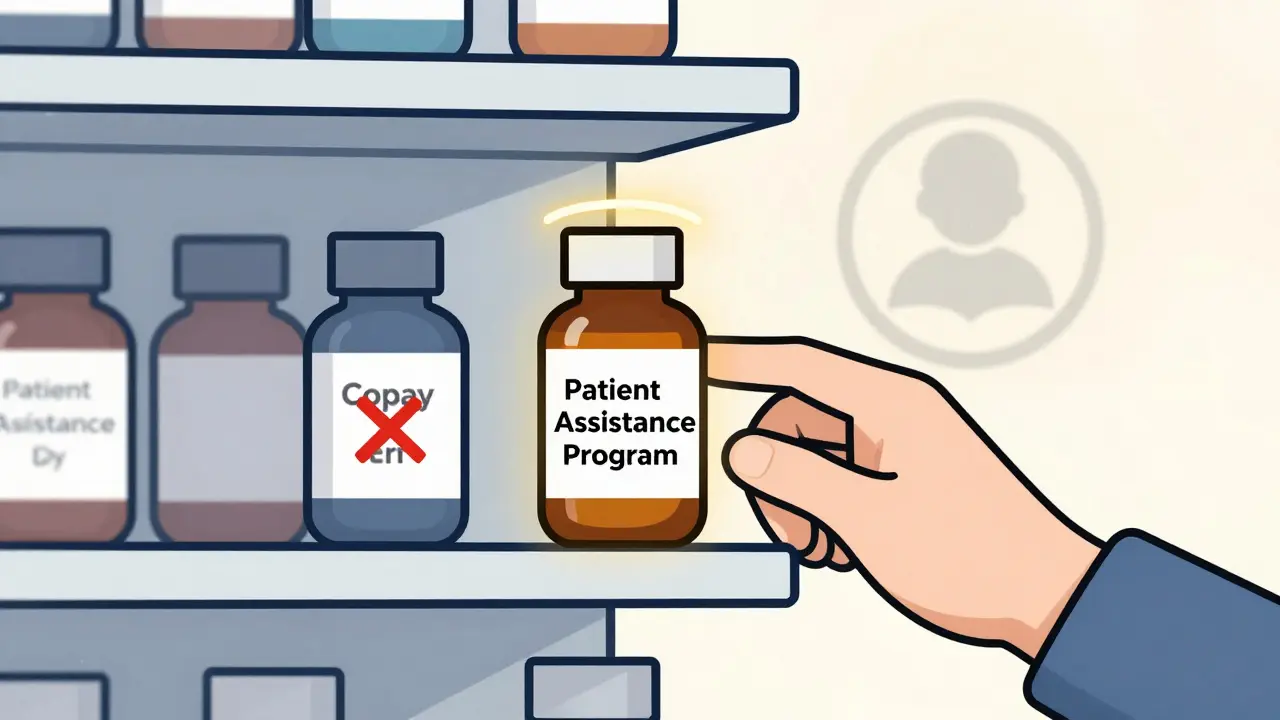
What If Your Plan Won’t Let You Sync?
Not all insurance plans allow early refills or synchronized fills. Medicare Part D, for example, only lets you refill a 30-day prescription 2 days before the 70% point of your last fill. That can make syncing harder. If your pharmacy says no, ask for a “partial fill” or “early refill exception.” Many pharmacists can request this from your insurer. A 2023 ASHP survey found that 63% of these requests are approved when the pharmacist explains it’s for adherence, not convenience. You can also ask your doctor to switch your prescriptions to 90-day supplies where possible. Many insurers charge the same copay for a 90-day supply as they do for a 30-day one. That cuts your visits in half right away.How to Get Started Today
Here’s your action plan:- Make a list of all your medications-prescription, over-the-counter, and supplements.
- Call your pharmacy and ask: “Do you offer medication synchronization?”
- If yes: Schedule a 15-minute appointment with the pharmacist.
- If no: Ask if they can still help you consolidate refills manually.
- Ask: “Do you use copay accumulators?” If yes, ask about manufacturer alternatives.
- Confirm your sync date and set a phone reminder.
What’s Next?
By 2030, the Congressional Budget Office predicts 95% of chronic medication management will use some form of synchronization. That’s because it works. It’s not just about saving money-it’s about staying healthy. If you’re tired of juggling pills, trips, and bills, you don’t have to keep doing it alone. Your pharmacist is your partner in this. They’re not just filling prescriptions-they’re helping you live better. Start today. Walk in. Ask. Save money. Stay on track.Is medication synchronization free?
Yes, medication synchronization is a free service offered by most major pharmacies, including CVS, Walgreens, and Rite Aid. There’s no extra charge to enroll or participate. You still pay your regular copay for each medication, but you pay it fewer times per year.
Can I sync my prescriptions if I take a 90-day supply?
Yes, but it may take longer to sync. If you take a 90-day supply of one medication and 30-day supplies of others, your pharmacist will adjust the timing of the 30-day meds to align with your 90-day refill. This might require a short-term partial fill, but once aligned, you’ll get everything together every three months instead of monthly.
Will med sync work with my Medicare Part D plan?
Yes, Medicare Part D plans allow medication synchronization. However, they have rules about early refills-you can’t refill a 30-day prescription more than 2 days before the 70% point of your last fill. Your pharmacist can request exceptions if needed, especially for adherence reasons. Many Medicare beneficiaries successfully use med sync with their Part D coverage.
Why did my copay go up after I enrolled in med sync?
Your copay per prescription likely didn’t change. But if you were previously getting some meds on a 90-day schedule (with lower copays) and switched to monthly 30-day fills for syncing, your total monthly cost could increase. Ask your pharmacist to check if you can switch back to 90-day supplies for eligible meds. Also, check if your insurer uses a copay accumulator that’s reducing the value of your manufacturer coupons.
What if my pharmacy says they can’t sync my meds?
If your pharmacy says no, ask if they can help you coordinate refills manually-like scheduling all your refills on the same day even if it’s not a formal sync program. Also, try another pharmacy. Nearly all major chains offer med sync. If your insurer blocks early refills, ask your doctor to write prescriptions for 90-day supplies where possible. That cuts your visits in half without needing sync.
Can I use med sync with specialty drugs?
Yes, but you need to be careful. Specialty drugs often come with copay assistance cards, but many insurance plans now use copay accumulators that don’t count those toward your deductible. Talk to your pharmacist about whether your drug manufacturer offers an alternative funding program that bypasses insurance. Some companies now send direct financial aid to patients, avoiding accumulators entirely.
How long does it take to get synced?
It usually takes 1 to 3 months, depending on how staggered your refill dates are. For example, if one med is due in 5 days and another in 60, the pharmacy will give you a small supply of the soon-to-expire med now, then align everything for the next refill cycle. Don’t be surprised if you get a short-term fill at first-it’s normal and temporary.
Does med sync improve medication adherence?
Yes, studies show it does. The American College of Physicians found that patients using med sync had 18.7% fewer hospitalizations due to medication errors or missed doses. A 2021 study by the Institute for Safe Medication Practices showed medication errors increased by 32% when patients managed multiple refill dates. Syncing reduces confusion and makes it easier to take your meds as prescribed.
Comments (8)
OMG YES THIS!!! 🙌 I synced my mom’s 8 meds last month and she’s been crying happy tears-no more midnight pharmacy runs! 🏥💖 She even started wearing her ‘Med Sync Queen’ t-shirt. Worth every second. Also, my pharmacist gave me a free lollipop. Small wins, folks.
I appreciate this post. It’s clear, factual, and doesn’t assume everyone has the same access. I’ve seen people struggle with sync because their plan blocks early refills, and it’s frustrating. But you’re right-pharmacists can advocate for exceptions. Just ask nicely. And bring snacks.
bro this is life changing. i been takin 5 pills diff days, always forgettin one, end up in ER last year. got synced last week, now i just grab all on tuesdays. no more stress. my grandma in india heard bout it and wants me to help her too. pharmacy guy was chill, no drama. just ask. its free. 😊
Hey, I’m a nurse and I’ve seen this save lives. Seriously. People think ‘it’s just pills’ but missing doses = hospital = lost wages = more debt. Med sync isn’t a perk-it’s a safety net. And if your pharmacy says no? Walk out. Go to CVS. They’ll do it in 10 minutes. You deserve to be healthy without going broke. 💪
It is imperative to underscore that medication synchronization constitutes a paradigmatic shift in pharmaceutical care delivery, predicated upon the principles of adherence optimization and cost-containment. Empirical data, as cited from the American Pharmacists Association and CMS, demonstrate statistically significant reductions in medication non-adherence metrics (p < 0.01), as well as a concomitant decline in healthcare utilization. Furthermore, the integration of 90-day supply protocols synergistically enhances the efficacy of this model. It is, therefore, not merely advisable-it is clinically mandated.
Ugh. I’m so tired of Americans acting like this is some revolutionary idea. In Canada, we’ve had this since 2005. You guys still paying $400 for insulin? Pathetic. Also, your ‘free’ service? It’s subsidized by taxpayer dollars. Don’t act like you invented healthcare. 🇨🇦 > 🇺🇸
Okay, so let me get this straight: you’re telling me I can stop being a human pharmacy schedule app? YES. I’ve been running around like a headless chicken since 2020. I once took my blood pressure med at 3 a.m. because I mixed up the dates. I cried in the Walgreens parking lot. Then I synced. Now I sleep. I’m not just saving money-I’m saving my sanity. And if your pharmacist says no? Tell them I said ‘F*** that noise’ and walk to the next one. 💅
THIS IS THE MOST IMPORTANT THING YOU’LL DO THIS YEAR. I used to skip my diabetes meds because I couldn’t afford the copay on the 12th, 18th, and 27th. Now I pay once a month. I’ve gained 15 pounds of confidence. I’m alive. I’m healthy. I’m not a statistic. You can do this. Do it now. Don’t wait. Your future self will hug you.