
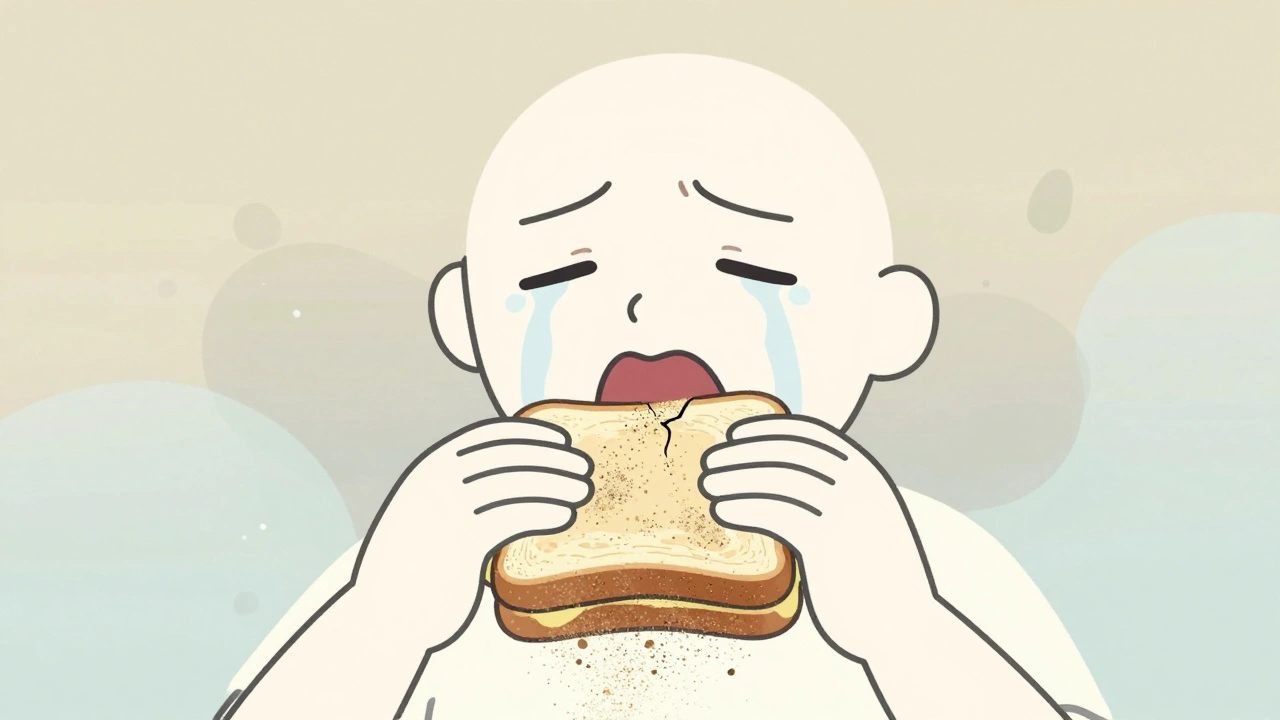
Imagine trying to eat a sandwich, but every bite feels like swallowing sand. Your eyes burn after five minutes on a computer. You wake up with a cotton mouth, even after drinking water. For millions of people, this isn’t a bad day-it’s daily life with Sjögren’s Syndrome.
What Exactly Is Sjögren’s Syndrome?
Sjögren’s Syndrome is an autoimmune disease where the body’s immune system turns against its own moisture-producing glands. Instead of protecting you, it attacks the tear ducts and salivary glands, leaving you chronically dry. It was first identified in 1933 by Swedish doctor Henrik Sjögren, but for decades, it was dismissed as just "old age" or "stress." Today, we know better. It’s not rare. About 4 million people in the U.S. live with it-most of them women, usually diagnosed between 45 and 55. But it doesn’t just affect older women. Cases have been confirmed in children as young as 8. The disease comes in two forms: primary, where it stands alone, and secondary, where it shows up alongside other autoimmune disorders like lupus or rheumatoid arthritis. About half of all cases are secondary. The real problem? It’s invisible. You can’t see dry eyes or a dry mouth. So doctors often miss it. The average time from first symptom to diagnosis is nearly three years. Many patients see four or more doctors before someone connects the dots.The Hallmark Symptoms: Dry Eyes and Dry Mouth
The two most common signs are unmistakable once you know what to look for. Dry eyes don’t just feel uncomfortable-they feel like there’s grit under your eyelids. Redness, burning, light sensitivity, and blurred vision are common. The Schirmer’s test measures tear production. If you produce less than 5 millimeters of tears in five minutes, it’s a red flag. Dry mouth is worse than just being thirsty. Saliva isn’t just for comfort-it protects your teeth, helps you swallow, and fights infections. Without it, eating dry foods like crackers or bread becomes a chore. You need to sip water constantly. Taste fades. Cavities explode. One study found Sjögren’s patients are 5 to 10 times more likely to lose teeth than people without it. Many people assume these symptoms come from aging, caffeine, or not drinking enough. But if you’re young, hydrated, and still dry, it’s not normal. And it’s not just your mouth and eyes.It’s Not Just Dryness-It’s Systemic
Sjögren’s doesn’t stop at the glands. It’s a full-body disease. About 70% of patients report extreme fatigue that doesn’t go away with sleep. It’s not laziness-it’s a biological shutdown. Brain fog is common too. People describe forgetting words mid-sentence or struggling to focus during meetings. Joint pain affects 30-50% of patients. It’s often mistaken for arthritis, but unlike rheumatoid arthritis, it rarely destroys joints. Still, it’s painful and real. Skin gets dry, itchy, and sometimes develops rashes on the hands or feet. Up to 20% of patients have lung involvement, leading to a persistent dry cough. Vaginal dryness affects about half of women with Sjögren’s-something rarely discussed but deeply impactful on relationships and quality of life. Even nerves can be attacked. About 10-15% of patients develop neuropathy: numbness, tingling, or burning in their hands and feet. This isn’t just discomfort-it’s nerve damage. The most serious risk? Lymphoma. People with Sjögren’s have a 4-5% lifetime risk of developing non-Hodgkin lymphoma, compared to just 0.5% in the general population. That’s why regular check-ups with a rheumatologist are critical.How Is It Diagnosed?
There’s no single test. Diagnosis requires a mix of symptoms, blood tests, and physical exams. Blood tests look for two key autoantibodies: anti-SSA/Ro and anti-SSB/La. About 60-70% of patients have them. But even if they’re negative, you can still have Sjögren’s. That’s why doctors use other tools. A minor salivary gland biopsy-taken from the inside of your lip-looks for clusters of immune cells attacking the glands. If you see a focus score of 1 or higher, it’s a strong indicator. Tear production is measured with the Schirmer’s test. Saliva flow is checked by collecting spit over 15 minutes. If you produce less than 1.5 mL, it’s below normal. Newer tools are helping. Salivary gland ultrasound, introduced in 2022, can detect swelling and inflammation with 85% accuracy. It’s non-invasive and faster than a biopsy. The American College of Rheumatology updated its guidelines in 2023 to push for earlier diagnosis-before major gland damage occurs. That’s a big shift. For years, doctors waited until symptoms were severe. Now, they’re encouraged to act sooner.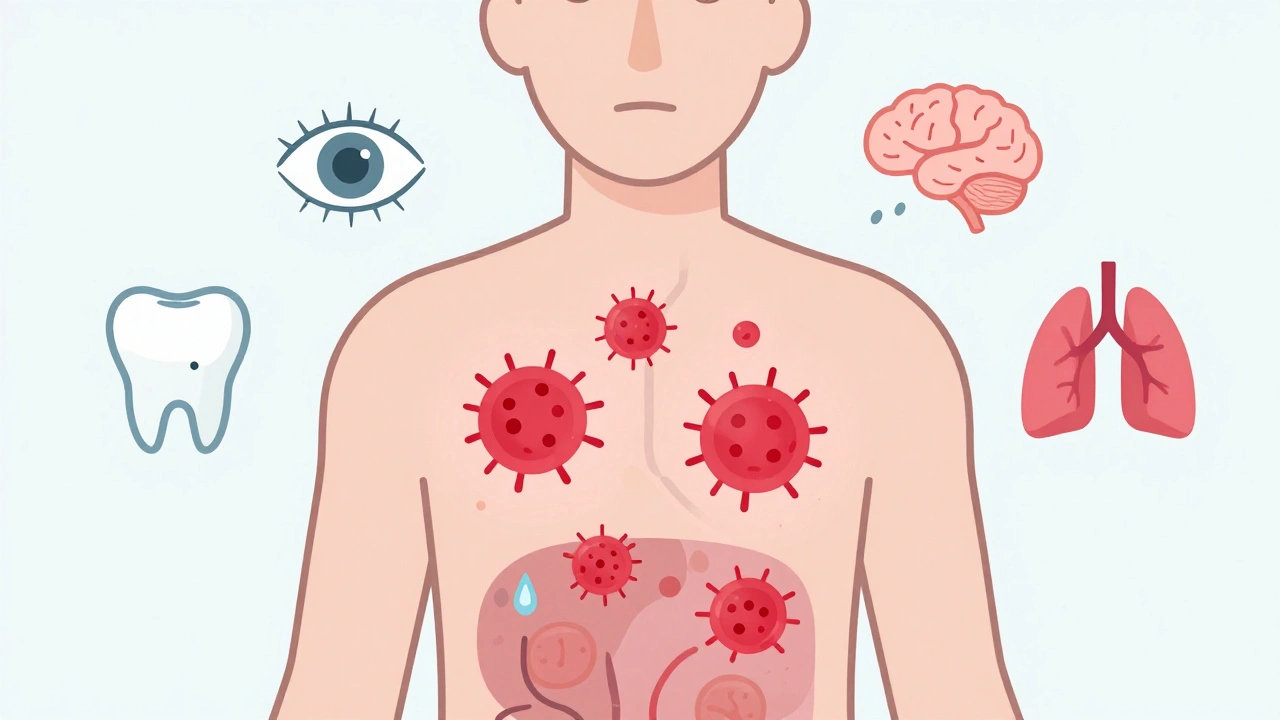
Treatment: Managing Symptoms and Slowing Progression
There’s no cure. But there are ways to manage it-and new hope on the horizon. For dry eyes, preservative-free artificial tears are the first line. You might need them 8-10 times a day. Prescription eye drops like cyclosporine (Restasis) or lifitegrast (Xiidra) reduce inflammation and help your eyes make more tears over time. Dry mouth? Sugar-free gum and lozenges help stimulate saliva. But for real relief, medications like pilocarpine (5mg three times a day) or cevimeline (30mg three times a day) can boost saliva production. About 60-70% of patients report noticeable improvement. Hydroxychloroquine (Plaquenil), a drug used in lupus and arthritis, is prescribed to about half of Sjögren’s patients for joint pain and fatigue. It helps about a third of them. Dental care is non-negotiable. You need check-ups every 3-4 months, not every six. Fluoride treatments, antibacterial rinses, and avoiding sugary snacks are essential. One patient told me she lost five teeth in three years before switching to a Sjögren’s-aware dentist. Environmental changes matter too. Humidifiers set to 40-60% humidity help. Drinking water constantly, avoiding alcohol and caffeine, and using lip balm with no menthol can make a big difference.New Treatments and Hope for the Future
The last 18 months have brought the biggest advances in decades. In June 2023, the FDA approved Efgartigimod (Vyvgart Hytrulo)-the first new treatment for Sjögren’s in 20 years. In clinical trials, it improved dry mouth symptoms by 35% compared to placebo. It works by removing harmful antibodies from the bloodstream. Twelve new drugs are now in clinical trials. Three target B-cells-the immune cells that drive the attack on glands. Rituximab biosimilars are showing promise for systemic symptoms like fatigue and joint pain. The National Institutes of Health launched the Sjögren’s Precision Medicine Network in March 2023. It’s tracking 5,000 patients to match treatments to individual biomarkers. One breakthrough? A specific T-cell signature found in 78% of primary Sjögren’s patients. This could lead to a simple blood test for early detection. And the TARGET initiative, a $15 million research project announced in late 2023, is hunting for genetic markers that predict who will develop severe disease. That’s huge. Right now, no one can say if your symptoms will stay mild or turn serious.Living With Sjögren’s: The Emotional Toll
The hardest part isn’t the dryness. It’s the isolation. A 2022 survey by the Sjögren’s Syndrome Foundation found that 87% of patients struggled with daily tasks because of dry mouth. 79% said eye pain affected their work. 63% avoided social events because they felt self-conscious. One Reddit user wrote: "I stopped eating out because I couldn’t chew without water. People think I’m picky. I’m just sick." Another said: "My husband doesn’t get why I cry when I can’t kiss him-vaginal dryness isn’t something you talk about at dinner parties." Depression rates are more than double the general population. Many patients report feeling dismissed by doctors. One study found 61% felt minimized during medical visits. Support groups matter. Online communities like MySjogrensTeam (with 25,000+ members) and Reddit’s r/Sjogrens (12,500 members) are lifelines. People share tips: "Try coconut oil for dry lips," "Use a nasal saline spray before bed," "Switch to fragrance-free soap."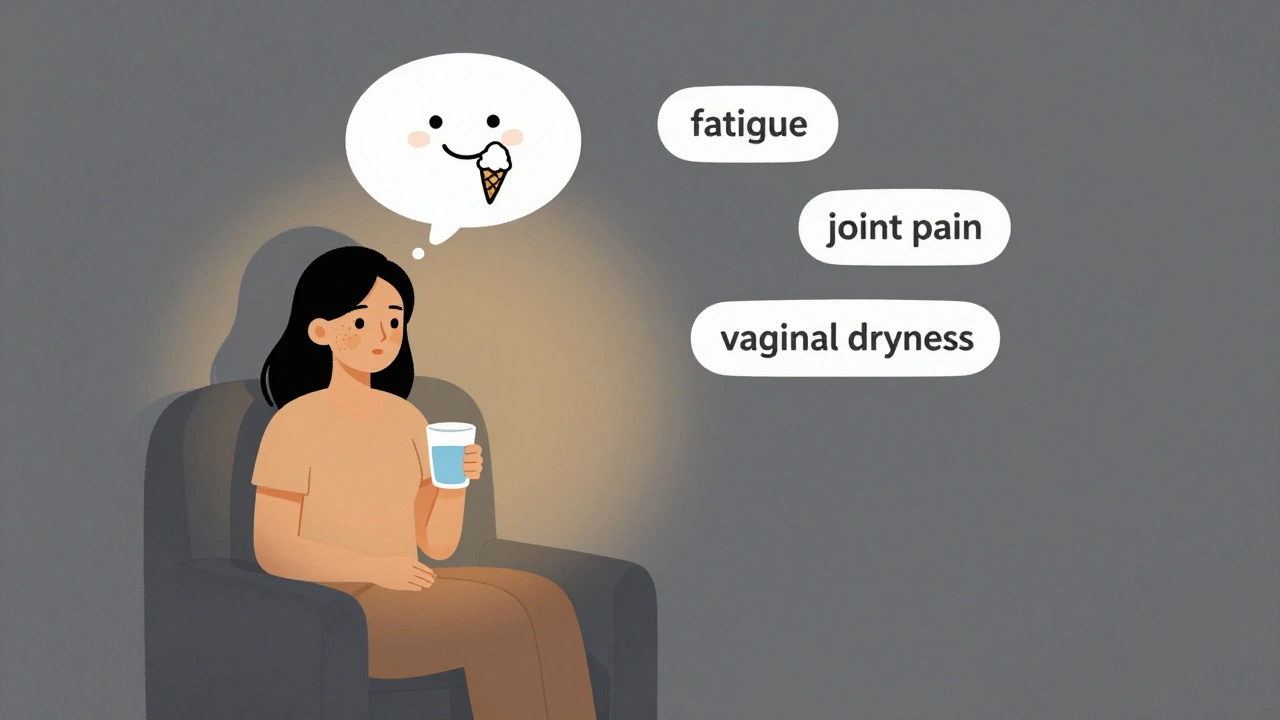
Who’s at Risk? And Why Is It So Underdiagnosed?
Women are 9 times more likely to get it than men. It peaks in middle age. Caucasians are diagnosed more often-but that may be because minority groups are under-tested. It’s misdiagnosed because symptoms overlap with so many other things: allergies, menopause, stress, medication side effects, even aging. A patient might see an ENT for dry throat, a dentist for cavities, an ophthalmologist for red eyes-and no one connects the dots. Doctors aren’t trained to think "autoimmune" when someone says "I’m always dry." That’s changing, slowly. The American Medical Association added Sjögren’s to its continuing education platform in 2022, reaching 45,000 physicians. But funding? It’s scandalously low. In 2022, the NIH spent $28.7 million on Sjögren’s research. For lupus? $167 million. For rheumatoid arthritis? $114 million. Sjögren’s affects 4 million people. It deserves more.What You Can Do Right Now
If you’re constantly dry and no one can explain why:- Track your symptoms: When do your eyes burn? When does your mouth feel worst?
- See a rheumatologist-not just an eye doctor or dentist. They’re the specialists who connect the dots.
- Ask for anti-SSA/Ro and anti-SSB/La blood tests.
- Request a Schirmer’s test and unstimulated saliva flow test.
- Start using preservative-free artificial tears and sugar-free gum.
- Find a dentist who knows about Sjögren’s. They’ll help you prevent tooth loss.
- Stick to your treatment plan-even when you feel fine.
- Join a support group. You’re not alone.
- Advocate for yourself. If a doctor says "it’s just aging," ask for a second opinion.
- Know your risks: Annual check-ups for lymphoma symptoms (swollen glands, night sweats, unexplained weight loss) are essential.
Comments (11)
From a rheumatology research standpoint, this is a paradigm-shifting overview. The integration of salivary gland ultrasound as a non-invasive diagnostic biomarker is particularly compelling-85% sensitivity aligns with recent EULAR consensus guidelines. The shift toward pre-symptomatic intervention, as endorsed by the 2023 ACR criteria, fundamentally redefines clinical trajectories. We’re no longer managing end-stage glandular failure-we’re intercepting autoimmunity at the mucosal interface. This deserves dissemination beyond rheumatology circles.
ok so like i read this whole thing and im just like… why is no one talking about how efgartigimod is basically a magic bullet? i mean, 35% improvement? i’ve been on restasis for 4 years and still feel like my eyeballs are sandpaper. also, why is the NIH spending 28 mil on sjogrens when they spend 167 on lupus? like… come on. its not like we’re a niche group. 4 million ppl? that’s more than parkinsons. #sjogrensawareness
Thanks for this. Really well put. 🙏 I’ve had it since 2019. The dry mouth thing? Worst part. I keep sugar-free gum in every bag, car, drawer. Pilocarpine helped but gave me night sweats 😅. Also-yes to humidifiers. My cat now sleeps on the humidifier. She’s my co-patient. 🐱💧
OMG YES. I just started using coconut oil on my lips and it’s a game changer. No more cracking. Also, switched to fragrance-free soap and my skin stopped itching like crazy. I’m 32 and was told I was just ‘dehydrated’ for 2 years. Don’t let anyone gaslight you. You’re not crazy. 💪
Interesting. But let’s be real-this disease is mostly overdiagnosed in middle-aged women who can’t handle modern life. Back in my day, people didn’t whine about dry eyes. We just drank water and blinked. Also, why are we funding research for a condition that’s mostly ‘inconvenient’? If you’re not dying, maybe you should just tough it out. America’s too soft.
Thank you for sharing this. It is clear, precise, and deeply human. Many patients suffer silently due to systemic ignorance. A simple blood test for anti-SSA/Ro, coupled with clinical evaluation, can prevent years of misdiagnosis. Let us advocate for early screening in primary care. Knowledge is compassion in action.
THIS. I’ve been waiting for someone to say this out loud. I thought I was the only one who couldn’t eat toast without a glass of water. And the vaginal dryness thing? So real. So unspoken. Thank you for including it. We’re not broken-we’re just misunderstood. 💕
the silence around sjogrens… it’s almost… poetic. like the body’s own betrayal rendered mute by clinical apathy. we are the ghosts of the autoimmune spectrum, haunting the waiting rooms with dry lips and tired eyes. do we scream? no. we sip water. quietly. always quietly.
Just wanted to add: if you’re on hydroxychloroquine, get your eyes checked every 6 months. Retinal toxicity is rare, but real. Also-salivary gland ultrasound is now available at most academic centers. Ask your rheumatologist if they have access. And yes, the lymphoma risk is real-but it’s 4-5% over a lifetime, not a guarantee. Don’t panic. Just monitor. Stay informed. You’ve got this.
Why are you all so dramatic? I have dry eyes too. I just use drops. End of story. Stop making it a whole thing. People have real diseases. This is just… annoying.
Wow. Just… wow. Ashley, you’re the reason people don’t believe us. I’ve been crying into my sugar-free gum for 7 years because you think this is "annoying." I hope your eyes burn someday. Just once. So you know what it’s like to be ignored.