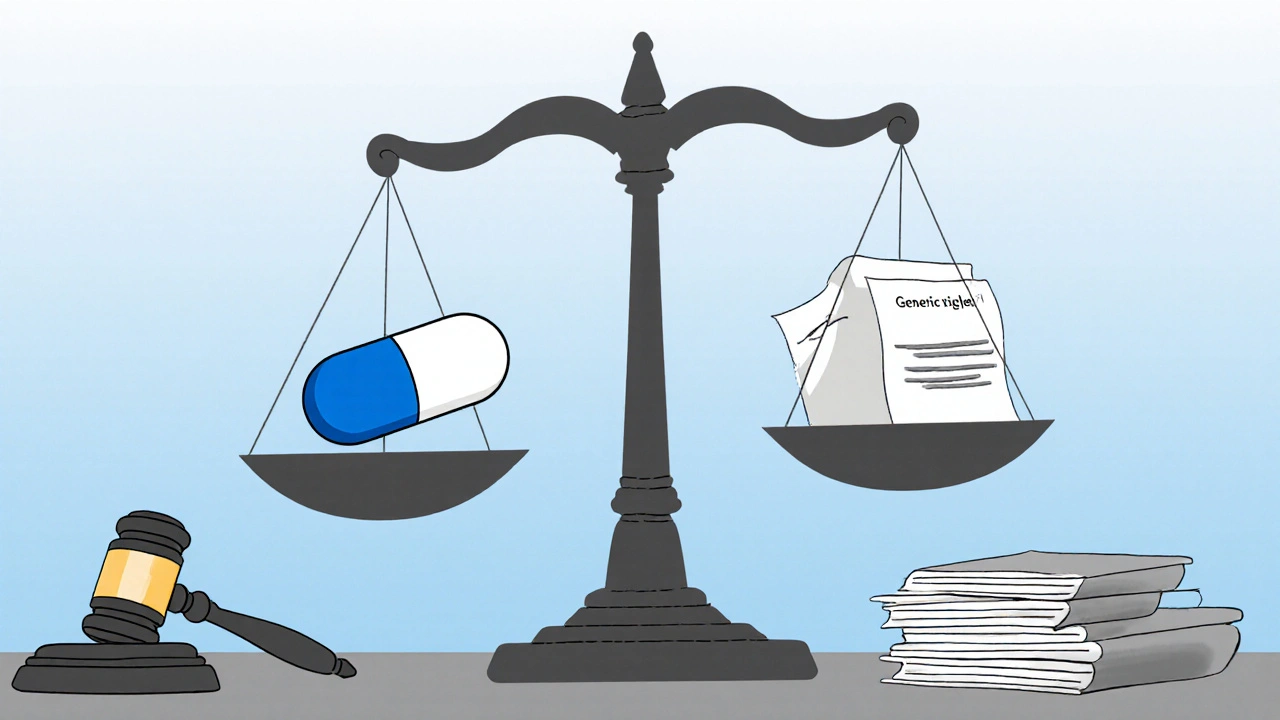
Hatch-Waxman Act: How Generic Drugs Got Approved and Changed Healthcare
When you pick up a generic pill at the pharmacy, you’re benefiting from a law passed in 1984 called the Hatch-Waxman Act, a U.S. law that created a faster, cheaper path for generic drugs to enter the market while protecting brand-name drug patents. Also known as the Drug Price Competition and Patent Term Restoration Act, it’s the reason you can buy the same medicine for a fraction of the price. Before this law, companies spent years and millions to prove a generic drug worked—just like the original. That slowed down competition and kept prices high. The Hatch-Waxman Act changed that by letting generic makers prove their drugs were therapeutic equivalence to the brand version without repeating every clinical trial.
This law didn’t just help patients—it reshaped how drug companies think. It gave brand-name makers extra patent time to make up for delays during FDA review, so they still had incentive to innovate. At the same time, it gave generic manufacturers a clear roadmap: show bioequivalence, file an Abbreviated New Drug Application (ANDA), and get approved. The result? Today, over 90% of prescriptions in the U.S. are filled with generics. That’s not luck—it’s the Hatch-Waxman Act working as designed. It also created the framework for how the FDA, the U.S. agency responsible for approving drugs and ensuring their safety and effectiveness evaluates whether a generic is truly interchangeable with a brand drug. This is why you see different shapes and colors in generics but the same active ingredient and same effect.
The law also set the stage for how pharmacists can legally substitute generics, how prescribers need to understand therapeutic equivalence, and why some drugs still don’t have generic versions—usually because of complex patents or manufacturing challenges. You’ll find posts here that dig into real-world examples: how generics are labeled differently, why some patients still prefer brand names, and how the FDA tracks side effects after generics hit the market. You’ll also see how this law connects to today’s debates—like biosimilars, drug pricing, and patient safety. The Hatch-Waxman Act isn’t just history. It’s the invisible hand behind every generic you take, every savings you get, and every decision your pharmacist makes when filling your prescription.