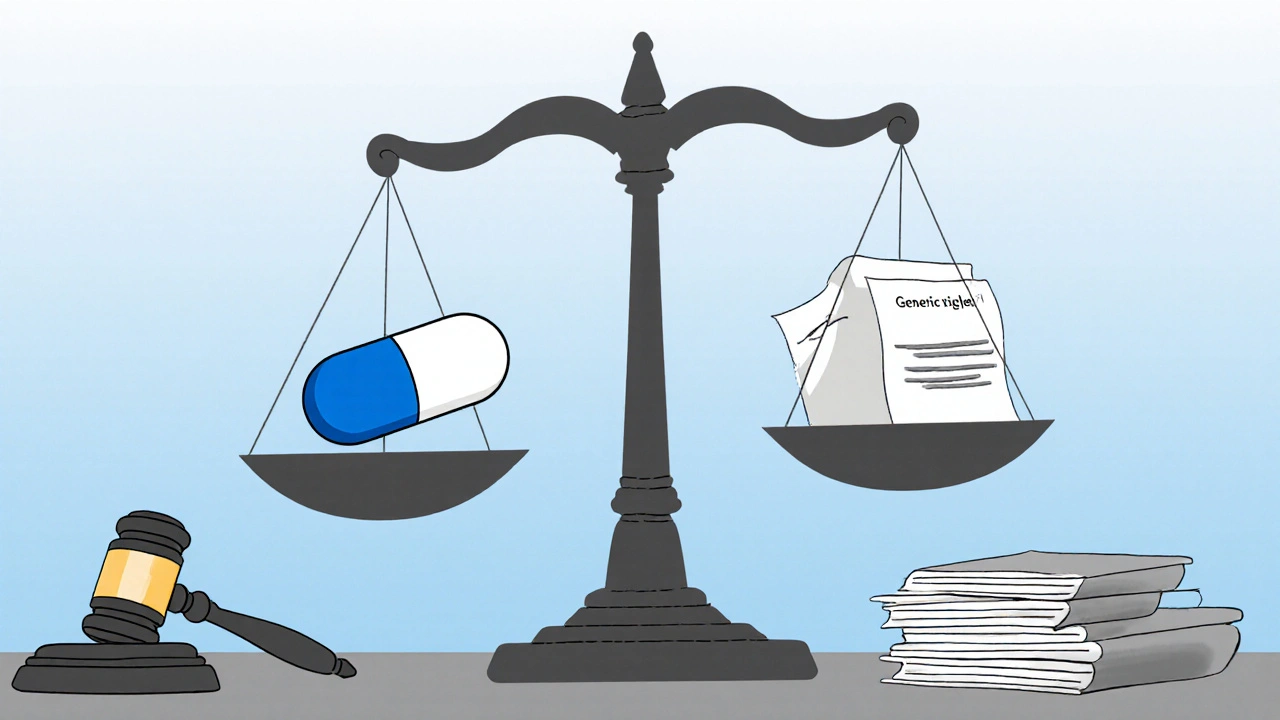
Pharmaceutical Patents: How Drug Monopolies Shape What You Pay and What You Get
When you buy a medicine, what you’re really paying for isn’t just the pill—it’s the pharmaceutical patent, a legal monopoly that lets a company be the only one to sell a new drug for a set time. Also known as drug exclusivity, this system is designed to reward innovation, but it also controls how long you pay high prices before cheaper options appear. Without patents, companies wouldn’t invest billions to develop new treatments. But once the patent runs out, generic versions flood the market—and prices often drop by 80% or more.
That’s why generic drugs, chemically identical copies of brand-name medicines approved after patent expiration show up years later. The FDA requires them to match the original in strength, safety, and how they work. But they don’t need to repeat expensive clinical trials, which is why they cost less. Meanwhile, patent expiration, the moment a drug’s legal protection ends and competitors can enter becomes a critical date for pharmacies, insurers, and patients alike. Some companies try to extend their monopoly by tweaking the drug slightly—changing the pill shape, dosage form, or adding a new use—called "evergreening." These tactics delay generics and keep prices high, even when the original invention is old.
And it’s not just about cost. brand-name drugs, the original version sold under a company’s trademark before generics arrive often come with marketing hype, patient support programs, and doctor incentives. But once the patent expires, those advantages fade. What’s left is the same active ingredient, sold for a fraction of the price. This is why pharmacists recommend generics—they’re not just cheaper, they’re just as safe and effective, backed by the same science.
What you’ll find below are real-world stories about how patents affect your prescriptions. From how a single patent delay can cost families hundreds a month, to how pharmacists navigate substitutions when brand names are still protected, to why some drugs stay expensive long after their invention. These aren’t abstract legal debates—they’re daily decisions that impact your health and wallet. Read on to see how the system really works—and what you can do when it doesn’t.