
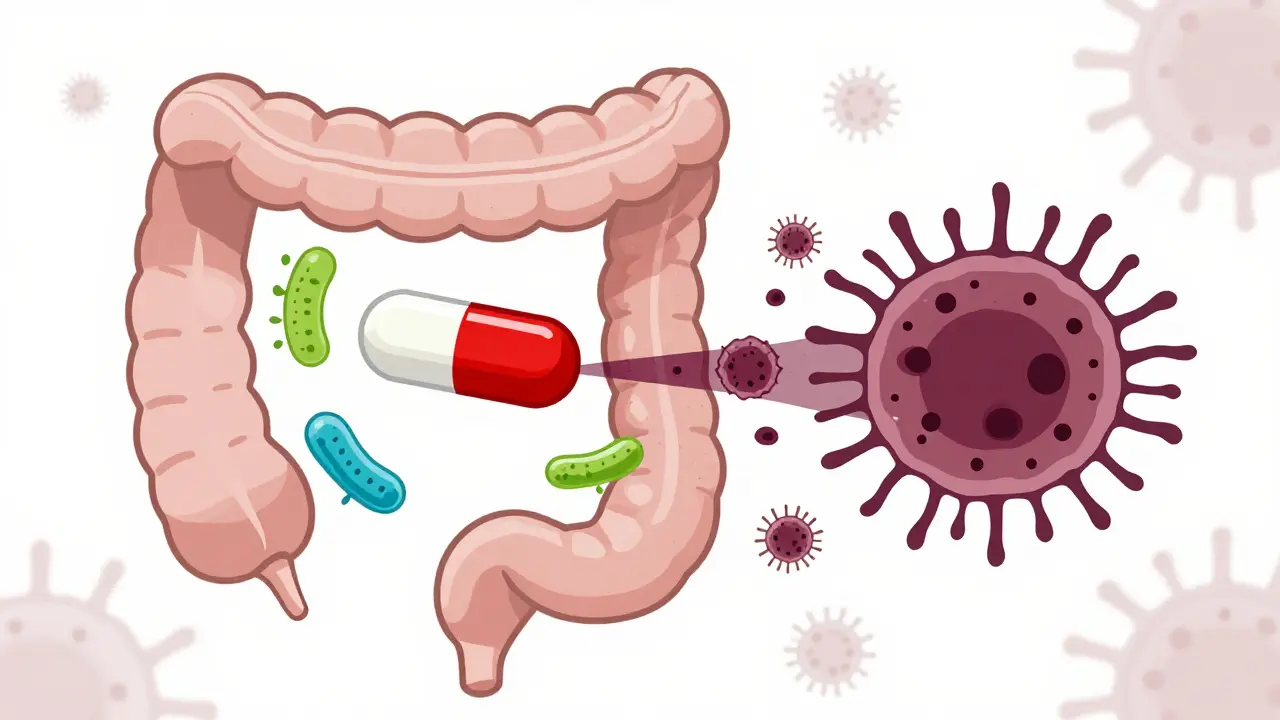
Every time you take an antibiotic when you don’t need it, you’re not just helping yourself-you’re helping bacteria become stronger. That’s the harsh truth behind antibiotic overuse. It’s not a distant threat. Right now, in hospitals and homes around the world, common infections are becoming untreatable because the drugs we once relied on no longer work. And one of the biggest consequences? A dangerous gut infection called C. difficile.
Why Antibiotics Are Losing Their Power
Antibiotics were once miracles. A single pill could clear up a throat infection, a urinary tract infection, or a skin abscess. But today, that’s no longer guaranteed. According to the World Health Organization’s 2025 global report, one in six bacterial infections worldwide are now resistant to standard antibiotics. That’s not a prediction-it’s today’s reality.
This isn’t magic. It’s evolution. Bacteria don’t stay still. When you take an antibiotic, most of the bad bacteria die. But some survive-because they’re naturally resistant or picked up resistance genes from other bacteria. Those survivors multiply. Soon, the whole strain becomes untouchable. And it’s happening fast. Between 2018 and 2023, resistance increased in over 40% of the antibiotic-bacteria combinations monitored across 76 countries.
Some of the worst offenders are common pathogens:
- Escherichia coli (E. coli): 42% of cases are now resistant to third-generation cephalosporins, one of the most common antibiotic classes used for urinary infections.
- Staphylococcus aureus: 35% of cases are methicillin-resistant (MRSA), meaning standard treatments like penicillin and amoxicillin are useless.
- Carbapenem resistance: These are last-resort antibiotics. Resistance to them has doubled since 2005 and is expected to keep climbing. When these fail, doctors have almost nothing left.
And it’s not just about one country. The WHO found that in South-East Asia and the Eastern Mediterranean, one in three infections are resistant. In Africa, it’s one in five. Even in places with better healthcare, we’re losing ground.
C. difficile: The Silent Aftermath of Antibiotics
Most people don’t realize that antibiotics don’t just kill bad bacteria-they wipe out the good ones too. Your gut is home to trillions of microbes that help you digest food, make vitamins, and keep harmful bugs in check. When you take an antibiotic, especially a broad-spectrum one, you’re basically carpet-bombing your digestive system.
That’s where Clostridioides difficile (C. difficile) comes in. It’s a bacteria that lives quietly in some people’s guts without causing harm. But when antibiotics kill off the healthy bacteria that normally keep it under control, C. difficile explodes. It produces toxins that destroy the lining of the colon, causing severe diarrhea, fever, and in the worst cases, death.
The CDC reports that in 2017 alone, C. difficile caused nearly half a million infections in the U.S., with nearly 29,000 deaths. While exact numbers for 2025 aren’t available, trends show it’s getting worse. Hospitals are seeing more cases, and it’s no longer just a hospital problem-community-acquired C. difficile is rising. And guess what? Antibiotic use is the #1 trigger.
Some antibiotics are worse than others. Clindamycin, fluoroquinolones (like ciprofloxacin), and cephalosporins are the biggest culprits. Even a single course can set off a chain reaction. And once you get infected once, you’re at high risk of coming back. The infection is hard to treat, spreads easily, and often requires weeks of strong antibiotics-which can make the problem worse.
The Bigger Picture: A Global Crisis
This isn’t just about one infection. It’s about the collapse of modern medicine. Think about surgeries. Chemotherapy. Hip replacements. All of them rely on antibiotics to prevent deadly infections. If antibiotics stop working, these procedures become death traps.
Experts warn we’re heading toward a world where a scratched knee or a simple urinary infection could kill you. The WHO calls antimicrobial resistance a “silent pandemic.” In 2019, it directly caused 1.27 million deaths and contributed to nearly 5 million more. By 2050, if nothing changes, AMR could kill 10 million people a year-more than cancer.
And the economic cost? It’s staggering. By 2030, resistant infections could cost the global economy $3 trillion a year. By 2050, cumulative losses could hit $100 trillion. That’s not science fiction. It’s what happens when we treat antibiotics like candy.
Where Is This Happening?
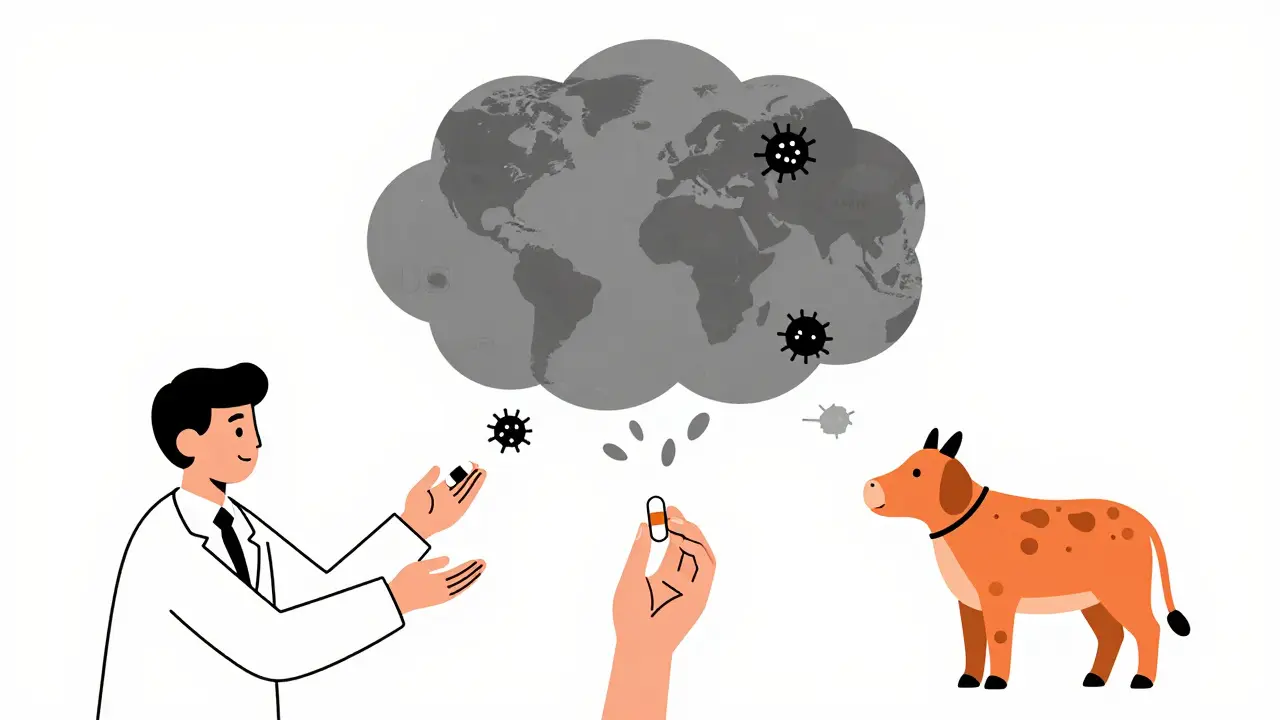
It’s happening everywhere-but not equally. In high-income countries, overprescribing is the main issue. Doctors give antibiotics for viral infections like colds or flu-even though antibiotics do nothing against viruses. Patients demand them. Doctors give in. It’s easier than explaining why they’re not needed.
In low-resource settings, it’s the opposite. People don’t have access to diagnostics. If you’re sick and can’t afford a test, the only thing a clinic can offer is antibiotics. So they give them. Wide and often. That’s why resistance is rising fastest in regions with weak health systems.
And don’t forget agriculture. More than 70% of antibiotics used globally go to farm animals-not to treat illness, but to make them grow faster or prevent disease in crowded, unsanitary conditions. Those antibiotics enter our water, soil, and food. Resistance doesn’t care if it started in a hospital or a pig farm.
What’s Being Done? Not Enough
There are programs trying to fix this. Antibiotic stewardship programs in hospitals train doctors to prescribe smarter. Some countries have banned antibiotics as growth promoters in livestock. The WHO has a global action plan. CARB-X, a public-private partnership, has invested over $480 million into developing new antibiotics since 2016.
But here’s the problem: drug companies aren’t making new antibiotics. Why? Because antibiotics are used for short courses. A drug for high blood pressure? You take it for life. A new antibiotic? You take it for 7 days. The return on investment is tiny. So most big pharma has walked away. The pipeline is dry. We’re running out of options faster than we’re developing them.
And the pandemic made it worse. Between 2020 and 2022, hospital-acquired resistant infections rose 20% in the U.S. as antibiotic use surged and infection control slipped. Progress made over a decade was wiped out in two years.
What You Can Do
You don’t need to be a doctor to help. Here’s what actually works:
- Never demand antibiotics. If your doctor says you have a virus, trust them. Ask: “Is there a way to treat this without antibiotics?”
- Take them exactly as prescribed. Don’t skip doses. Don’t save leftovers. Don’t give them to someone else.
- Ask if you really need them. For sinus infections, ear infections, or bronchitis, many are viral. Antibiotics won’t help-and they might hurt.
- Practice good hygiene. Wash your hands. Stay home when sick. Vaccines (like flu and pneumonia shots) reduce the need for antibiotics by preventing infections in the first place.
- Support responsible farming. Choose meat and dairy from farms that don’t use antibiotics routinely. Look for labels like “raised without antibiotics.”
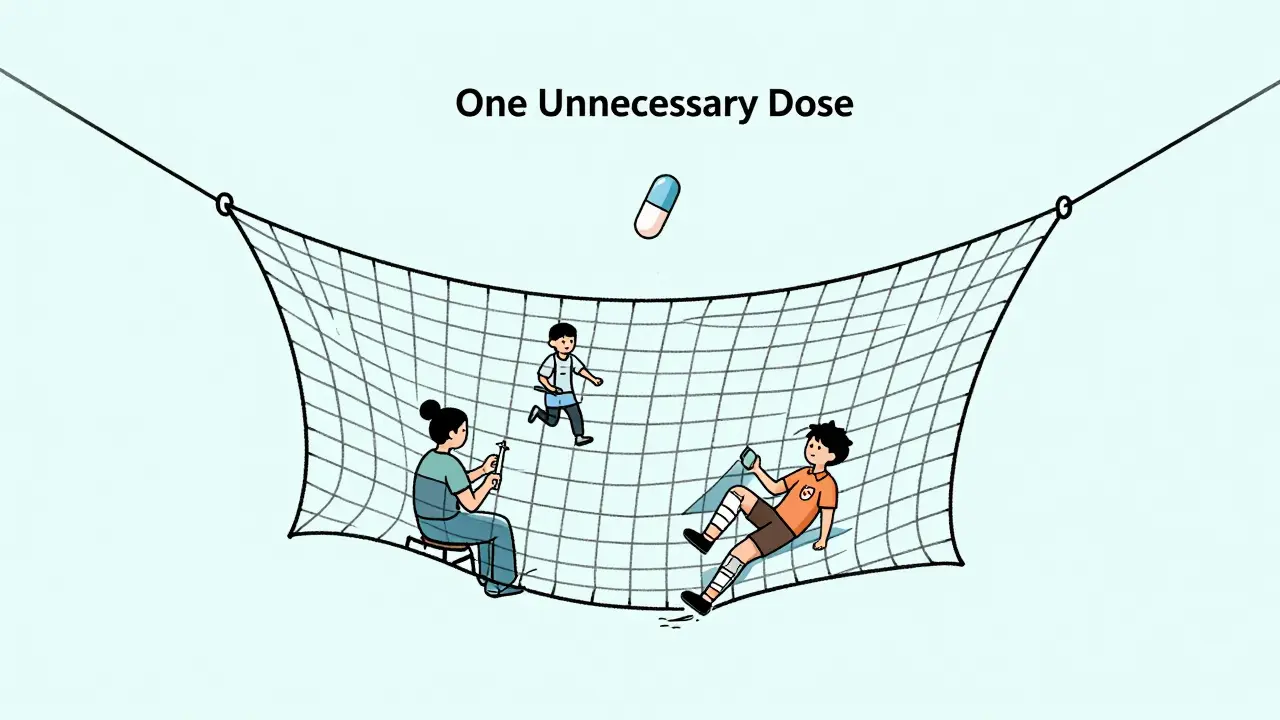
It’s not about being perfect. It’s about being smarter. Every unnecessary antibiotic you avoid is one less chance for bacteria to evolve.
The Future Is in Our Hands
We’ve been lucky. For nearly a century, antibiotics have been our safety net. But that net is full of holes. We’re on the edge of a world where minor infections are deadly again. Where routine surgeries carry huge risks. Where children might die from a simple cut.
It’s not inevitable. But it will only change if we stop treating antibiotics like a quick fix. They’re not. They’re a fragile tool. And once they’re gone, we may never get them back.