
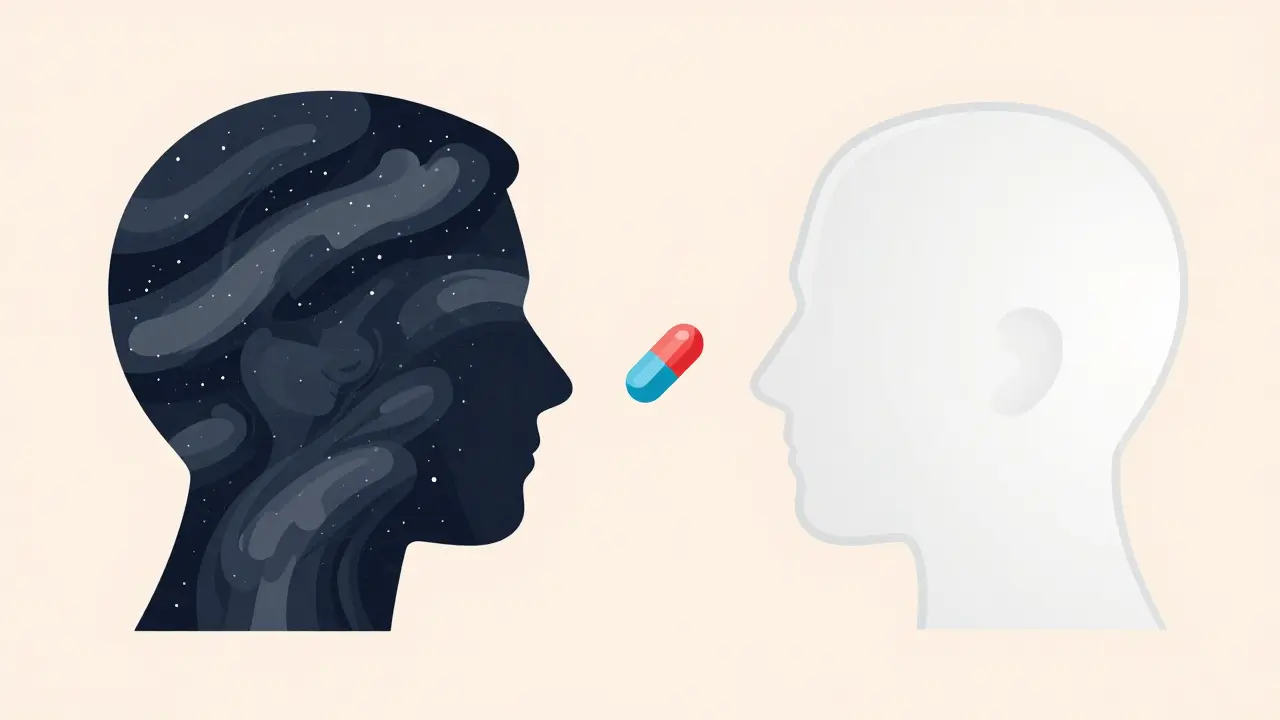
SSRI Metabolism Simulator
Select a medication and your genetic phenotype to see how your body might process the drug compared to a "Normal Metabolizer".
Clinical Impact: Expected standard response.
Your body processes this medication at a typical rate, meaning standard doses usually provide a therapeutic effect with expected side effects.
Ever wonder why your friend feels great on a specific antidepressant while you feel like a zombie on the same dose? Or why some people experience intense nausea and insomnia while others feel nothing at all? It isn't just luck. A huge part of how you react to pharmacogenomic testing for SSRIs comes down to your DNA-specifically how your liver processes these drugs. If your body breaks down medication too quickly, it never reaches a therapeutic level. If it does it too slowly, the drug builds up in your system, turning a helpful treatment into a cocktail of side effects.
The Quick Take on Genetic Drug Metabolism
- CYP2D6 and CYP2C19 are the two main enzymes that determine how your body handles most SSRIs.
- Poor Metabolizers risk toxic buildup and severe side effects.
- Ultrarapid Metabolizers often find standard doses completely ineffective.
- Testing can help doctors pick the right drug and dose faster, potentially saving $1,200 to $1,800 in trial-and-error costs.
The Engines of Metabolism: CYP2D6 and CYP2C19
To understand why some antidepressants fail, we have to look at the Cytochrome P450 system. Think of these enzymes as the "cleanup crew" in your liver. They break down medication so your body can get rid of it. Two specific enzymes, CYP2D6 and CYP2C19, do the heavy lifting for serotonin reuptake inhibitors.
These genes are highly polymorphic, meaning they come in many different versions (called alleles). For example, CYP2D6 has over 100 known variants, while CYP2C19 has about 35. Because of this variety, no two people process these drugs exactly the same way. When a doctor prescribes a "standard dose," they are guessing based on the average person. But you aren't an average; you're a unique genetic profile.
How Your Phenotype Predicts Side Effects
Based on your genes, you fall into one of several metabolic categories. This "phenotype" tells us if you're likely to struggle with side effects or if the medication will simply slide through your system without doing anything.
Poor Metabolizers (PMs): These folks have little to no enzyme activity. Imagine a sink with a clogged drain-the drug just keeps piling up. Research shows that CYP2D6 poor metabolizers have a 2.7 times higher risk of side effects when taking venlafaxine. If you're a PM, a standard dose can feel like an overdose, leading to severe dizziness or insomnia.
Intermediate and Normal Metabolizers (IMs/NMs): These are the "standard" users. Most drugs work as expected, and side effects are usually manageable.
Rapid and Ultrarapid Metabolizers (RMs/UMs): This is the opposite of the clogged drain-it's like a wide-open pipe. The drug is flushed out before it can even start working. A patient might take 20mg of escitalopram and feel nothing because their body is shredding the molecule almost instantly. In these cases, they often need much higher doses than the FDA label suggests to get any relief.
| Enzyme | Commonly Processed Medications | Key Impact |
|---|---|---|
| CYP2D6 | Fluoxetine (Prozac), Paroxetine (Paxil), Venlafaxine (Effexor XR), Duloxetine (Cymbalta) | High risk of severe ADRs in Poor Metabolizers |
| CYP2C19 | Escitalopram (Lexapro), Citalopram (Celexa), Sertraline (Zoloft) | Plasma concentrations can be 2.3-3.5x higher in Poor Metabolizers |
Is the Testing Actually Worth It?
You might be wondering if a genetic test is a magic bullet. Not exactly. The evidence is actually stronger for older tricyclic antidepressants (TCAs) than it is for modern SSRIs. While we can see a massive difference in the amount of drug in your blood (pharmacokinetics), that doesn't always translate to a different clinical outcome (pharmacodynamics). Some people are Poor Metabolizers but still tolerate the drug just fine.
However, for many, it's a game-changer. Consider a 45-year-old woman who tried venlafaxine at 75mg/day and suffered from debilitating nausea and insomnia. She was a CYP2D6 poor metabolizer. Once her doctor saw the genetic report and dropped her dose to 37.5mg, the side effects vanished, and the drug actually worked. Without the test, she might have just given up on the medication entirely, thinking it "didn't work for her."
Getting Tested: What You Need to Know
If you're considering this, don't expect a standard blood draw or a quick genome-wide scan to do the trick. Because CYP2D6 has "pseudogenes" (basically genetic decoys), labs need to use targeted genotyping arrays or specific sequencing to get it right. A generic ancestry test won't give you the clinical accuracy needed for dosing.
Here is the typical process you'll encounter:
- The Sample: Usually a cheek swab or a blood draw.
- The Wait: Expect a turnaround time of 1 to 3 weeks.
- The Result: You'll get a report classifying you (e.g., "CYP2C19 Ultrarapid Metabolizer").
- The Adjustment: Your doctor uses guidelines from the Clinical Pharmacogenetics Implementation Consortium (CPIC) to adjust your dose or switch your med.
One heads-up: Insurance coverage is still a bit of a lottery. As of 2024, only about 62% of major US insurers cover these tests for antidepressants. You might have to pay out of pocket, but given the potential to avoid months of the wrong medication, many find the cost-benefit ratio works in their favor.
The Bigger Picture: Genes Aren't Everything
It is tempting to think that a DNA test solves the depression puzzle. But your genes are just one piece of the map. Your age, your weight, other medications you're taking (which can "block" these enzymes), and even your diet play a role. For instance, if you take a drug that inhibits CYP2D6, you can effectively become a "poor metabolizer" even if your genes are normal.
Modern medicine is moving toward "polygenic risk scores," which look at a wider web of genes rather than just one or two. We are shifting away from the "one size fits all" approach and moving toward a model where your prescription is as unique as your fingerprint.
Will this test tell me exactly which antidepressant will work?
No. It tells you how your body processes the drug, not whether the drug will fix the underlying chemistry of your depression. It helps avoid side effects and dosing failures, but it can't guarantee a 100% success rate.
How accurate are these tests?
Most commercial pharmacogenetic tests have a sensitivity and specificity between 95% and 99%. However, this depends on using targeted sequencing rather than basic genome-wide genotyping.
What happens if I'm an "Ultrarapid Metabolizer"?
You likely break down the medication so fast that it doesn't stay in your system long enough to work. Your doctor may need to increase your dose above the standard recommendation or switch you to a drug that uses a different metabolic pathway.
Does this test cover all antidepressants?
It covers the majority of SSRIs and TCAs via CYP2D6 and CYP2C19. Newer guidelines have also started incorporating CYP2B6, SLC6A4, and HTR2A for a more complete picture.
Can I get this test on my own?
While some direct-to-consumer tests exist, it's highly recommended to do this through a healthcare provider. Interpreting the results requires clinical expertise to ensure you don't make dangerous dosing changes on your own.
Next Steps and Troubleshooting
If you've been cycling through antidepressants without success, your first step should be a conversation with your psychiatrist about your "metabolic profile." Ask specifically about CYP2D6 and CYP2C19.
If your insurance denies the test: Ask your doctor if they can provide a "Letter of Medical Necessity" based on your history of adverse drug reactions. Some clinics also offer sliding-scale pricing for these panels.
If you already have your results: Don't panic if you're a "poor metabolizer." It doesn't mean you can't take SSRIs; it just means you might need a lower starting dose or a different medication altogether. Work with a pharmacogenetics-certified pharmacist if your doctor isn't familiar with the CPIC guidelines.