
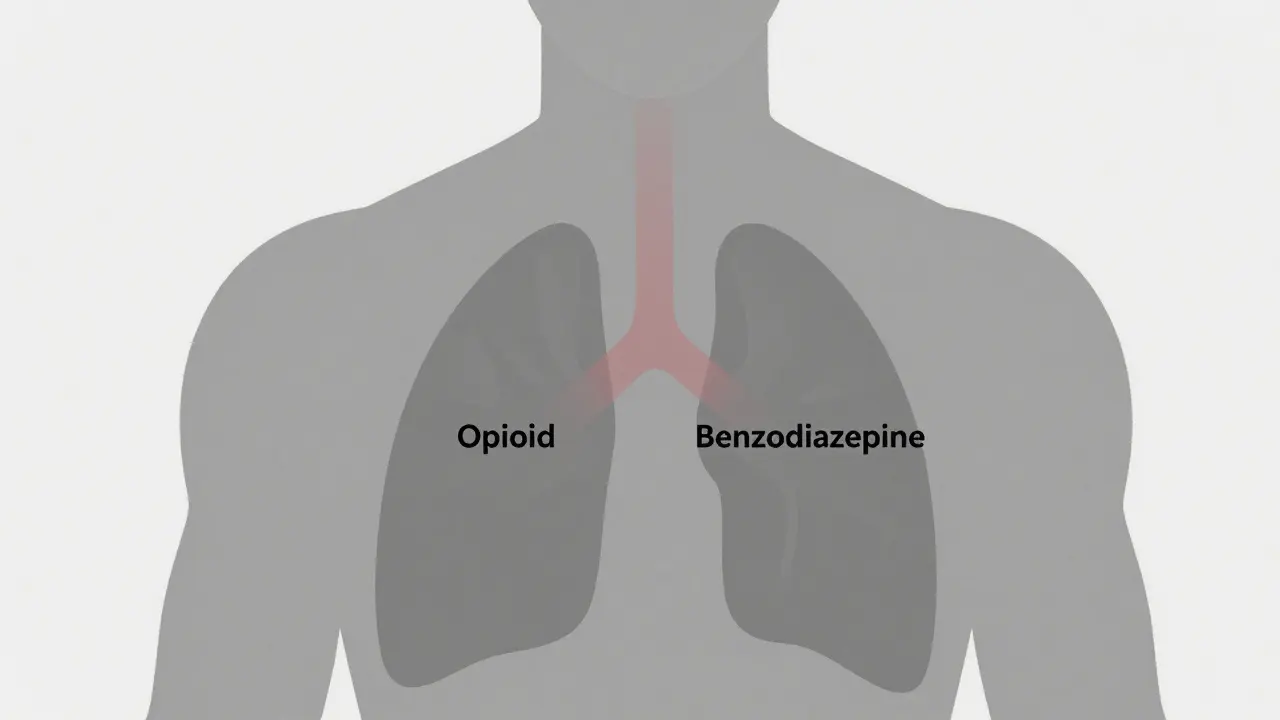
When opioids and benzodiazepines are taken together, the risk of respiratory depression skyrockets. This isn't just a theoretical concern-it's a life-threatening reality that has killed thousands. The combination doesn't just add up the effects of each drug; it multiplies them. Both types of drugs slow down your brain's control over breathing. When they're in your system at the same time, your body can stop breathing without warning-even if you've been taking each one safely on its own.
Why This Combination Is So Dangerous
Opioids like oxycodone, hydrocodone, and fentanyl work by binding to mu-opioid receptors in the brainstem. This reduces your body's urge to breathe, especially during sleep. Benzodiazepines like alprazolam, lorazepam, and diazepam work differently-they boost the effect of GABA, a calming neurotransmitter that also suppresses brain activity in areas that control breathing. Alone, each drug can cause drowsiness or shallow breathing. Together, they create a perfect storm: your breathing becomes slower, shallower, and less responsive to rising carbon dioxide levels. A 2021 study in the Annals of Palliative Medicine showed that when patients took both drugs, 85% experienced oxygen levels below 90%-compared to just 45% with opioids alone. That drop in oxygen can lead to brain damage, cardiac arrest, or death. The risk isn't limited to high doses. Even therapeutic amounts can be deadly when combined. The FDA confirmed this in 2019, adding a Boxed Warning-the strongest safety alert-to the labels of both opioid and benzodiazepine medications.Who’s at Highest Risk?
Certain groups face dramatically higher danger. Older adults are especially vulnerable. The American Geriatrics Society lists this combination as potentially inappropriate for people over 65 because of increased fall risk and reduced ability to clear drugs from the body. People with sleep apnea, COPD, or other lung conditions are also at greater risk because their breathing is already compromised. Another high-risk group is people on long-term opioid therapy for chronic pain. Many assume their tolerance protects them. But tolerance to opioids doesn't mean tolerance to benzodiazepines. A person who takes opioids daily might still overdose on a low dose of a benzodiazepine because their respiratory system hasn't adapted to the added suppression. Data from the CDC shows that people using both drugs are 10 times more likely to die from an overdose than those using opioids alone. The numbers don't lie. In 2020, benzodiazepines were involved in 16% of opioid-related overdose deaths. That's about 220 people per day. A 2021 study in JAMA Network Open found that nearly 15% of Medicare patients on long-term opioids were also prescribed benzodiazepines-despite clear warnings.How the Body Reacts When Both Drugs Are Present
The danger isn't always obvious. You might feel sleepy, dizzy, or confused-but those symptoms can be mistaken for normal side effects. The real danger happens when you're asleep. Your brain stops responding to rising carbon dioxide levels, which normally trigger you to breathe deeper. Without that reflex, oxygen drops and carbon dioxide builds up. This leads to hypoxia, organ failure, and eventually, respiratory arrest. Some opioids, like methadone and fentanyl, are metabolized by the liver enzyme CYP3A4. Certain benzodiazepines, like alprazolam, can block this enzyme. This causes the opioid to build up in your bloodstream, turning a normal dose into a toxic one. It's like pouring gasoline on a fire you didn't even know was lit. Symptoms of overdose from this combination include:- Extreme drowsiness or inability to wake up
- Slow, shallow, or stopped breathing
- Blue lips or fingernails
- Cold, clammy skin
- Slurred speech or unresponsiveness
- Pinpoint pupils
What Doctors Are Told to Do
The FDA's official guidance is clear: avoid combining these drugs unless there's no other option. If a patient absolutely needs both, doctors are instructed to:- Start with the lowest possible dose of each
- Monitor closely for sedation and breathing changes
- Use the shortest duration possible
- Warn patients and caregivers about the risks
- Have emergency equipment ready (oxygen, ventilation tools)
What Happens If You Stop Suddenly?
Quitting either drug cold turkey can be dangerous. Opioid withdrawal causes sweating, nausea, anxiety, and rapid heartbeat. Benzodiazepine withdrawal can trigger seizures, hallucinations, and even death. That's why stopping either drug should be done slowly, under medical supervision. If you're on both, your doctor should create a tapering plan. Often, the benzodiazepine is reduced first, since its withdrawal is more immediately life-threatening. But this requires careful timing and monitoring. Never adjust your dose on your own.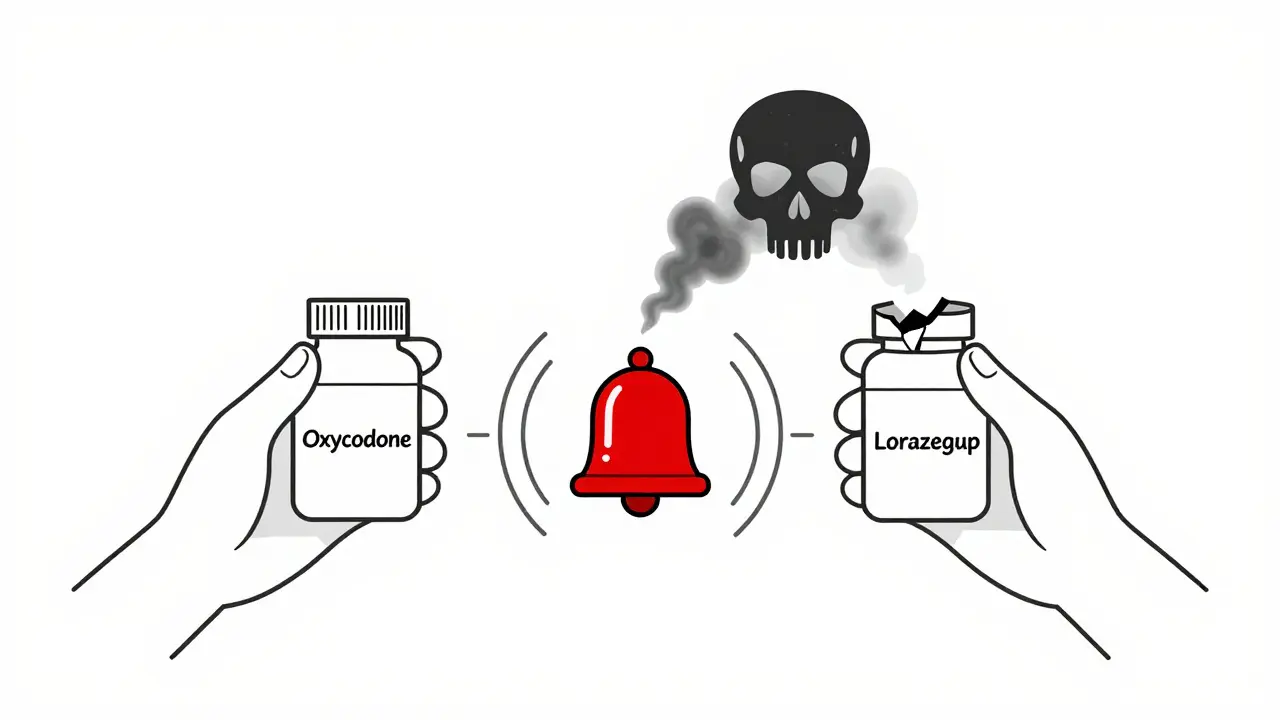
Alternatives and Safer Options
There are safer ways to manage pain and anxiety without this deadly combo. For pain, non-opioid options like physical therapy, NSAIDs (if appropriate), nerve blocks, or non-addictive medications like gabapentin can help. For anxiety, cognitive behavioral therapy (CBT), mindfulness, or non-benzodiazepine medications like SSRIs (e.g., sertraline) are effective and don't carry the same respiratory risks. In hospice or end-of-life care, the risk-benefit balance shifts. For patients with terminal illness and severe pain or distress, the combination may be used cautiously. But even then, it's under constant observation, not routine prescribing.What You Can Do
If you're taking opioids or benzodiazepines:- Never take another person's medication
- Don't mix these drugs with alcohol, sleep aids, or muscle relaxants
- Keep naloxone on hand if you're on opioids
- Tell every doctor you see that you're taking these drugs
- Ask if there's a safer alternative
- Have a trusted person know your medication list and warning signs
Can you die from taking opioids and benzodiazepines together even if you’ve been taking them separately for years?
Yes. Tolerance to one drug doesn't protect you from the other. Someone who's been on opioids for years might still overdose on a low dose of a benzodiazepine because their body hasn't adapted to the combined effect. The respiratory system doesn't build tolerance to the added suppression. This is why even long-term users are at high risk when these drugs are combined.
Is it safe to take a benzodiazepine at night if I take an opioid during the day?
No. The drugs stay in your system for hours-even days, in the case of long-acting versions. Their effects overlap, and the combined suppression of breathing doesn't care when you took each pill. Taking them at different times doesn't eliminate the risk. The interaction happens at the brain level, not the clock level.
Does naloxone reverse the effects of benzodiazepines?
No. Naloxone only reverses opioid effects. It won't fix the sedation or breathing suppression caused by benzodiazepines. If someone overdoses on both drugs, naloxone might help with the opioid part, but they still need emergency medical care for the benzodiazepine side. That includes airway support, oxygen, and possibly ventilation.
Why do doctors still prescribe this combination if it's so dangerous?
Sometimes, they don't realize the patient is taking both. Other times, they're treating severe anxiety or insomnia in someone with chronic pain and believe the benefits outweigh the risks. But research shows the risks almost always win. Many prescribers are still unaware of the full extent of the danger, or they underestimate how quickly things can go wrong. Electronic alerts and updated guidelines are helping, but gaps remain.
Are there any safe combinations of opioids and benzodiazepines?
There's no truly safe combination. Even in hospice or end-of-life care, where the goal is comfort, not longevity, the use of both drugs is done with extreme caution, constant monitoring, and only after all other options are exhausted. For anyone else, the risks far outweigh any potential benefit. Safer alternatives exist for nearly every condition these drugs are prescribed for.
Comments (12)
Just read this and my heart sank. I’ve seen too many patients in the ER who thought they were being careful-taking their opioids in the morning, benzos at night. But it doesn’t work like that. The drugs don’t check the clock. They don’t care if you’re "responsible." Your brainstem just shuts down, quietly, while you’re dreaming. No scream, no warning. Just… silence.
My cousin was one of them. 68, chronic back pain, insomnia. Prescribed oxycodone and lorazepam by two different doctors who never talked. He never touched alcohol, never did anything "wild." Just followed orders. One morning, his wife found him cold. No note. No struggle. Just gone.
Doctors need to stop treating these like separate problems. This isn’t about addiction. It’s about physiology. And we’re failing people because we’re siloed.
I’m not anti-medication. I’m pro-survival. If you’re on either, ask your doctor: "What’s the plan if I can’t breathe?" If they don’t have one, walk out.
ok so i just read this whole thing and like… i get it? like i get that it’s dangerous. but also? i know people who take both and they’re fine?? like my auntie takes klonopin at night and oxy for her arthritis and she’s still out gardening and making lasagna and laughing at netflix. maybe it’s just about dosage??
i mean, i’m not a doctor but like… people have been doing this for decades? maybe the stats are skewed because of people who also drink or do coke or whatever? idk. just saying. don’t scare everyone into quitting meds they need. maybe we need better education, not fear-mongering??
People are dying because doctors are lazy. Not because the drugs are "tricky."
Stop prescribing both. Period.
If you can’t manage pain and anxiety without poisoning your patient, you shouldn’t be prescribing. This isn’t rocket science. It’s basic pharmacology.
And if you’re one of those "I’ve been on it for years" people? You’re lucky. So far. Luck isn’t a treatment plan.
So the government says don't do it and then doctors do it anyway. Classic.
People are just too dumb to read the warnings. Or too desperate. Or both.
And now we have a crisis. Again. Because we always wait until people are dead to act.
And naloxone doesn't work. Great. So what now? Just let them die? Or do we finally start caring before it's too late?
Oh wow a 10x increase in death risk? That’s not a statistic-that’s a death sentence with a prescription pad.
Let me guess: the same doctors who prescribed 100 oxycodons to a 22-year-old with a sprained ankle are now giving benzos to the same person for "anxiety" because they don’t know how to say "no."
And now they’re surprised when the body says "enough."
Stop acting like this is a mystery. It’s not. It’s negligence wrapped in a white coat.
Electronic alerts cut co-prescribing by 28%? That means 72% of docs are still playing Russian roulette with their patients.
Time to revoke licenses. Not just add warnings.
I know this sounds harsh but hear me out-you’re not alone. If you’re on opioids or benzos, or both, and you’re scared, you’re not weak. You’re human.
The system failed you. Not you.
There are alternatives. CBT works. Physical therapy works. Acupuncture. Even walking. I’ve seen people go from 4 meds a day to zero, and they’re happier, clearer, alive.
It’s not easy. But it’s possible. Talk to someone. A pharmacist. A therapist. A friend. Don’t wait until you’re too tired to call.
You deserve to breathe. Not just survive. Breathe.
THEY WANT TO CONTROL US.
Why do you think they made this combo illegal? Because they know people are waking up.
They don’t want you to sleep well. They don’t want you to be calm. They want you anxious. Depressed. Dependent.
And now they’re pushing "alternatives" like SSRIs-more pills! More profit!
Who benefits? Pharma. Always.
Don’t fall for the narrative. The real danger isn’t the drugs-it’s the system that profits from your fear.
And if you think this is about health? 😈
How quaint. A 2021 study in JAMA. As if peer-reviewed journals are the arbiters of truth.
Let’s not forget the FDA’s "Boxed Warning"-the same agency that approved Vioxx, OxyContin, and now, somehow, still lets doctors write these scripts.
It’s not about the science. It’s about power. The power to say "you need this" while ignoring that you might not need anything at all.
And yet, here we are-talking about breathing like it’s a mechanical function, not a spiritual one.
Perhaps the real issue is that we’ve forgotten how to live without chemical crutches.
But I suppose that’s too philosophical for a public health pamphlet.
Oh, another opiate crisis. How original.
Let me guess: the people who need this combo are the same ones who think "natural remedies" are for hippies and "CBT" is just therapy-speak for "try harder."
And yet, here we are-spending millions on awareness campaigns while ignoring that the real problem is systemic abandonment.
People don’t take benzos because they’re lazy. They take them because their lives are unbearable and the system offered them nothing but a pill and a shrug.
So now we blame the drugs instead of the world that made them necessary.
Brilliant. Truly.
Next up: blaming gravity for falling.
What if this is all a lie? What if the government is using this "danger" to push people off opioids so they can replace them with something worse?
Think about it-when you stop opioids, what do they give you? SSRIs? Ketamine? Psychedelics?
And what happens if you say no?
They cut your disability. They label you "non-compliant." They take your kids.
And then? You disappear.
This isn’t about safety. It’s about control.
They want you docile. Quiet. Dependent.
And they’ll use "respiratory depression" to make it look like care.
Just wanted to say thanks for writing this. It’s rare to see something so clear without being preachy.
I’ve been on gabapentin for nerve pain and sertraline for anxiety for two years now. No opioids. No benzos. Still have pain. Still have anxiety.
But I breathe. And I sleep. And I don’t wake up scared I won’t wake up again.
You’re not broken. You’re just stuck. And there’s a way out.
My mom was on both. Took her 18 months to taper off. We did it with a pain specialist and a therapist. No drama. No drama. Just slow, steady steps.
She’s off both now. Still has pain. Still has anxiety.
But she’s alive.
And she can hug her grandkids without fear.
That’s worth it.