
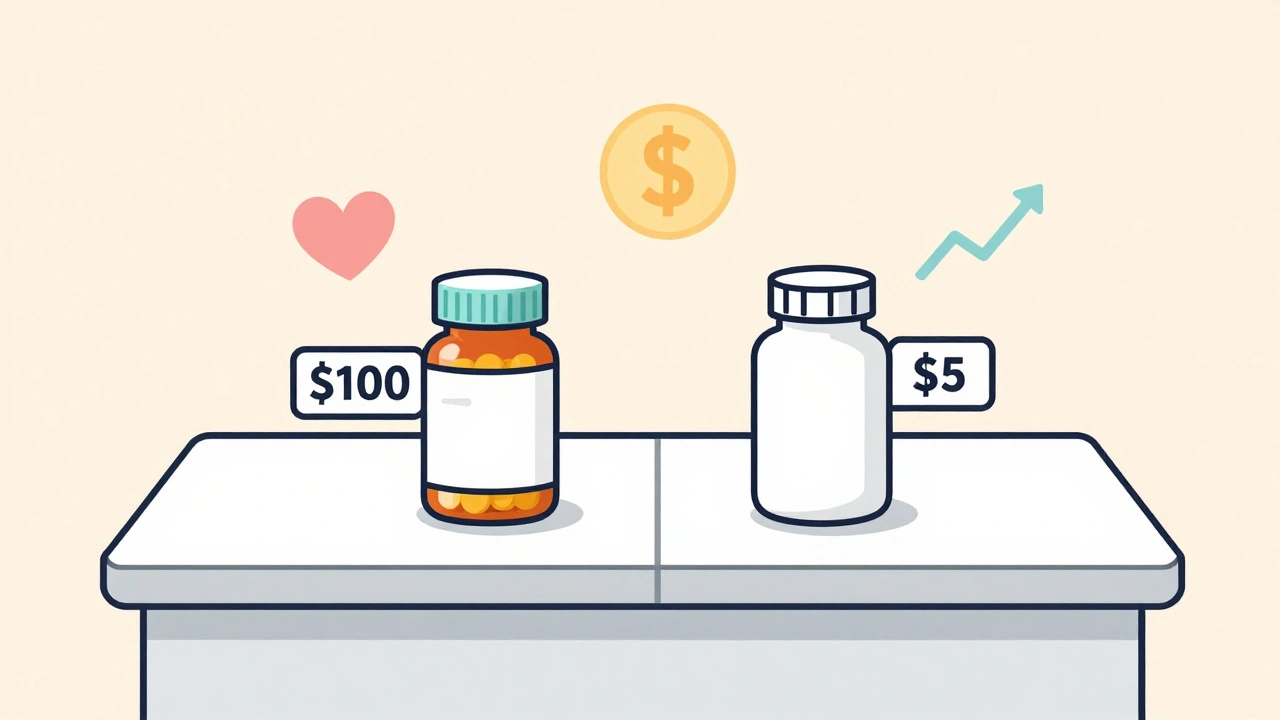
When you pick up a prescription, you might see two options: the brand-name drug you’ve heard of, or a cheaper generic version. It’s easy to assume the generic is just a cheaper copy. But in health economics, that assumption doesn’t cut it. The real question isn’t just cost-it’s value. Does switching to a generic save money without hurting outcomes? Does it actually make people healthier over time? And who pays the hidden costs when things go wrong?
What Does ‘Value’ Really Mean in Generic Drugs?
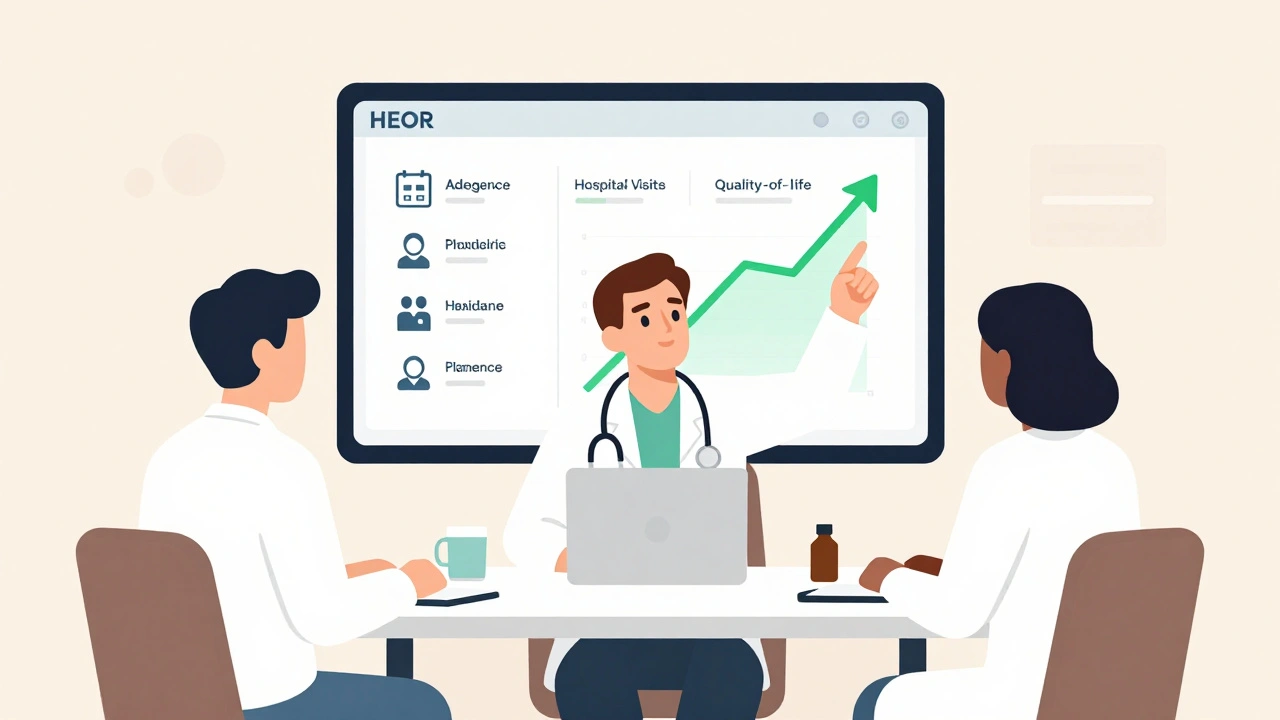
Health economics doesn’t just look at the price tag on a pill bottle. It measures value using something called Health Economics and Outcomes Research (HEOR). This isn’t guesswork-it’s a structured system that tracks three things: clinical results, economic impact, and patient experience. For generics, that means asking: Does this cheaper version keep people out of the hospital? Do patients take it regularly? Does it affect their energy, mood, or ability to work?
Take levothyroxine, a common thyroid drug. The FDA says generics are bioequivalent-they deliver the same active ingredient within 80-125% of the brand’s concentration. But real-world data shows something else: patients switched to a new generic brand sometimes report fatigue, weight gain, or heart palpitations. Why? Because inactive ingredients like fillers or dyes can vary. One 2023 study found 12% of patients on generic levothyroxine had abnormal thyroid levels within 90 days of switching-despite meeting FDA standards. That’s not a failure of science. It’s a failure of oversimplification.
The Numbers Behind the Savings
Generics make up 90% of prescriptions in the U.S., but only 22% of total drug spending. That’s a $200 billion annual savings just from substitution. But savings aren’t automatic. They depend on how well the system is designed.
Commercial insurers and Medicare Part D plans that aggressively push generics save $1,200 to $1,800 per member per year. That’s real money. But here’s the catch: those savings come with trade-offs. Payers often require prior authorization for brand-name drugs, adding administrative work for doctors and delays for patients. One pharmacy chain reported a 20% increase in phone calls from confused patients after switching to a mandatory generic formulary.
And the savings aren’t just in drug costs. When patients stick to their meds-because they’re cheaper-they’re less likely to end up in the ER. A 2024 analysis of 500,000 diabetes patients found those on generic metformin had 7% fewer hospital visits than those on the brand. Why? Better adherence. Generics are 5-15% more likely to be taken as prescribed because cost is no longer a barrier.
When Generics Don’t Save Money-They Cost More
Not all switches are wins. For drugs with a narrow therapeutic index-like warfarin, lithium, or seizure medications-even tiny differences in absorption can cause harm. In one 2023 study, patients switched from brand to generic warfarin had a 30% higher chance of needing a blood test adjustment within 30 days. That means more doctor visits, more lab fees, and more anxiety.
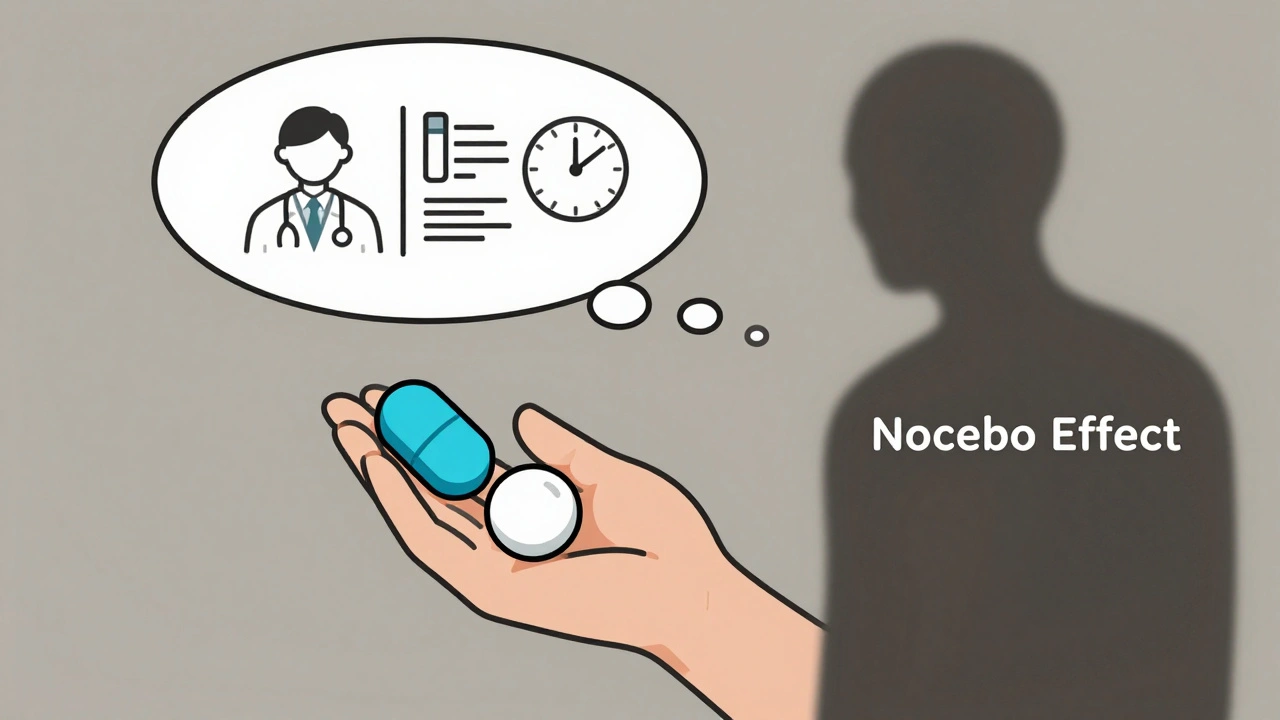
And then there’s the psychological cost. A 2024 survey of 12,850 patients found that 68% of negative reviews for generics cited ‘different effectiveness,’ even when clinical data showed no difference. That’s therapeutic misconception: patients believe the brand works better simply because it’s more expensive. That belief can trigger real symptoms-nocebo effect-leading to unnecessary dose changes or switches back to the brand, undoing the savings.
Even worse, some patients stop taking their meds entirely when generics aren’t available. A Reddit thread with over 1,200 comments revealed that 42% of respondents had family members who skipped doses after a pharmacy switched to an unfamiliar generic. One woman wrote: ‘My mom stopped her blood pressure med because the new pill looked wrong. She ended up in the ER with a stroke.’ That’s not a medication failure. It’s a communication failure.
Who’s Doing It Right?
The best outcomes come when HEOR isn’t just a spreadsheet-it’s a conversation. Leading pharmacy benefit managers (PBMs) and Medicare plans now use HEOR dossiers that include:
- Real-world adherence data from claims records
- Quality-of-life surveys (like EQ-5D) collected at 30, 90, and 180 days
- Costs of hospitalizations, ER visits, and missed work
- Patient feedback on pill appearance, size, and taste
Organizations with mature HEOR teams-usually staffed with PhD economists, pharmacists, and data analysts-see 25-35% faster adoption of generics and 15-20% greater savings than those relying on simple price-per-pill comparisons.
One hospital system in Ohio used HEOR to evaluate generic alternatives for statins. Instead of just picking the cheapest, they analyzed 18 months of patient data. They found one generic had 12% higher adherence and 8% fewer muscle pain reports than others-even though it cost 10% more. They chose it. Result? Lower statin discontinuation, fewer liver enzyme checks, and $320,000 saved in avoided complications over two years.
What’s Changing in 2025?
The FDA is tightening rules. New draft guidance requires longer follow-up (24 months minimum) for complex generics-like extended-release pills or topical creams. AI tools are now predicting which patients are most likely to have issues with a switch, based on age, comorbidities, and past medication history.
By 2027, 85% of U.S. health systems will be required to use HEOR evidence for formulary decisions, thanks to CMS mandates. That’s not a trend-it’s a mandate. The old model of ‘cheaper is better’ is dead. The new model is ‘best value wins.’
What Should You Do?
If you’re a patient: Don’t assume generics are the same. Ask your pharmacist: ‘Is this the same as my last one?’ If you notice changes in how you feel after a switch, report it. Keep a log. Your feedback matters.
If you’re a provider: Don’t automatically switch. For narrow therapeutic index drugs, stick with what’s working unless the HEOR data shows a clear benefit. Use tools like GoodRx to show patients the price difference-and explain why some generics might be better than others.
If you’re a payer or administrator: Stop using cost-per-pill as your main metric. Build a HEOR team. Collect real-world data. Track adherence, hospitalizations, and patient-reported outcomes. The savings aren’t in the pill-they’re in the person.
Final Thought: It’s Not About the Pill. It’s About the Person.
Generics aren’t just cheaper versions of brand drugs. They’re a test of how well our healthcare system values people over profits. The data is clear: when done right, generics save money and improve lives. When done poorly, they create confusion, distrust, and even harm.
The goal isn’t to replace brands with generics. It’s to replace guesswork with evidence. And that’s where outcomes economics changes everything.
Are generic drugs really as effective as brand-name drugs?
Yes-by FDA standards, generics must deliver the same active ingredient at the same rate and amount as the brand. But bioequivalence doesn’t guarantee identical patient experience. Differences in inactive ingredients, pill size, or taste can affect adherence. Real-world studies show generics work just as well for most people, but a small subset report side effects or feel the drug doesn’t work as well-often due to psychological factors or formulation differences.
Why do some patients feel worse after switching to a generic?
It’s not always the drug. Sometimes, the change in pill color, shape, or size triggers a nocebo effect-where expecting a problem causes real symptoms. Other times, inactive ingredients like dyes or fillers cause mild reactions in sensitive individuals. For drugs with a narrow therapeutic index-like warfarin or levothyroxine-even small absorption differences can affect blood levels. Always report changes to your doctor.
Do generics save money for the healthcare system?
Yes-dramatically. Generics account for 90% of prescriptions but only 22% of drug spending in the U.S., saving over $200 billion annually. When patients take their cheaper meds consistently, they have fewer hospital visits and ER trips. Studies show 5-7% lower complication rates for chronic conditions like diabetes and hypertension when generics are used. But savings depend on smart implementation-not just picking the lowest price.
Which drugs should I avoid switching to generics?
For most drugs, switching is safe. But for narrow therapeutic index medications-like warfarin, lithium, levothyroxine, phenytoin, and some seizure drugs-small changes in blood levels can be dangerous. Many doctors recommend staying on the same brand or generic formulation once stabilized. Always consult your provider before switching these.
How do insurers decide which generics to cover?
Top insurers use Health Economics and Outcomes Research (HEOR) to evaluate not just price, but real-world outcomes: adherence rates, hospitalization reductions, patient-reported side effects, and total cost of care. They look at data from claims, surveys, and electronic health records. The cheapest option doesn’t always win-the best value does.
Is HEOR only for big health systems?
No. While large PBMs and Medicare plans lead in HEOR use, smaller clinics and independent pharmacies can start small: track adherence rates, collect patient feedback, and compare total costs over time. Even simple data-like how many patients refill their generic meds-can guide better decisions. You don’t need a PhD to begin using outcomes-based thinking.
Comments (13)
Generics? Ha! In India, we’ve been using them for decades-no drama, no fuss. But here in the US, you turn a pill into a national crisis. You people treat medicine like a Netflix subscription: ‘Wait, this generic looks different? I’m suing!’
Meanwhile, my uncle in Delhi takes five generics a day, lives to 92, and still argues about cricket. You want outcomes? Look at real life-not your insurance formulary.
Stop overcomplicating. If it’s FDA-approved, take it. End of story. Your anxiety is the real drug.
The data is unequivocal: for 95% of patients, generics perform identically to brand-name drugs in clinical outcomes. The exceptions-narrow therapeutic index drugs-are well-documented and already handled by clinical guidelines.
The real issue isn’t bioequivalence. It’s communication. Patients aren’t being told that color changes are inert, or that adherence improves when cost drops. That’s a systems failure, not a pharmacological one.
HEOR isn’t just ‘spreadsheet math.’ It’s the difference between treating patients and treating line items. The Ohio statin case proves that. Stop reducing value to price per tablet.
One must consider the epistemological underpinnings of pharmaceutical equivalence. The FDA’s bioequivalence threshold of 80–125% is, by any rigorous scientific standard, a remarkably permissive range-particularly when applied to drugs with zero margin for error.
Moreover, the psychological dimension, while frequently dismissed as ‘nocebo,’ is not merely anecdotal; it is neurobiologically mediated through the prefrontal cortex and dopaminergic pathways, as demonstrated in recent fMRI studies on expectation-induced pharmacodynamic modulation.
Therefore, to reduce this complex, multi-layered phenomenon to a cost-benefit ratio is not merely reductive-it is ethically negligent.
Let me tell you what they don’t want you to know… Big Pharma owns the FDA. They let generics in so they can control which ones get approved-then they buy up the small manufacturers and jack up prices on the ‘new’ generic.
That ‘2023 study’? Paid for by a subsidiary of Pfizer. The ‘Ohio hospital savings’? They switched to a generic made by a company that just got bought by a private equity firm that also owns 37% of the local ER chain.
You think this is about health? No. It’s about control. They want you dependent on the system. And they want you scared to switch. That’s why they make you feel guilty for asking questions.
My cousin’s heart meds changed color. He had a seizure. They said it was ‘coincidence.’
Let’s be real. The ‘HEOR team’ is just a fancy way of saying ‘we hired someone to justify the cheapest pill.’
That ‘12% higher adherence’ stat? That’s because the pharmacy automated the refill and didn’t tell the patient they switched. People don’t notice. They just keep taking the pill.
And ‘patient-reported outcomes’? You think someone’s gonna fill out a survey because their pill looks different? No. They just stop taking it-and you count that as ‘success’ because they’re not in the system anymore.
Stop pretending this is science. It’s cost-shifting dressed up in PowerPoint.
Oh my god. I’ve been on the same generic for 8 years. Then one day my pill went from white oval to blue circle. I panicked. Thought I was getting poisoned. Called my doctor. Turned out it was the same exact drug. I felt like an idiot.
But here’s the thing-I’m not alone. My mom did the same thing with her blood pressure med. She didn’t take it for two weeks. Got dizzy. Went to the ER. They blamed her. She cried for days.
So yeah, generics save money. But who pays for the panic? The system? No. The patients do. In stress. In trust. In health.
What if the real problem isn’t the pill-but the idea that medicine should be cheap?
We’ve turned healthcare into a Walmart aisle. ‘Which generic has the lowest price per unit?’
But health isn’t a commodity. It’s a relationship. Between you and your body. Between you and your doctor. Between you and the tiny blue pill that, for some reason, feels less trustworthy than the red one with the logo.
Maybe we don’t need more data. Maybe we need to stop pretending that healing can be optimized like a supply chain.
Generics in India? They’re not just cheaper-they’re unreliable. I’ve seen pills with no imprint. Pills that crumble. Pills with different colors across batches. No one checks them.
So when Americans freak out about a different-shaped pill? I laugh. At least your FDA has standards. We have… hope.
But you know what? We still survive. Because we have to. You have a choice. We don’t.
Stop overthinking. Take the generic. If you feel weird, tell your doctor. If you don’t, keep taking it. Simple.
Also, stop blaming the pill. Blame the pharmacy that doesn’t tell you they switched.
If you can’t afford your meds, you’re not sick-you’re poor. And that’s not a pharmaceutical problem. It’s a moral failure.
Generics aren’t the answer. Universal healthcare is.
One must interrogate the hegemonic discourse surrounding pharmaceutical equivalence. The very notion that ‘bioequivalence’ constitutes therapeutic equivalence is a colonial artifact-a relic of Western positivism that reduces the embodied, phenomenological experience of the patient to a pharmacokinetic curve.
When a woman in Bihar takes a generic tablet with a different dye, she does not merely ingest a chemical compound-she ingests a history of marginalization, of institutional disregard, of being treated as a statistic rather than a subject.
HEOR, as currently deployed, is not liberation. It is algorithmic paternalism dressed in academic garb.
And yet… I still take the generic. Because I have no choice.
Let’s talk about the ontological instability of pharmaceutical identity. The pill is no longer a discrete object-it’s a signifier in a semiotic network of brand loyalty, color psychology, and placebo neurology.
When you switch generics, you’re not just changing excipients-you’re destabilizing the patient’s symbolic relationship with their own healing.
HEOR is just the latest attempt to quantify the unquantifiable: the soul’s trust in a tablet.
And yet… the data still holds. For most, it works. For some, it doesn’t. And that’s where humanity begins.
i think the real question is… why do we even have brands anymore? like… if the active ingredient is the same… why does the pill need a logo? why does it need to be a different color? why does it need to cost 10x more?
maybe the problem isnt the generic… maybe its the whole idea of medicine as a branded product.
also i spelled ‘it’s’ wrong on purpose. just because.