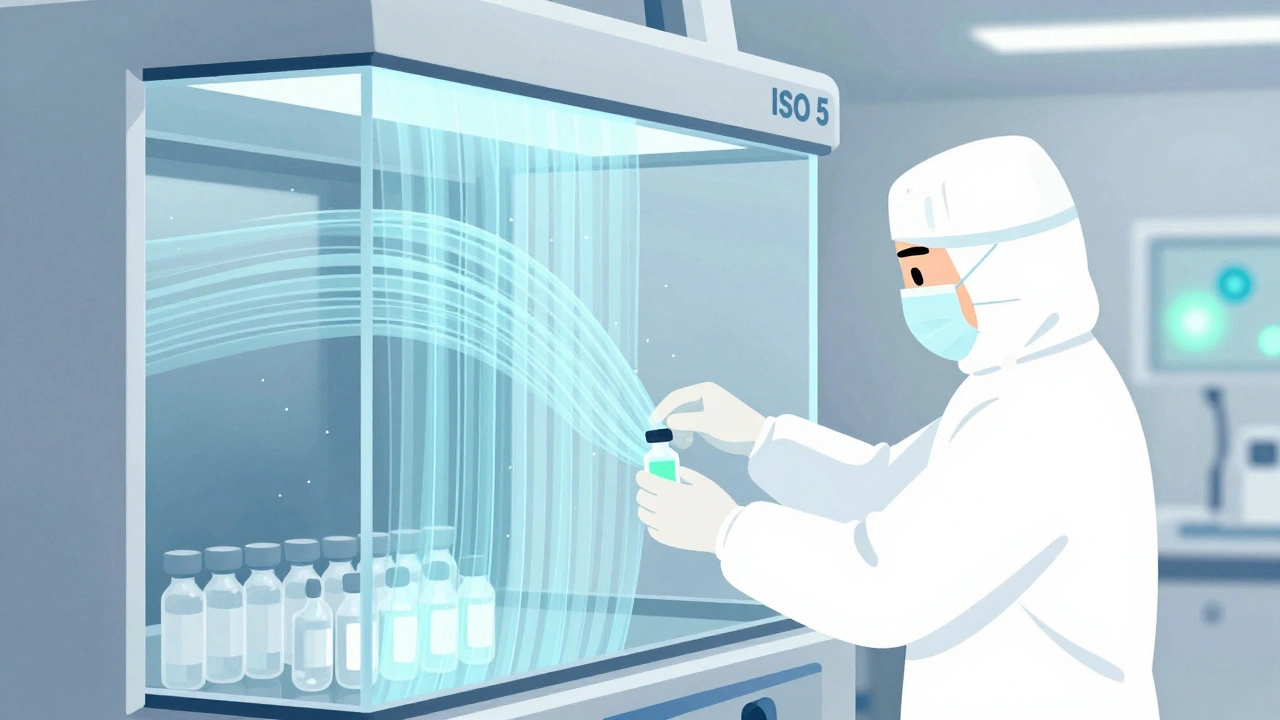
Aseptic Processing: What It Is and Why It Matters for Your Medications
When you get an injection, an IV, or eye drops, you expect them to be safe—no bacteria, no mold, no invisible threats. That’s where aseptic processing, a method of manufacturing medications without sterilizing the final product by keeping everything sterile from start to finish. Also known as sterile manufacturing, it’s the reason your insulin or chemotherapy doesn’t make you sicker than your disease. Unlike autoclaving or radiation, which kill germs after packaging, aseptic processing stops them from ever getting in. It’s not just a step—it’s the entire system.
This isn’t magic. It’s science built on cleanrooms, sterile gear, and strict rules. Workers wear full-body suits, air is filtered constantly, and every surface is cleaned with precision. Even a single sneeze near a vial can ruin a batch. That’s why cleanroom standards, controlled environments with specific particle limits defined by international guidelines like ISO 14644 are non-negotiable. Facilities are built like hospitals for medicine—no windows, no unfiltered airflow, no shortcuts. And it’s not just for big pharma. Even small compounding pharmacies use these same rules when making custom IV bags or hormone injections.
When aseptic processing fails, the results are deadly. Think of the 2012 fungal meningitis outbreak linked to contaminated steroid injections. Over 750 people got sick. More than 60 died. It wasn’t a lab error—it was a breakdown in aseptic practices. That’s why regulators watch this process like a hawk. Every step, from the gloves worn to the way vials are sealed, is documented and audited. pharmaceutical contamination, the presence of harmful microbes in medications that should be sterile isn’t just a risk—it’s a failure with real human cost.
You won’t see aseptic processing in action, but you feel its effect every time you use a sterile product. It’s why your eye drops don’t burn, why your IV doesn’t cause fever, and why your insulin works without infection. The posts below dive into how this process affects real-world medication safety—from how generic manufacturers maintain sterility to why some drug recalls happen because of tiny breaches in cleanroom protocols. You’ll also find real cases where poor practices led to harm, and how modern systems are tightening the rules to protect patients like you.