Med Sync: What It Is and How It Saves Time and Money for Families
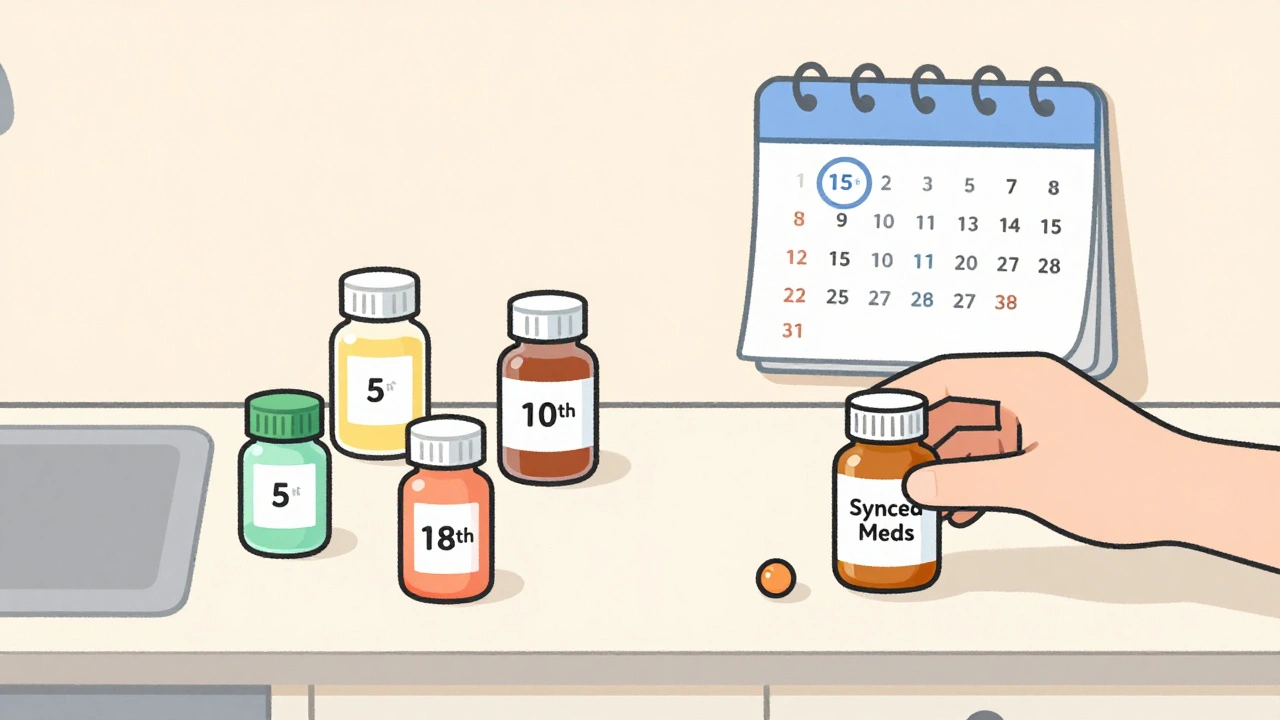
When you’re juggling pills for high blood pressure, diabetes, cholesterol, and maybe even depression, keeping track of refill dates can feel impossible. That’s where med sync, a pharmacy service that aligns all your prescriptions to one monthly refill date. Also known as medication synchronization, it’s not just convenient—it’s proven to improve adherence and reduce waste. Think of it like a monthly reset button for your medicine cabinet. Instead of running to the pharmacy every few weeks because one script ran out, you get everything at once. No more missed doses. No more last-minute panic when you’re out of insulin.
Med sync isn’t just for seniors. It works for anyone taking three or more daily meds—parents managing kids’ asthma inhalers, people with heart disease, or those on thyroid and antidepressants. Pharmacies that offer med sync often include free pill organizers, automatic refills, and phone or text reminders. Some even deliver. The real win? Fewer trips mean less time off work, lower co-pays (since you’re refilling once instead of multiple times), and fewer emergency visits from missed doses. Studies show patients on med sync are 20% more likely to stick to their regimen. That’s not just a convenience—it’s a lifesaver.
It’s not magic. You still need to talk to your doctor and pharmacist to make sure all your meds can be synced. Some drugs, like antibiotics or short-term pain meds, don’t fit. But for long-term conditions—like the ones covered in our posts on levothyroxine, a thyroid hormone replacement that requires strict timing with calcium and iron, or lithium, a mood stabilizer that needs careful monitoring and consistent dosing—med sync makes life simpler. It also pairs well with bulk purchasing of generics, which cuts costs even further. And if you’ve ever wondered why your pharmacist keeps asking if you want to enroll, now you know: they’re not pushing a program. They’re trying to help you stay healthy without the stress.
Below, you’ll find real-world stories and deep dives into how medication timing, interactions, and refill habits affect your health. Whether you’re managing a chronic condition or helping an aging parent, these posts give you the tools to take control—without the guesswork.