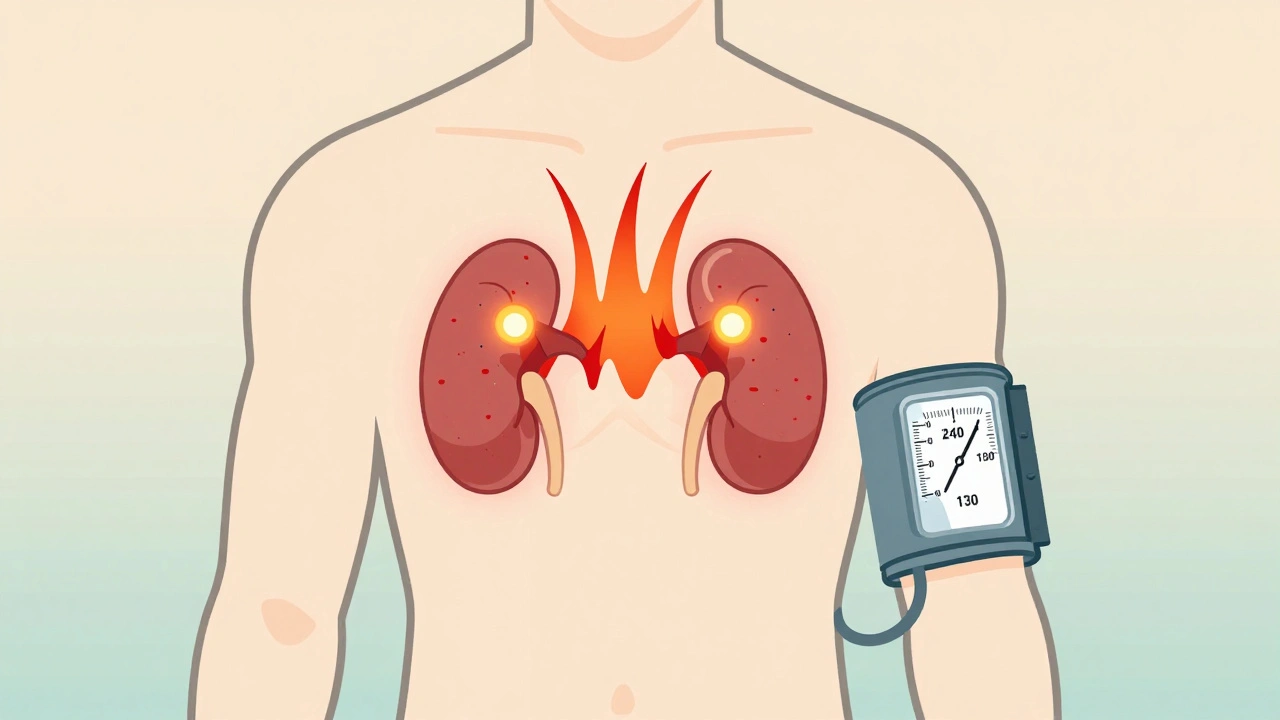
Pheochromocytoma: Symptoms, Diagnosis, and Treatment Options
When your body suddenly floods with adrenaline for no reason, it’s not anxiety—it could be a pheochromocytoma, a rare, usually noncancerous tumor in the adrenal gland that produces excess catecholamines. Also known as adrenal chromaffin cell tumor, it’s the hidden cause behind unexplained panic attacks, pounding headaches, and blood pressure that spikes like a rollercoaster. This isn’t just high blood pressure—it’s episodic, severe, and often misdiagnosed as stress or anxiety. If you’ve had sudden sweating, heart palpitations, or pale skin without explanation, this might be why.
Pheochromocytomas are part of a larger group called paragangliomas, tumors that arise from nerve tissue outside the adrenal gland. These can show up in the neck, chest, or abdomen, but the adrenal ones are the most common. They release catecholamines, hormones like epinephrine and norepinephrine that control heart rate, blood pressure, and stress response. Too much of these triggers the fight-or-flight response constantly, even when you’re sitting still. That’s why people with this tumor often feel like they’re in crisis—no matter how calm their surroundings are.
Diagnosis starts with blood or urine tests that measure catecholamine levels during a symptom flare. Imaging like CT or MRI finds the tumor, but genetic testing is just as important—up to 40% of cases are linked to inherited syndromes like MEN2 or von Hippel-Lindau. Treatment isn’t just about removing the tumor—it’s about preparing for it. Doctors first use alpha-blockers to control blood pressure, then beta-blockers to manage heart rate. Surgery is the cure, but skipping the prep phase can be deadly. Even after removal, monitoring is critical because these tumors can come back.
What you’ll find below are real, practical posts that break down how this condition shows up in patients, how doctors test for it, and what medications or procedures actually help. You’ll see how it connects to high blood pressure treatments, why certain drugs can trigger dangerous spikes, and how genetics play a role. No fluff. Just clear, usable info from people who’ve been there.