
Rifampin Interaction Calculator
Check Your Medication Safety
Rifampin can reduce effectiveness of other drugs by up to 90%. Enter your medication to see the interaction risk.
How Rifampin Changed TB Treatment
Rifampin is a semi-synthetic antibiotic derived from Amycolatopsis rifamycinica. First isolated in 1957 and introduced clinically in 1965, it revolutionized TB care by cutting treatment time from 18 months to 6 months. This drug works by binding to the beta-subunit of bacterial RNA polymerase, blocking RNA synthesis. It's highly effective against Mycobacterium tuberculosis, both inside and outside cells. Peak blood levels hit around 7 mcg/mL after a standard 600 mg dose, though food reduces absorption by 30%.
Rifampin's drug interactions are a critical concern for patients on TB treatment. What makes it so powerful also makes it dangerous for people taking other medications. This tiny molecule triggers a chain reaction in your body that can leave life-saving drugs useless or even harmful.
Rifampin's Hidden Mechanism: Enzyme Induction
Rifampin doesn't just kill TB bacteria-it also tricks your body into breaking down other drugs faster. It activates the pregnane X receptor (PXR), which turns on genes for drug-processing enzymes. This includes CYP3A4, a major liver enzyme responsible for metabolizing over half of all prescription drugs. Within 24 hours of taking rifampin, CYP3A4 levels start rising. By day 5-7, enzyme activity can double or even triple. This means drugs processed by CYP3A4 get broken down too quickly, leaving less in your bloodstream to work.
For example, when rifampin is taken with oral contraceptives, the pill's effectiveness drops by 67%. This isn't a small risk-it's why many women on TB treatment get pregnant despite using birth control. Similarly, warfarin (a blood thinner) sees a 42% reduction in blood levels, raising the risk of dangerous clots. HIV protease inhibitors like ritonavir drop by 75-90%, leading to treatment failure and drug-resistant HIV.
Common Drugs Affected by Rifampin
| Medication | Effect | Clinical Risk |
|---|---|---|
| Oral contraceptives | 67% reduction in effectiveness | Unintended pregnancy |
| Warfarin | 42% reduction in blood levels | Increased clotting risk |
| HIV protease inhibitors | 75-90% reduction | Treatment failure |
| Statins (e.g., atorvastatin) | 50-70% lower levels | Reduced cholesterol control |
| Immunosuppressants (e.g., cyclosporine) | Up to 80% reduction | Organ rejection risk |
These numbers aren't theoretical. In real-world cases, patients on rifampin have experienced unexpected pregnancies, blood clots, and HIV treatment failure-all because of these interactions. Doctors always check for other medications before starting TB treatment. If you're on rifampin, never take new drugs without consulting your healthcare team.
Managing Rifampin Interactions in Practice
When rifampin is part of your treatment plan, timing matters. The enzyme induction starts within a day, peaks around a week, and lingers for two weeks after stopping. This means you need to plan carefully when switching medications. For drugs with narrow therapeutic windows-like warfarin or cyclosporine-doctors often recommend a four-week washout period before starting the new drug. For others, like birth control, alternatives like IUDs or implants are safer during rifampin treatment.
Liver health also needs monitoring. Rifampin contributes to drug-induced liver injury in 10-20% of TB patients. Regular blood tests for ALT and AST levels help catch problems early. If liver enzymes rise significantly, doctors may adjust the TB regimen or switch to alternative drugs like rifabutin, which has fewer interactions.
New Research: Fighting Rifampin Tolerance
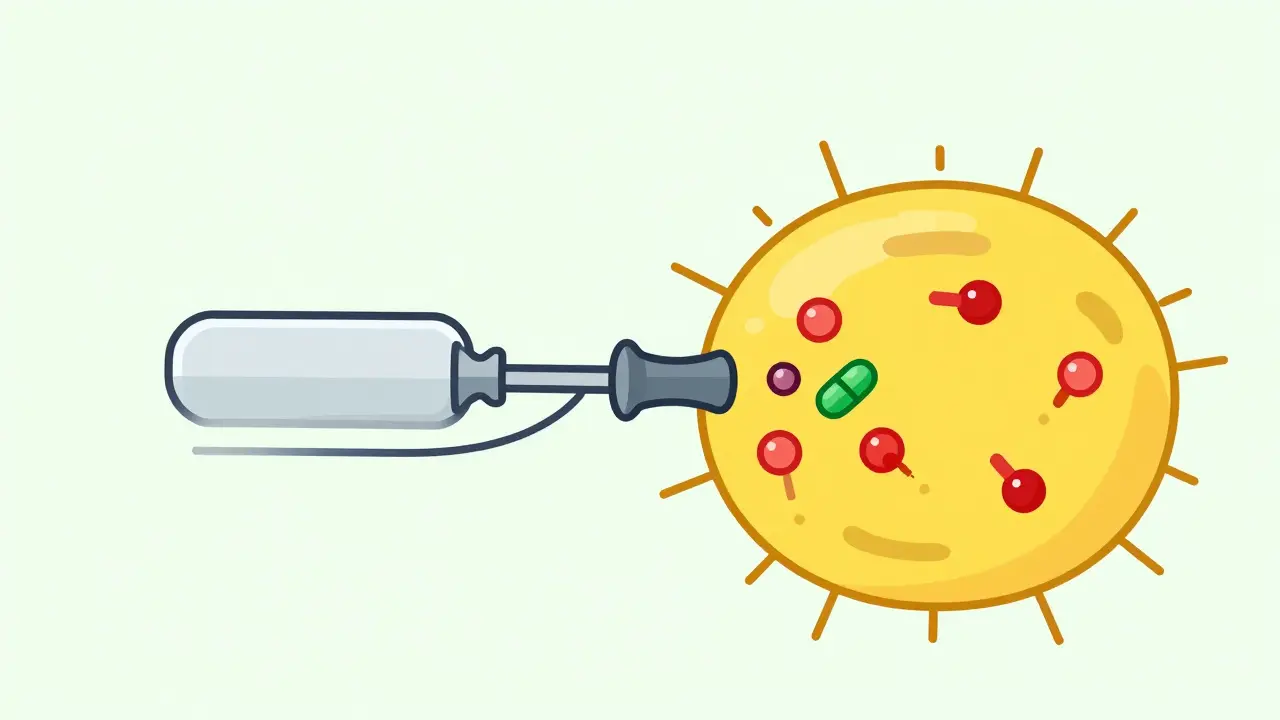
Recent studies reveal a surprising twist: rifampin itself helps TB bacteria survive. Researchers found that at low doses, rifampin triggers a stress response in Mycobacterium tuberculosis through rpoB gene upregulation. This makes the bacteria temporarily tolerant to the drug. But there's hope. Studies show that drugs like verapamil (a blood pressure medication) and omeprazole (a common acid reducer) can block this tolerance mechanism.
In lab tests, verapamil at 25 µM concentration reduced rifampin efflux by TB bacteria by over 60%. Omeprazole showed similar effects at clinically achievable doses. Clinical trials are now testing these combinations to shorten TB treatment. If successful, they could cut treatment time from six months to three, reducing relapse rates from 25% to under 5%.
What Patients Need to Know
If you're taking rifampin for TB, here's what you should do: First, tell your doctor about every medication you take-including over-the-counter drugs, supplements, and herbal remedies. Second, avoid starting new treatments without checking for interactions. Third, if you're on birth control, ask about non-hormonal options like IUDs. Fourth, get regular liver function tests. Finally, don't skip doses or stop rifampin early-this can lead to drug-resistant TB.
TB treatment is complex, but understanding rifampin's interactions helps you stay safe. With careful management, most people complete treatment successfully and avoid complications. New research continues to improve these strategies, making TB care safer and more effective every year.
How long do rifampin interactions last after stopping the drug?
Rifampin's enzyme induction effects begin within 24 hours of starting the drug, peak around 5-7 days, and persist for up to two weeks after discontinuation. This means you need to wait at least two weeks before starting medications that are sensitive to CYP3A4 induction. For drugs with narrow therapeutic windows like warfarin, doctors often recommend waiting four weeks to ensure enzyme levels return to normal.
Can rifampin cause liver damage?
Yes. Rifampin contributes to drug-induced liver injury in 10-20% of TB patients. It causes oxidative stress and mitochondrial dysfunction, leading to elevated liver enzymes. Doctors monitor ALT and AST levels regularly during treatment. If liver damage occurs, they may switch to alternative drugs like rifabutin or adjust the regimen.
Are there alternatives to rifampin for TB treatment?
Yes. Rifabutin is a common alternative with fewer drug interactions, though it's less effective against some TB strains. For patients with severe interactions, doctors may use high-dose isoniazid or other second-line drugs. However, rifampin remains the first-choice drug for most drug-sensitive TB cases due to its proven effectiveness and safety profile when managed correctly.
Why does rifampin affect birth control?
Rifampin induces CYP3A4 enzymes that break down estrogen and progestin in birth control pills. This reduces hormone levels by 67%, making the pill ineffective. Hormonal IUDs or implants may also be affected, so non-hormonal options like copper IUDs are safer during rifampin treatment.
How do new drugs like verapamil help with TB treatment?
Verapamil blocks efflux pumps in TB bacteria that eject rifampin from cells. This keeps rifampin inside the bacteria longer, improving effectiveness. Clinical trials show verapamil combined with rifampin can shorten treatment duration by 50% and reduce relapse rates from 25% to under 5% in animal studies. Human trials are ongoing to confirm these benefits.
Comments (12)
Rifampin's mechanism is a perfect example of how a single molecule can have profound systemic effects. It's not just about killing TB bacteria; it's about how it hijacks our body's metabolic pathways. By activating the pregnane X receptor, it essentially tells the liver to ramp up drug-processing enzymes. This is why medications like birth control pills become ineffective-their hormones are broken down too quickly. It's fascinating how such a targeted treatment can have such wide-reaching consequences. I've seen patients struggle with unexpected pregnancies or clotting issues because they didn't realize the interaction. This is why healthcare providers must always check for concurrent medications. The science here is both a blessing and a curse-effective against TB but risky for other treatments. Understanding this helps in managing TB without compromising other health needs. It's a reminder that medicine is rarely about isolated effects but interconnected systems. Maybe we need more awareness campaigns about these interactions. The fact that rifampin can induce liver enzymes so quickly is something patients often overlook. Even after stopping rifampin, the effects linger for weeks. This is why timing matters when switching medications. It's a lesson in how complex our bodies are and how careful we must be with drug combinations.
Let me tell you something-rifampin interactions are being blown way out of proportion. Yes, it affects certain drugs, but doctors are trained to handle this. For instance, if you're on warfarin, they just adjust the dose and monitor you closely. Same with birth control-use a backup method. It's not like you can't manage it. The real issue is patients not being honest with their doctors about all the meds they're taking. I've seen people on rifampin taking random supplements without saying anything and then blaming the drug. It's not rifampin's fault; it's the patient's lack of communication. If you're worried about interactions, talk to your doctor instead of panicking. The science is clear: with proper management, rifampin is safe and effective. Stop acting like it's some dangerous poison when it's just another medication that needs careful handling. In fact, rifampin has saved millions of lives from TB. Without it, TB treatment would be much longer and less effective. The interactions are manageable with proper medical supervision. People need to stop overreacting and trust their healthcare providers. It's not like we're using rifampin without understanding the risks-doctors know exactly what they're doing. So next time you hear someone complaining about rifampin, remind them that it's a life-saving drug with manageable risks.
Always consult your doctor before changing meds while on rifampin.
Stay strong! TB treatment is tough but manageable with the right info. You got this!
Oh my goodness! Rifampin interactions are so critical! I can't believe how many people don't know about this! It's so important to check with your doctor! Always ask about interactions! Don't wait until it's too late! Please be careful!
Rifampin's enzyme induction is wild! CYP3A4 upregulation is a game-changer for drug metabolism. But sometimes the jargon is too much. Like, PXR activation? What does that even mean? But seriously, the implications for birth control and warfarin are huge. Just wanted to say, if you're on rifampin, make sure to check all your meds. Misspelled 'meds' but whatever.
Wow, rifampin's effect on CYP3A4 is huge! 😲 It's crazy how it makes birth control ineffective. But I heard about verapamil helping! 🤯 Let's hope clinical trials work out! 🙌 Always talk to your doc! 💪
Rifampin is a life saver but it's tricky with other meds. I had to switch birth control becaus of it. 😅 Always check with your doctor! Typos are bad but I'm trying. 😂
Why is the CDC pushing rifampin so hard? It's a known fact that pharmaceutical companies are using rifampin to control populations. The drug interactions are a cover-up for something bigger. They want us to be dependent on other meds. Check the data-there's a pattern here. Trust me, this isn't about TB treatment; it's about control. The FDA knows about this but they're silent. It's all part of a larger agenda to keep people sick and dependent on drugs. Wake up, people!
Rifampin is part of a larger plot to control TB patients. The interactions are intentional. Watch out.
Rifampin interactions require careful management. Failure to do so may result in serious complications. Patients must disclose all medications. This is non-negotiable.
Hey everyone, you're doing great with TB treatment! 😊 Just remember to check with your doctor about meds. I had a typo here but hope it's clear! 💕