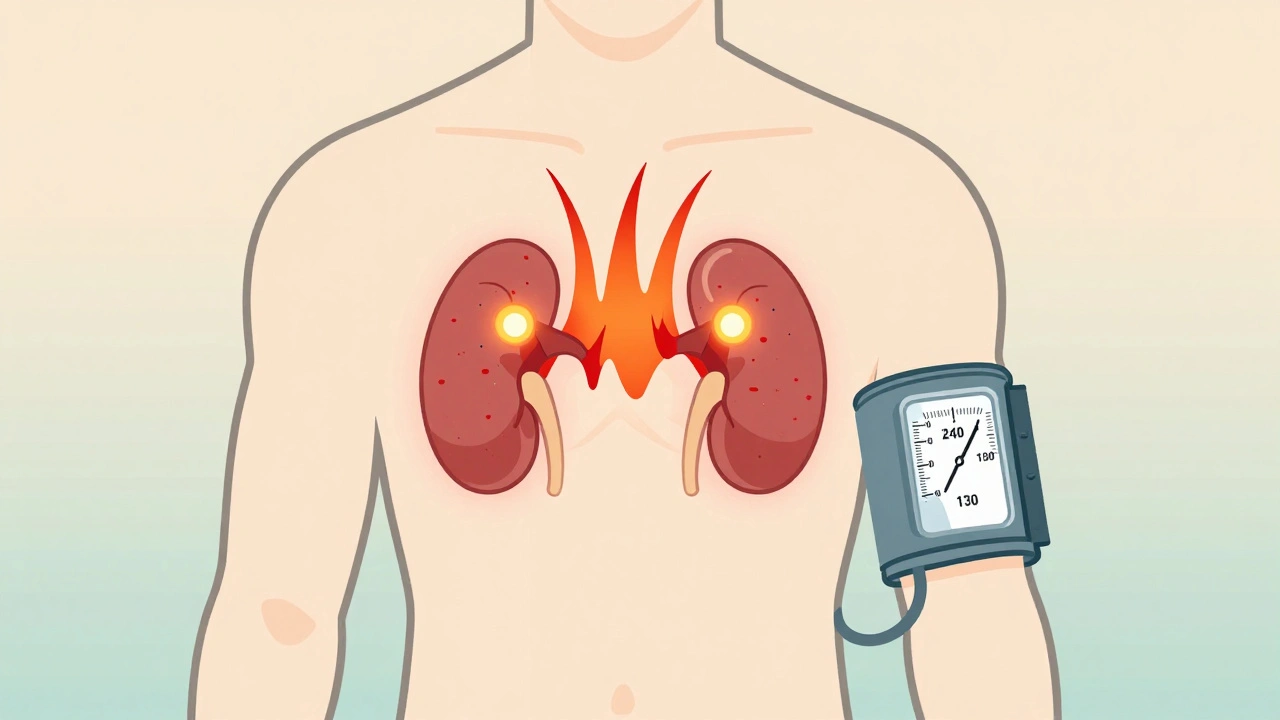
Adrenal Tumor: Symptoms, Causes, and What You Need to Know
When you hear adrenal tumor, an abnormal growth on one or both adrenal glands that sit above your kidneys. It can be benign or cancerous, and it may or may not produce hormones that throw your whole system out of balance. Many people live with these tumors for years without knowing—until they start feeling weird, tired, sweaty, or their blood pressure spikes for no reason.
Not all adrenal tumors are the same. Some, like pheochromocytoma, a rare tumor that makes excess adrenaline, cause sudden panic attacks, racing heart, and crushing headaches. Others, like those that overproduce cortisol, the stress hormone that regulates metabolism and immune response, lead to weight gain, stretch marks, and mood swings. Then there’s the kind that pumps out too much aldosterone, a hormone that controls blood pressure by managing salt and water, making your blood pressure stubbornly high even on meds.
Most adrenal tumors are found by accident during scans for other problems. Only about 1 in 10 are cancerous. But size matters: tumors over 4 cm are more likely to be dangerous. Blood and urine tests can spot hormone overproduction. A CT or MRI tells doctors if it’s growing fast or spreading. If your tumor isn’t making hormones and is small, watchful waiting is often the best move. If it is, surgery is usually the fix—minimally invasive, often done in a day.
What you won’t find in most online lists is how often these tumors are misdiagnosed as anxiety, menopause, or just "getting older." If you’ve had unexplained high blood pressure, sudden weight gain, or muscle weakness that won’t go away, ask your doctor to check your adrenal glands. It’s not a wild guess—it’s a standard test.
The posts below cover real cases and practical advice: how hormone tests work, what to expect after surgery, why some tumors come back, and how to tell if your symptoms are from the tumor or something else. You’ll also find what medications help manage symptoms before and after treatment, and how to avoid dangerous drug interactions if you’re on hormone therapy. This isn’t theory—it’s what people actually face, and what works in real life.