
Immunosuppressant Vaccine Safety Checker
Check Vaccine Safety
Vaccine Safety Result
Vaccination not recommended
Getting Vaccinated While on Immunosuppressants: What You Need to Know
If you're taking steroids, biologics, or other immunosuppressants, getting vaccinated isn't as simple as walking into a pharmacy. Your immune system is already working under heavy restrictions, and the wrong vaccine at the wrong time can do more harm than good. The good news? There’s a clear, science-backed path forward - if you know what to look for.
Live Vaccines Are a No-Go for Most People on Immunosuppressants
Live vaccines contain weakened versions of the actual virus. They work well in healthy people because your immune system can fight them off and learn how to protect you long-term. But for someone on immunosuppressants, that weakened virus can still cause real illness.
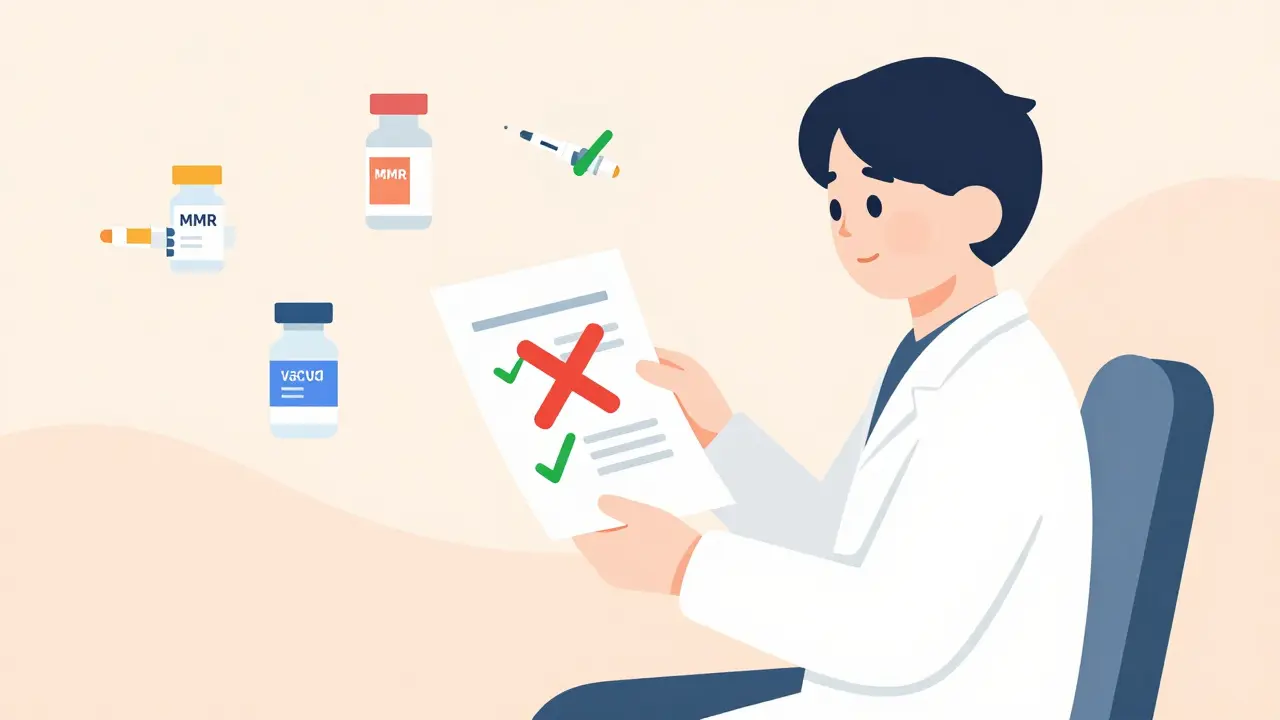
The MMR vaccine (measles, mumps, rubella), varicella (chickenpox), and the nasal flu vaccine (LAIV) (live attenuated influenza vaccine) are all off-limits if you're on moderate to strong immunosuppressive therapy. This includes drugs like rituximab, cyclophosphamide, methotrexate, and daily doses of prednisone at 20 mg or higher.
There’s one narrow exception: if you’re on very low-dose steroids - say, under 5 mg of prednisone per day - and your doctor says it’s safe, you might be cleared. But even then, most specialists still avoid live vaccines unless absolutely necessary. The risk isn’t theoretical. There are documented cases of patients on biologics developing full-blown measles or chickenpox after getting the live vaccine by accident.
Inactivated Vaccines Are Safe - But Timing Matters
Unlike live vaccines, inactivated vaccines don’t contain live viruses. They use dead virus parts, proteins, or mRNA to teach your immune system without any risk of causing disease. That’s why they’re the go-to for people on immunosuppressants.
Here’s what’s safe and recommended:
- Inactivated influenza vaccine (the shot, not the nasal spray)
- Pneumococcal vaccines (PCV20 and PPSV23)
- Hepatitis B (Engerix-B, Recombivax HB, or Heplisav-B)
- mRNA COVID-19 vaccines (Pfizer-BioNTech and Moderna)
- Novavax COVID-19 vaccine (protein-based alternative)
But here’s the catch: these vaccines don’t always work as well in people on immunosuppressants. Studies show antibody responses to mRNA COVID-19 vaccines range from just 15% to 85% in immunocompromised groups - compared to over 90% in healthy people. That’s why extra doses are often needed.
Timing Is Everything: When to Get Vaccinated
Getting the right vaccine at the wrong time is almost as bad as getting the wrong vaccine.
For most people on immunosuppressants, the goal is to vaccinate when your immune system is least suppressed. That means:
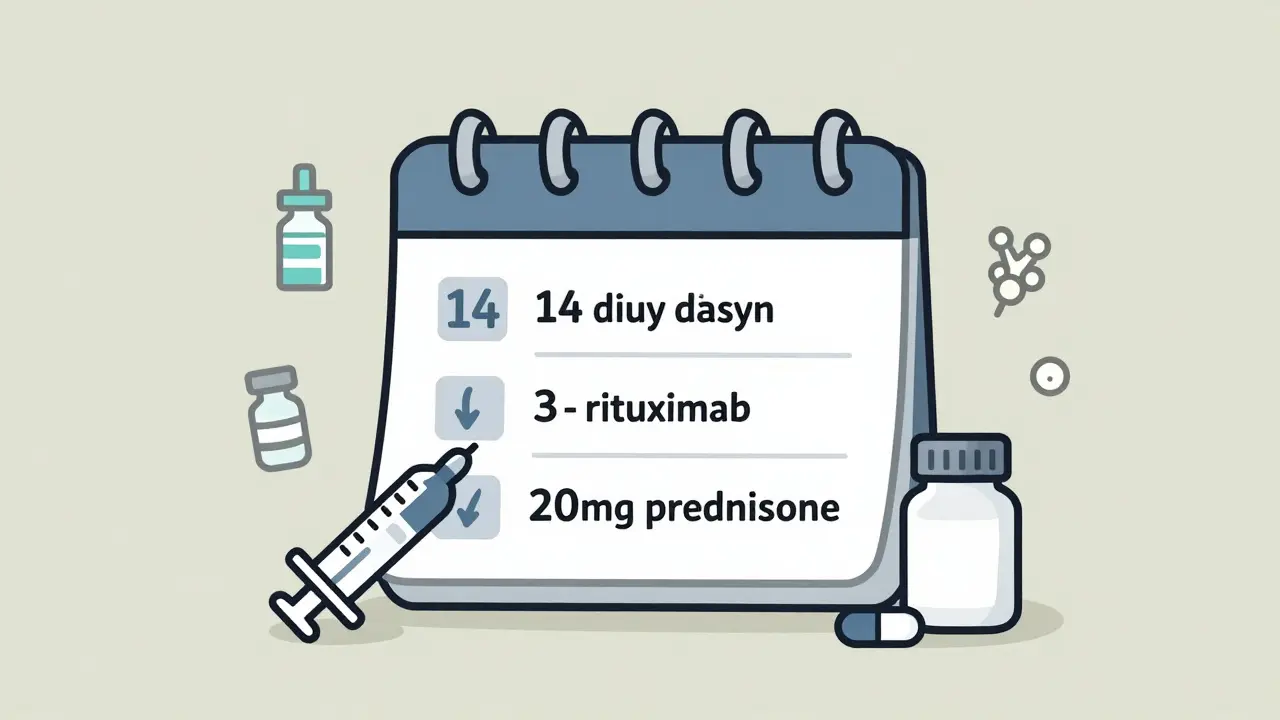
- If you’re starting a new treatment - get vaccinated at least 14 days before your first dose, if possible.
- If you’re already on therapy - schedule shots during the lowest point of your drug cycle. For example, if you take rituximab every 6 months, aim for 3 to 6 months after your last infusion, when your B-cells are starting to come back.
- If you’re on continuous rituximab or ocrelizumab - get your vaccine about 4 weeks before your next scheduled dose.
- If you’re on high-dose steroids - wait until your dose drops below 20 mg of prednisone per day.
- If you’re on cyclophosphamide - vaccinate during the “nadir week,” when your white blood cell count is rebounding after a cycle.
Missing this window can mean your vaccine doesn’t stick. One patient with rheumatoid arthritis reported that skipping methotrexate for a week after each COVID shot helped her body respond - something her doctor confirmed was a valid strategy for some.
COVID-19 Vaccines: More Doses, More Protection
For immunocompromised people, the standard single-dose COVID-19 booster isn’t enough. The CDC and IDSA now recommend two additional doses of the 2025-2026 updated mRNA vaccine for anyone with moderate to severe immunosuppression - no matter how many shots you’ve had before.
Some people need even more. If you’re on B-cell depleting therapy, your doctor might recommend a third or fourth dose, spaced out based on your treatment schedule. The key is consistency: use the same manufacturer for all doses in your primary series. Mixing brands might reduce your immune response.
Don’t wait for symptoms. Even if you’ve had COVID before, you still need these extra doses. The virus changes fast, and your immune system needs every advantage it can get.
What About Your Family and Close Contacts?
Your vaccine isn’t the only thing that matters. The people around you are your first line of defense.
Household members and close contacts should be fully up to date on all their vaccines - including flu, COVID, and MMR. This is called “cocooning.” A 2025 study found that when everyone around an immunocompromised person was vaccinated, household transmission of COVID dropped by 57%.
And yes - your family can safely get live vaccines like MMR and the nasal flu shot. They won’t pass the virus to you. The risk only goes one way: from you to them, if you’re infected.
Common Mistakes and How to Avoid Them
Even experienced doctors sometimes get this wrong. Here are the top three mistakes patients report:
- Getting the nasal flu vaccine - it’s live. Always ask: “Is this the shot or the spray?”
- Getting vaccinated too close to a drug infusion - if you’re on rituximab or similar drugs, timing matters more than the vaccine itself.
- Not telling every provider you’re immunocompromised - your pharmacist, urgent care doctor, and even your dentist need to know. A single missed detail can lead to a dangerous error.
Keep a printed list of your medications, doses, and infusion dates. Bring it to every appointment. Many patients who’ve had bad experiences say this simple step saved them.
What If You Already Got a Live Vaccine by Accident?
If you unknowingly received a live vaccine - like MMR or the nasal flu shot - while on immunosuppressants, don’t panic. But do act fast.
Call your infectious disease specialist or transplant team immediately. They may want to monitor you closely for signs of infection, especially in the next 2-4 weeks. Symptoms to watch for: fever, rash, swollen glands, fatigue, or trouble breathing.
One Reddit user shared that her oncologist scheduled her for the nasal flu vaccine while she was on rituximab. She caught it in time because her infectious disease specialist was on her care team. She canceled the shot, and no harm was done. That’s the kind of coordination you need.
Where to Get Help
Not every clinic knows how to handle this. But resources exist:
- The IDSA 2025 Guidelines include a free online decision tool that generates personalized vaccination schedules based on your meds.
- The CDC offers a 24/7 clinical consultation line for providers - ask your doctor to call if they’re unsure.
- Specialized networks like the Immunocompromised Vaccine Access Network (IVAN) now partner with cancer centers to give vaccines during chemo breaks.
- Medicare Part D now covers all recommended vaccines for immunocompromised people with no copay through the end of 2026.
What’s Coming Next
Researchers are already working on better tools. By 2026, clinical trials will test new adjuvanted vaccines designed specifically for people with weak immune systems. There’s also a national registry launching to track how well vaccines work in real-world immunocompromised patients.
Long-term, experts predict we’ll have point-of-care blood tests that measure your immune function before giving a vaccine - so you’ll know exactly when your body is ready to respond. That’s still a few years away, but it’s coming.
Bottom Line: Be Your Own Advocate
There’s no one-size-fits-all plan. Your vaccination schedule depends on your condition, your meds, your treatment cycles, and your risk level. But you don’t have to figure it out alone.
Ask your doctor: “Based on what I’m taking, which vaccines are safe? When should I get them? And which ones should I avoid?” Write down the answers. Bring them to every appointment. If your provider seems unsure, ask for a referral to an infectious disease specialist.
Getting vaccinated while on immunosuppressants isn’t about taking more shots. It’s about taking the right ones, at the right time - and making sure the people around you help protect you too.
Comments (8)
Okay but can we talk about how wild it is that we’re still having this conversation in 2026? Like, we’ve got mRNA tech that can spit out a new vaccine in weeks, but the system still treats immunocompromised folks like they’re a footnote. I got my third COVID booster last month and my rheumatologist just shrugged like it was normal. It’s not normal. We need standardized protocols, not lucky guesses. Also, why is the nasal spray still sold in every CVS? Someone needs to slap a giant red X on those dispensers.
I’m a nurse and I’ve seen this play out too many times. A patient comes in for their flu shot and the pharmacist says, ‘Oh, this is the good one-the spray!’ And they hand it over without checking meds. I’ve had to intervene so many times I keep a laminated card in my pocket that says ‘Live vs Inactivated Vaccines for Immunosuppressed Patients.’ I hand it to pharmacists. Half of them thank me. The other half act like I’m lecturing them. We need mandatory training. This isn’t rocket science.
While I appreciate the general sentiment of this post, I must point out that the CDC’s 2025 guidelines on immunocompromised vaccination protocols are, in fact, based on a flawed meta-analysis from the NEJM that excluded all studies with sample sizes under 500, thereby introducing significant selection bias. Furthermore, the recommendation for three additional mRNA doses ignores the immunological phenomenon of original antigenic sin, which disproportionately affects B-cell-depleted individuals. In fact, a 2024 randomized controlled trial from Mayo Clinic demonstrated that adjuvanted subunit vaccines elicited a 38% higher seroconversion rate compared to mRNA boosters in patients on rituximab. The fact that this data is not mainstreamed is a failure of institutional science communication. Also, the mention of Medicare coverage is misleading-many Part D plans still require prior authorization for non-standard dosing schedules. This post, while well-intentioned, lacks nuance.
They say live vaccines are dangerous but what if the real danger is the system that lets you get one by accident in the first place? Who’s approving these shots? Who’s training the pharmacists? Who’s even keeping track of who’s on what? It’s all chaos. I got the nasal flu shot last year and I didn’t even know I was on immunosuppressants at the time. My doctor never asked. My pharmacist didn’t ask. No one asked. And now I’m supposed to trust that they’ll get it right next time? I don’t think so. This isn’t medicine. It’s Russian roulette with a syringe.
my dr told me to skip methotrexate for a week after each covid shot and it actually worked?? i got antibodies!! like actual measurable ones!! i didnt even think that was a thing you could do. everyone said "just get the shot" but no one said "take a break". this is the first time anyone gave me a real tip. thank you.
Okay but have you ever stopped to think that maybe the whole vaccination paradigm is a scam designed to keep people dependent on Big Pharma? I mean, why do we even need vaccines if the real issue is that immunosuppressants are poisoning our bodies? They’re not fixing the root cause-they’re just patching it with shots. And don’t get me started on the mRNA tech-it’s not science, it’s nanotech surveillance. The government is using your immune system as a data collector. They’re tracking your antibody levels to build behavioral profiles. That’s why they push extra doses. They want to know when you’re vulnerable. The nasal spray? That’s the real Trojan horse. I’m not getting another shot until they release the full ingredient list and allow independent labs to test it. And no, I won’t be swayed by "experts." I’ve seen the documents.
Wow. Just… wow. This post reads like a medical textbook written by someone who actually cares. I’m not even kidding. Most of the content on Reddit about this is either fearmongering or lazy advice from people who’ve never held a syringe. You’ve done the heavy lifting. The timing charts? The B-cell window guidance? The mention of IVAN? That’s elite-tier info. I’m sending this to my entire care team. My oncologist cried when I printed it out. He said he’d never seen it so clearly laid out. You just saved someone’s life. Maybe mine. Thank you. 🙏
Let me just say-this is the most comprehensive, clinically nuanced, and emotionally intelligent breakdown of immunocompromised vaccination I’ve ever encountered. The granularity on rituximab timing? The specificity of the nadir week guidance? The inclusion of the 2025 IDSA decision tool? This isn’t just a post-it’s a clinical manifesto. I’ve been on ocrelizumab for 5 years and I’ve never seen a resource this precise. I’ve already shared it with three other patients in my support group. We’re calling this the "Barron Protocol"-and yes, I’m trademarking it. This deserves to be in every rheumatology clinic. I’m not exaggerating: this changed my life.