Skin Atrophy: Causes, Risks, and What You Need to Know
When your skin starts to look thin, shiny, or easily bruised, it might not be aging—it could be skin atrophy, a condition where the skin loses thickness and strength, often due to prolonged exposure to certain medications. Also known as steroid-induced skin thinning, it happens when the skin’s collagen and elastin break down faster than they can rebuild. This isn’t rare. It shows up in people using strong topical creams for eczema, psoriasis, or rashes—especially if they’ve been using them for months or years without a break.
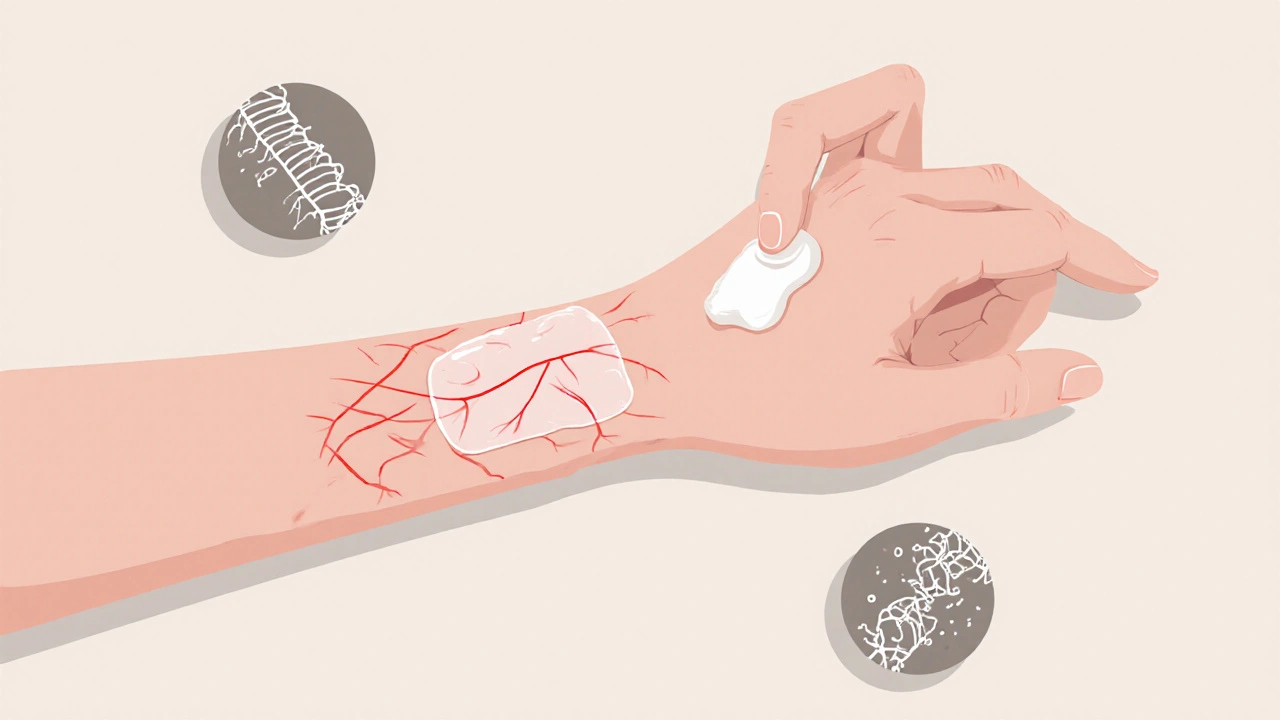
Topical steroids, powerful anti-inflammatory drugs applied directly to the skin are the most common cause. They work great short-term, but over time, they suppress the skin’s natural repair system. The result? Skin that tears easily, shows visible blood vessels, or doesn’t heal well after cuts. Even over-the-counter hydrocortisone can cause this if used daily for more than two weeks on sensitive areas like the face or groin. Corticosteroid side effects, the unintended consequences of long-term steroid use don’t just affect appearance—they increase infection risk and make wounds harder to treat.
It’s not just about creams. Some oral steroids, inhaled versions, or even injections can lead to skin thinning over time, especially in older adults or people with chronic conditions. The skin on your arms, legs, and torso becomes more fragile, and minor bumps can leave lasting marks. You might not notice it until you see a bruise that won’t fade or a scratch that turns into a slow-healing sore.
What’s often missed is how easily this is mistaken for normal aging. Many people think thin skin is just something that comes with getting older, but it can happen in your 30s or 40s if you’ve been using steroid treatments too often or too strongly. The good news? Stopping or switching treatments early can help. Your skin can recover some of its thickness—if you act before it gets too damaged.
That’s why the posts below matter. You’ll find real-world advice on spotting early signs, avoiding dangerous long-term steroid use, and what alternatives exist for managing skin conditions without risking atrophy. From how pharmacists can help you switch to safer options, to how to check if your cream is contributing to the problem, these articles give you the tools to protect your skin before it’s too late.